
Disclosure: “The owners of this website may be paid to recommend Goldco or other companies. The content on this website, including any positive reviews of Goldco and other reviews, may not be neutral or independent.” Learn More
Two Los Angeles firms sell the same dream: physical gold and silver inside your retirement account. Rosland Capital and Lear Capital both promise to shield your savings from inflation and a shaky dollar.
But the review boards, fee schedules, and complaint records tell two very different stories. If you have $10,000 or more sitting in an IRA and you are choosing between these two, the numbers below will settle it faster than any sales call.
Quick Overview

- CEO: Marin Aleksov
- BBB: 4.32/5 Out of 275 Customer Reviews
- Available Metals: Gold and Silver
- Minimum Investment: $10,000
- Promotions: Get Up to $15,000 in Free Silver on Qualified Purchases
- Free Kit Available: Yes
- CEO: Kevin DeMeritt
- BBB: 4.75/5 Out of 130 Customer Reviews
- Available Metals: Gold, Silver, Platinum, and Palladium
- Minimum Investment: $5,000
- Promotions: Up to $15,000 Offer in Bonus Coins on Qualified Purchases
- Free Kit Available: Yes
The Bottom Line Up Front
Lear Capital is the stronger choice for most retirement savers building a precious metals IRA. It posts its full fee schedule online, carries higher and more consistent review scores across six platforms, and backs liquidation with a no-fee buyback plus a 24-hour cancellation window.
Rosland Capital still earns a place for two specific buyers: direct cash purchasers who want a lower entry point of around $2,000, and collectors chasing exclusive specialty coins like the Formula 1 and British Museum series.
If you want IRA simplicity and review consistency, lean Lear. If you want collectible exclusivity and a smaller direct buy, Rosland fits.
Two Very Different Paths to the Same Industry
Both companies operate out of West Los Angeles and both pitch gold as a hedge against currency risk. Yet they reached that pitch from opposite directions, and the difference shapes how they treat you as a buyer.
Lear Capital’s 28-Year Run Under Kevin DeMeritt

Lear Capital opened its doors in 1997, making it one of the older names in physical metals. Across more than two and a half decades, the firm reports over $3 billion in transactions and more than 100,000 customers served.
Founder Kevin DeMeritt studied business and economics at the University of Montana and spent years in international banking and real estate lending before launching the company.
He also wrote a finance book, The Bulls, the Bears and the Bust, which signals a founder who built his brand around market commentary rather than celebrity flash.
That longevity matters. A firm that survives 28 years has weathered multiple gold cycles, and Lear’s track record gives you a longer paper trail to check.
Rosland Capital: Marin Aleksov’s Los Angeles Firm Behind the Famous TV Spots
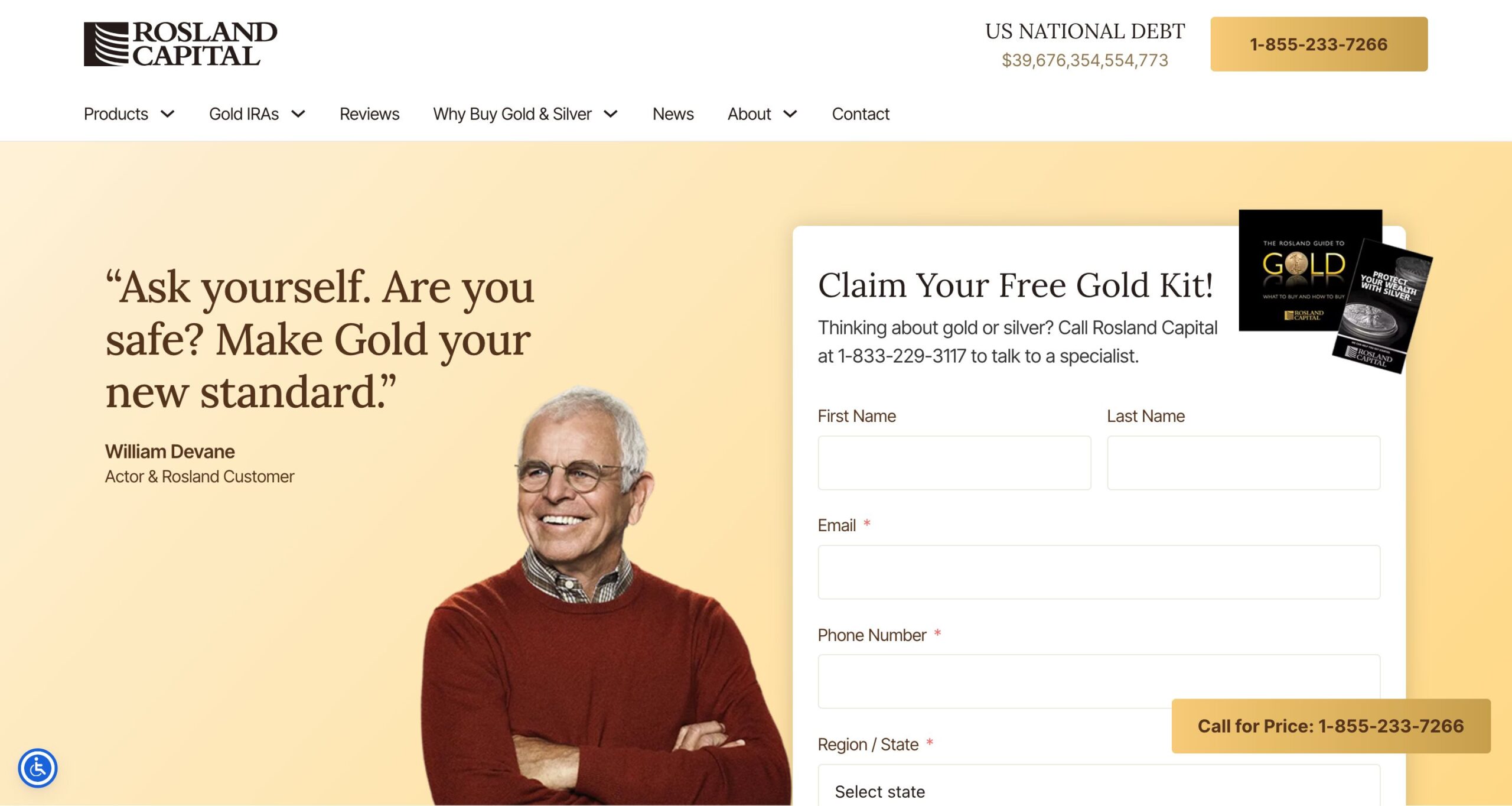
Rosland Capital launched in 2008, born directly out of the financial crisis. The crash and the bank bailouts left a lot of retail savers distrustful of paper assets, and Rosland built its model around that fear.
Founder and CEO Marin Aleksov brings more than 25 years in the metals trade. His approach leans on the “high-touch” sales call, where a representative walks you through the purchase rather than handing you a website to click through.
Aleksov also runs a visible humanitarian effort, donating proceeds from his book The Rosland Capital Guide to Gold to the American Red Cross.
You have probably seen the ads. That visibility is both Rosland’s biggest asset and the reason its sales practices draw extra scrutiny.
William Devane vs. Glenn Beck: What Their Endorsements Actually Signal
Rosland’s longtime face is actor William Devane, who has fronted its commercials for over a decade, talking about national debt and protecting your “retirement bail-out.”
Lear leans on conservative media personality Glenn Beck as a paid radio and digital spokesperson, with Olympic swimmer Mark Spitz featured in past campaigns.
Here is the honest read on celebrity endorsements:
- A paid spokesperson is a marketing expense, not a quality guarantee.
- Devane’s image targets older, traditional American viewers who watch cable news.
- Beck’s audience skews toward listeners already primed to distrust the dollar.
Neither endorsement should move your decision one inch. Judge both firms on fees, catalog, and complaint records instead.
The Securities and Exchange Commission has warned investors that celebrity backing alone never validates a precious metals offer.
Rosland and Lear by the Numbers
A side-by-side view cuts through the marketing. The table below lays out the figures that actually affect your wallet.
| Factor | Rosland Capital | Lear Capital |
| Founded | 2008 | 1997 |
| Direct purchase minimum | ~$2,000 | Varies by product |
| IRA minimum | ~$10,000 | $10,000 |
| Setup fee | ~$50 | $50 (waived over $10,000) |
| Annual custodian + storage | ~$175–$450 combined | ~$280 first year, ~$200 after |
| Metals carried | Gold, silver, platinum, palladium | Gold, silver, platinum, palladium |
| Custodians | Equity Institutional / Equity Trust | Self-directed IRA custodian coordination |
| Depositories | Delaware Depository, Brink’s | Delaware Depository |
| Buyback terms | Voluntary; ~4% restocking fee; payment within 60 days (often delayed) | No-fee buyback, partial or full |
| Cancellation window | Per Customer Agreement | 24-hour risk-free guarantee |
My read: Lear’s fee structure is easier to predict because the firm publishes it. Rosland’s combined annual costs can land lower or higher depending on metal volume and depository, but you will not know until a rep quotes you.
The 24-hour cancellation window at Lear is a genuine safety net Rosland does not match in the same clear language.
Breaking Down Every Dollar You’ll Pay
Fees in this business hide in two places: the recurring account charges and the markup baked into the coin price. The recurring fees are small. The markups are where retirees get hurt.
Rosland’s $2,000 Direct-Purchase Floor and $10,000 IRA Threshold
Rosland lets direct cash buyers start at roughly $2,000, one of the lower entry points among some of the better-known gold IRA firms operating today.
For an IRA, representatives typically recommend around $10,000 to make the account worthwhile after fees.
The recurring costs include a one-time setup near $50, an annual custodian fee running $75 to $225, and annual storage between $100 and $225. Most of that money goes to the third-party custodian, not Rosland itself.
That low direct-buy floor is a real advantage for someone testing the waters with a small cash purchase.
Lear’s Fee Schedule: $50 Application Fee and Roughly $235–$285 a Year After Year One
Lear requires a $10,000 minimum for IRA accounts and waives the $50 setup fee on accounts above that line.
Maintenance runs about $280 the first year and roughly $200 each year after, with storage and insurance bundled in.
The standout here is transparency. Lear publishes its complete fee schedule online, a rarity in this trade. Yahoo Finance named it a “Best Value” gold IRA company partly for that openness.
When a firm shows you the numbers before you call, it removes the most common source of buyer regret.
The Premium Problem: Commissions Reported From 4% to Over 30% Depending on the Product
This is the line item that matters most. Standard bullion at both firms carries a markup of roughly 5% to 15% over spot. Premium and specialty coins are another world entirely.
- Bullion markups: typically 5%–15% over spot price.
- Premium and “proof” coins: 30% to over 50% at Rosland.
- Reported Lear commissions on certain collectible coins reached as high as 33%, per the 2022 New York settlement.
A high markup means gold must climb significantly before you break even. The insights from our Rosland Capital review and research show customers reporting coins sold far above the metal’s melt value, which crushes liquidation returns. Always ask for the spot price and the premium as separate numbers.
Why Neither Firm Posts Prices Online (and How to Get a Real Quote)
Metal prices move every second, so dealers lock quotes by phone. Both Rosland and Lear require a call to finalize pricing, which frustrates buyers used to instant online checkouts.
To protect yourself, do this on the call:
- Ask for the current spot price of the metal.
- Ask for the markup as a dollar figure and a percentage.
- Request the full quote in writing or email before you pay.
- Compare that number against a transparent dealer like JM Bullion for the same coin.
A reputable rep will give you these figures without resistance. Hesitation is your warning sign.
What’s Actually in Each Catalog
The product lists reveal each firm’s strategy. Rosland chases exclusivity. Lear chases IRA eligibility.
Rosland’s Specialty Lines: Formula 1, PGA Tour, and British Museum Coins
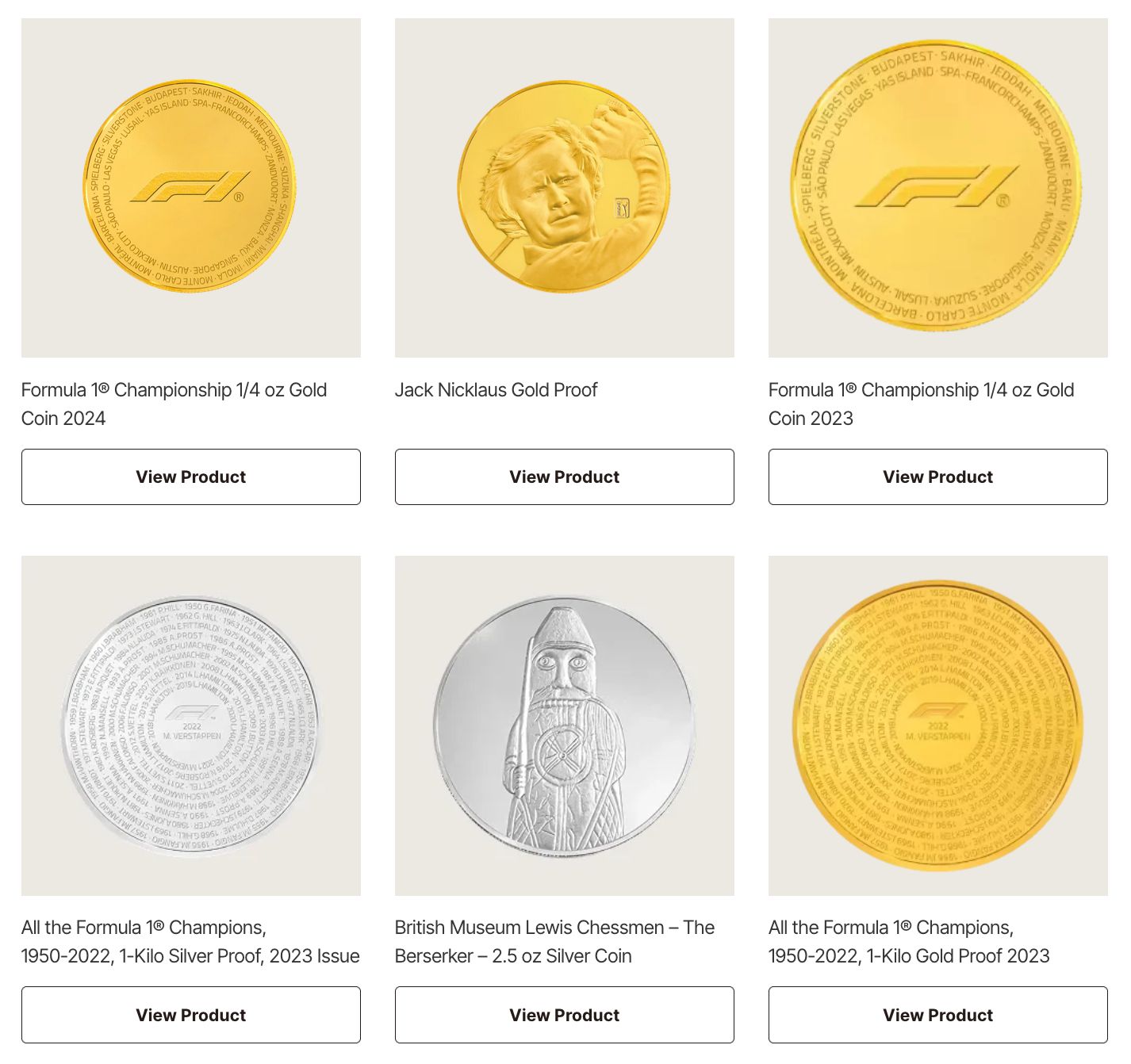
Rosland holds distribution deals that competitors cannot easily copy. The Formula 1 coin collection commemorates Grand Prix races and drivers like Michael Schumacher.
The British Museum series depicts treasures such as the Lewis Chessmen. The PGA Tour line honors golf legends including Jack Nicklaus and Arnold Palmer.
These coins carry numismatic and collectible appeal beyond their gold content. For a collector, that exclusivity is the draw.
For a retirement saver, it is a flag to read carefully, because collectible value does not always track the spot price.
Lear’s Focus on IRA-Eligible Bullion and Premium Coins
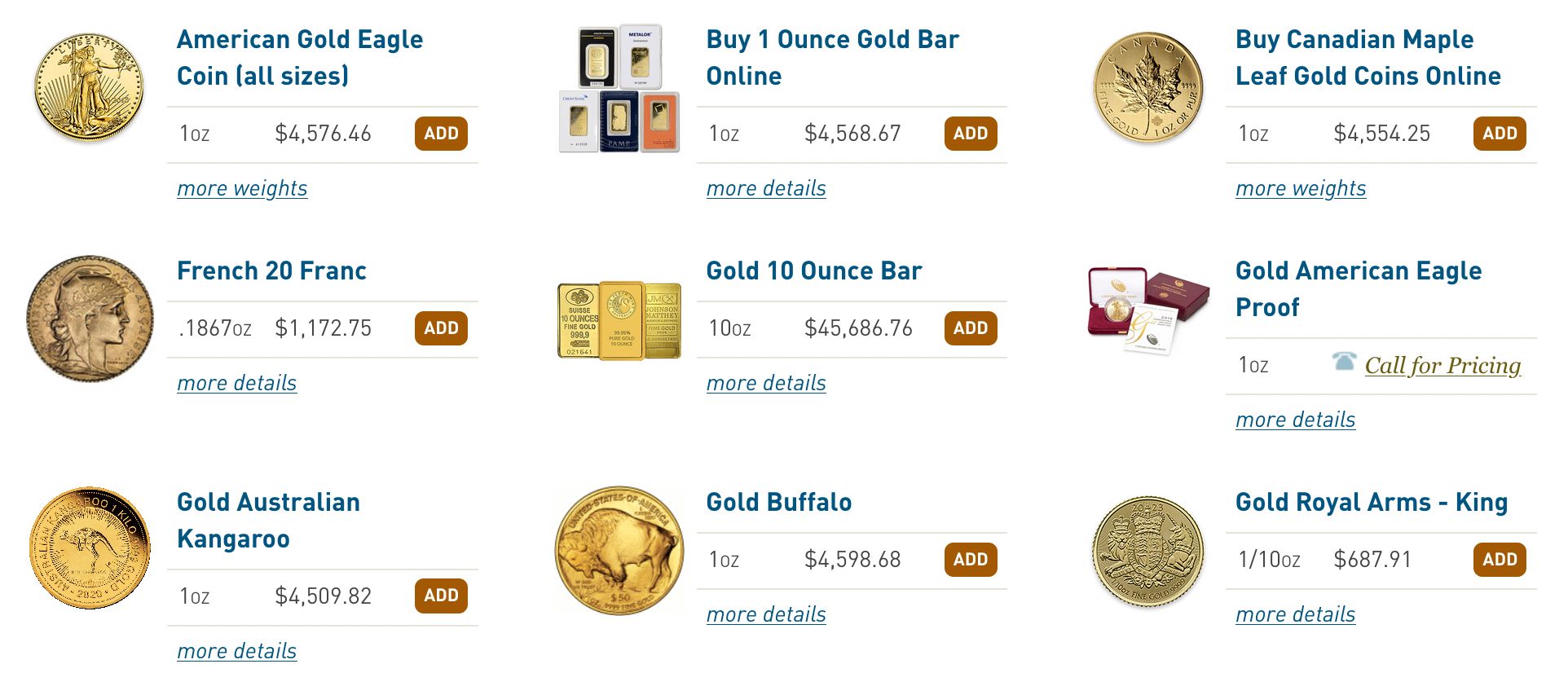
Lear stocks IRS-approved bullion bars and coins across all four metals, plus a selection of premium and rare pieces.
The catalog leans toward products that qualify for a self-directed IRA, which fits its core retirement audience.
That focus simplifies your choices. Fewer exotic options mean fewer ways to overpay for packaging and exclusivity.
The Collectible-Coin Trap Inside a Retirement Account
The IRS sets strict purity rules for IRA metals: gold at .995 fine, silver at .999, platinum and palladium at .9995. It generally bars collectible and numismatic coins from retirement accounts under 26 U.S.C. § 408(m).
That matters because:
- Many of Rosland’s specialty coins are best held for direct ownership, not an IRA.
- A coin bought at a 33% premium needs a major gold rally just to break even.
- Sellers often discover the “collectible” premium vanishes at buyback time.
The American Gold Eagle is a permitted exception, but most proof and themed coins are not. The IRS retirement plan rules spell out the eligible asset standards clearly.
From First Phone Call to Funded IRA
Both firms guide you by phone through setup, funding, and storage. The mechanics are similar. The pace differs.
Rosland’s Setup Steps and Custodian Arrangement
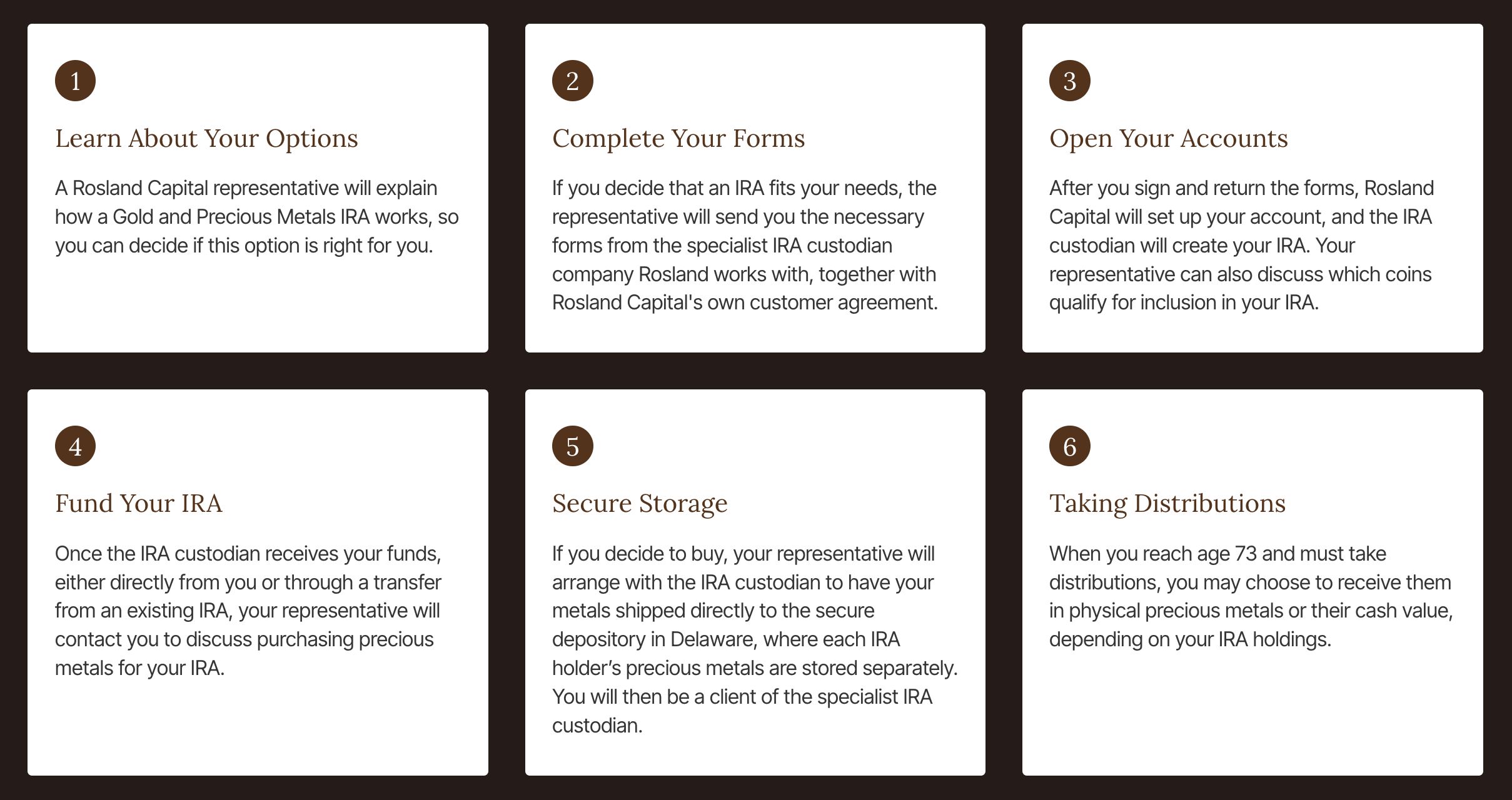
Rosland coordinates among three parties: itself as the dealer, a custodian such as Equity Institutional, and an IRS-approved depository like the Delaware Depository or Brink’s.
You request the free Gold IRA kit, sign a Customer Agreement and disclosure brochure, then fund through a rollover or transfer.
The kit runs about 24 pages and covers rollover steps, account types, and eligible products. Some versions include videos featuring William Devane.
The process works, but the paperwork and phone reliance mean it moves at the pace of your assigned rep.
Lear’s Rep-Guided Process With Delaware Depository Storage Insured by London Underwriters
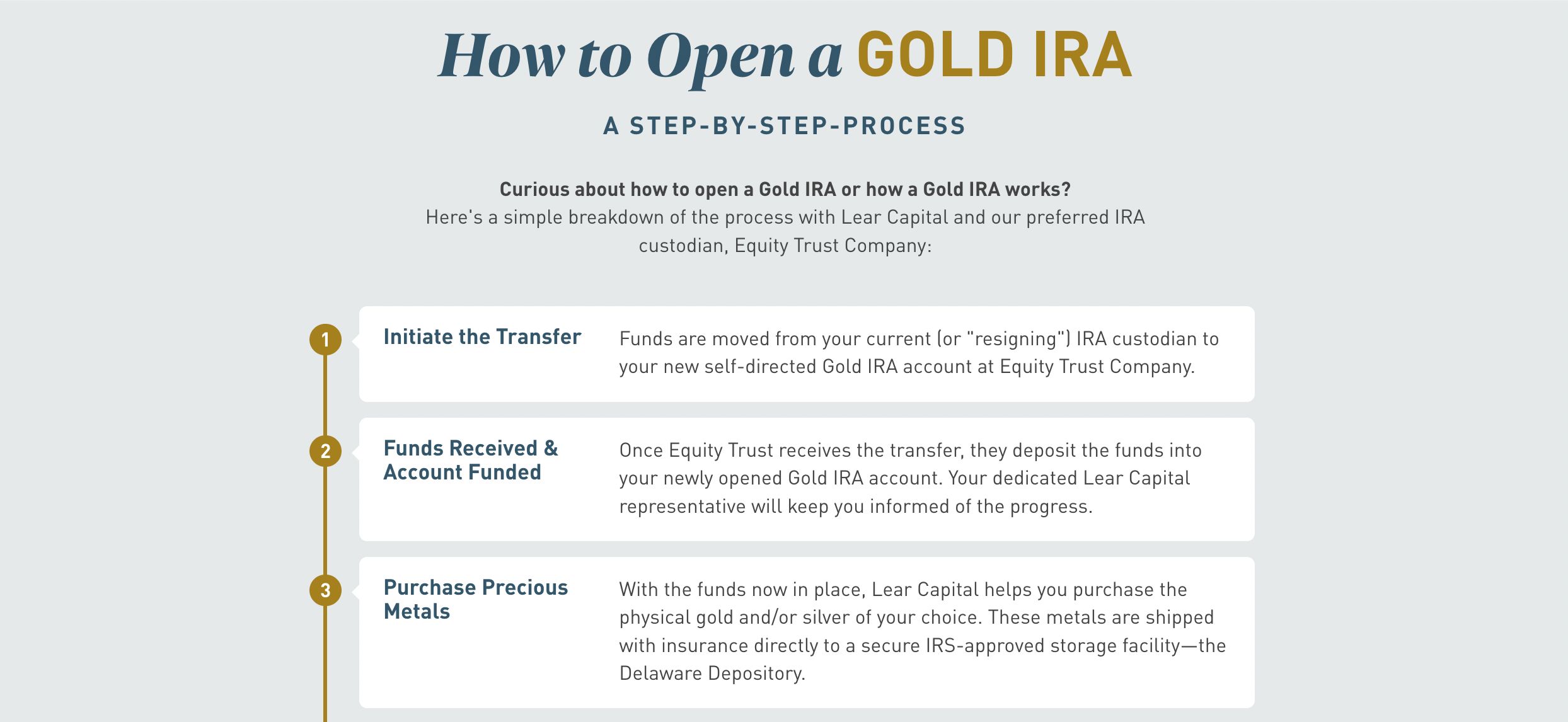
Lear’s application takes about 10 minutes, and accounts are often opened within 24 hours. Funding a rollover usually completes in up to five business days.
Your rep coordinates the transfer, you pick the metals by phone, and the order ships by insured transit to an IRS-approved depository.
Storage runs through the Delaware Depository, a 24/7 monitored facility with insurance underwritten by London markets.
The faster turnaround and clearer timeline give Lear an edge for first-time buyers who want the account funded quickly.
When It’s Time to Cash Out
Liquidity is where physical gold gets uncomfortable. You cannot click “sell” the way you can with a stock. The buyback terms below decide how painful that day will be.
Lear’s No-Fee Buyback and 24-Hour Risk-Free Guarantee
Lear commits to buying back your metals, in part or in full, without charging a liquidation fee. It also offers a 24-hour risk-free purchase guarantee, letting you cancel a higher-fee order shortly after placing it.
That cancellation window is a genuine consumer protection. It gives you a cooling-off period most dealers do not.
For a retiree who values a clean exit, the no-fee buyback is one of Lear’s strongest selling points.
Rosland’s Buyback Program: Reported Payment Delays and Administrative Holdups
Rosland runs a voluntary buyback at the current bid price, typically with a restocking fee around 4%. Its stated policy is payment within 60 days of receiving and verifying returned metals.
The problem shows up in the complaints. A meaningful number of buyers report waiting 75, 90, or even 120 days for funds. Rosland has blamed processing backlogs during gold price spikes.
For someone who may need cash on a deadline, that delay risk is the single biggest reason to pause.
Trust Scores Across the Web: What Six Platforms Show
Review scores are not gospel, but a pattern across six platforms tells you something. Here the gap between the two firms is hard to ignore.
Better Business Bureau: Grades and Complaint Records
Both firms hold an A+ rating with the Better Business Bureau. Lear has been accredited since 1997 and closed only 28 complaints in the past three years, with customer review scores around 4.75.
Rosland also carries strong BBB marks, averaging roughly 4.32 across 275 reviews. On the BBB measure, the two are close. The separation appears elsewhere.
Trustpilot: The Widest Gap Between the Two
This is where the firms diverge sharply. Lear holds an “Excellent” 4.7 out of 5 across more than 3,138 reviews.
Rosland’s Trustpilot number is unstable and far lower, with sources over the past year reporting anywhere from 2.9 to 3.8 stars (as of June 2026, verify the live figure before relying on it).
That volatility is itself a story. A score swinging by more than a full star in a year suggests inconsistent recent experiences, and neither competitor explains it.
ConsumerAffairs and Google Reviews
Lear earns 4.8 out of 5 on ConsumerAffairs across roughly 1,627 reviews, where it is tagged “Best Overall.” On Google, Lear sits near 4.7 across 636 reviews. Rosland’s Google average runs 4.6 to 4.8 across 145 to 164 reviews.
Lear’s far larger review volume gives its high scores more weight. A 4.8 across thousands carries more signal than a 4.7 across a few hundred.
Business Consumer Alliance, TrustLink, and Retirement Living
Both firms hold a top AAA rating with the Business Consumer Alliance. Lear collects approval from retirement-focused advocates including Retirement Living, while Rosland posts a Reach score near 5 out of 5 across 600-plus entries.
Across the smaller platforms the two stay competitive. The decisive gap remains Trustpilot’s volume and stability.
Reading Between the Stars: Complaint Patterns That Repeat
Scores aside, the recurring grievances matter more than any single rating. For Rosland, the key takeaways from this Lear Capital review comparison reveal three repeat issues: shipping delays, steep specialty-coin markups, and slow buyback payments stretching past the 60-day promise.
For Lear, the pattern is different: thin online fee detail on some products, no fully online account setup, and the 2022 New York settlement, which has since produced court-ordered disclosure changes.
The lesson is that Rosland’s complaints touch your money directly, while Lear’s are largely procedural and already addressed by regulators.
The Complaints Worth Taking Seriously
Every dealer collects gripes. The ones below are the patterns that should shape your decision rather than the one-off bad days.
Rosland’s Weak Spots
Delivery timelines surface repeatedly, with some buyers reporting longer waits than promised for shipped metals.
Pricing opacity is the bigger concern, since the absence of online quotes combined with high specialty-coin premiums leaves buyers unsure whether they overpaid until they try to sell.
Buyback friction is the most serious. Payments stretching well past the stated 60-day window leave retirees waiting months for cash they expected sooner. For an audience that may need liquidity on short notice, that is a structural risk, not a minor inconvenience.
Lear’s Weak Spots
The settlement history is the headline issue. In January 2022, Lear reached a $6 million settlement with the New York Attorney General over allegations that steep upfront commissions, up to 33% on certain coins, sat in fine print.
You can read the official details from the New York Attorney General’s office. As part of the deal, Lear now discloses all fees in plain language, added a 24-hour cancellation window, and built a complaint-tracking system.
The other gripe is the phone-only model. Final pricing and orders require a call, which annoys buyers who want to finish everything online. It is a friction point, not a financial harm.
Picking a Side: Honest Calls for Different Buyers
The data favors Lear overall, but Rosland wins for specific people. Match the firm to your situation rather than chasing the higher score blindly.
Rosland Earns the Nod When…
Pick Rosland if you want a lower entry point. Its roughly $2,000 direct-purchase floor lets you start small without committing to a full IRA.
Choose it too if you are a collector drawn to the exclusive Formula 1, PGA Tour, or British Museum coins that no competitor carries.
Those specialty lines are genuine differentiators for buyers who value exclusivity over pure metal weight.
Lear Earns the Nod When…
Pick Lear if review consistency matters to you. Its scores hold steady and high across six platforms, backed by thousands of reviews.
Choose it for the no-fee buyback and 24-hour cancellation guarantee, and for a catalog built around IRA-eligible bullion.
For a straightforward retirement IRA, Lear is the cleaner, safer path.
Signs You Should Keep Comparison Shopping
Neither firm is your only option. Walk away from both and keep looking if you notice any of these:
- A rep refuses to break out the spot price and markup separately.
- You feel pushed toward high-premium proof coins over plain bullion.
- The quoted IRA minimum climbs above your comfort level.
- You want fully online ordering with live pricing.
A solid dealer answers fee questions without flinching. Use the Commodity Futures Trading Commission’s fraud resources to vet anyone before you wire money.
Frequently Asked Questions
Q1. Why Is Rosland Capital’s Trustpilot Rating So Much Lower Than Lear Capital’s?
Rosland’s Trustpilot score has swung widely over the past year, reported between 2.9 and 4.3 stars, while Lear holds a steady 4.8 across more than 3,000 reviews.
The gap comes from review volume and recent complaint clusters around buyback delays and coin markups. Always check the live number before you decide.
Q2. Do Rosland Capital or Lear Capital List Their Coin Prices Anywhere Online?
Neither posts live coin prices, because metal values change constantly and both lock quotes by phone. Lear does publish its full fee schedule online, which Rosland does not. For any quote, get the spot price and markup separately and request it in writing.
Q3. Has Either Rosland Capital or Lear Capital Faced Legal or Regulatory Action?
Lear settled with the New York Attorney General in January 2022 for $6 million over hidden commissions and has since changed its disclosure practices.
Rosland has no comparable settlement on record but draws frequent complaints over delayed buyback payments. Both currently hold A+ BBB ratings.
Q4. Are Rosland Capital’s Specialty Coins (Formula 1, PGA Tour) Allowed in a Precious Metals IRA?
Most are not. The IRS bars collectible and numismatic coins from IRAs and requires strict purity standards. Rosland’s themed coins are best held for direct personal ownership, not inside a retirement account, unless a specific piece meets the proof and fineness rules.
Q5. How Quickly Do Rosland Capital and Lear Capital Ship After Payment Clears?
Lear reports insured shipping with clear tracking and timely delivery, and IRA metals reach the depository within days of funding.
Rosland generally ships within standard windows, though some buyers report longer-than-promised waits. Confirm the timeline with your rep before paying.
Conclusion
The data points one direction for most retirement savers. Lear Capital carries higher and steadier review scores across six platforms, publishes its fees, and backs purchases with a no-fee buyback and a 24-hour cancellation window. Its 2022 settlement is a real mark, but the court-ordered disclosure fixes are now in place.
Rosland Capital still earns a place for two buyers: those wanting a lower roughly $2,000 direct entry, and collectors after exclusive Formula 1, PGA, or British Museum coins.
Just go in clear-eyed about the higher specialty premiums and the documented buyback delays. Match the firm to your goal, and demand every fee in writing first.
Goldco Precious Metals
- Goldco Surpasses $2 Billion in Precious Metals Placements
- Over 6,000 Five-Star Ratings on BBB, Trustpilot, and ConsumerAffairs
- Seven-Time Winer on the Inc. 5000 List