

Disclosure: “The owners of this website may be paid to recommend Goldco or other companies. The content on this website, including any positive reviews of Goldco and other reviews, may not be neutral or independent.” Learn More
Anyone writing a serious Lear Capital review in 2026 has to reckon with two facts at once: this firm has moved more than $3 billion in physical bullion since 1997, and it also settled a $6 million case with the New York Attorney General’s office and filed Chapter 11 in 2022.
Both things are true. That tension is exactly why I looked into the company. Readers kept asking me whether the rehabilitation was real, or just a marketing repaint over the same sales floor.
What follows is my read on the operation as it stands today: ownership, fees, spreads, storage partners, and the gap between the five-star testimonials and the regulatory record.
The Reality Behind Lear Capital’s 25+ Year History

Longevity in the bullion business is not the same as integrity, but it does count for something. Lear Capital opened its doors in Los Angeles in 1997, the same year it earned Better Business Bureau accreditation.
Twenty-seven years and one bankruptcy filing later, the company is still operating, still selling Gold IRAs, and still running television spots featuring Glenn Beck and Mark Spitz.
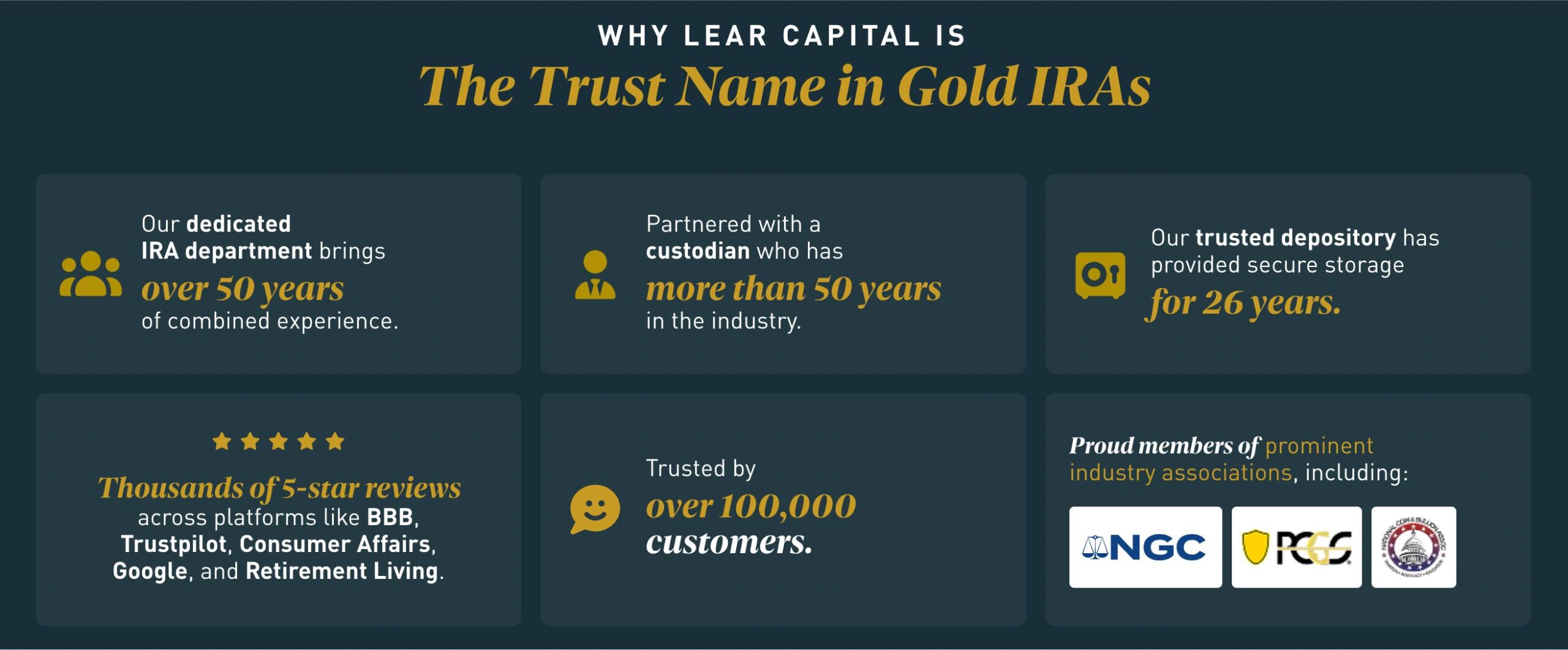
The headline numbers the company quotes: over 100,000 customers and north of $3 billion in transactions.
Those figures are self-reported, but they line up with the volume you would expect from a firm advertising this aggressively for this long.
Who Pulls the Strings? A Look at Corporate Leadership and Ownership
Kevin DeMeritt founded Lear Capital and remains its owner and chairman. He studied business and economics at the University of Montana, spent years in international banking and real estate lending, and wrote a book called The Bulls, the Bears and the Bust.
Day-to-day operations are run by CEO John Ohanesian, who came in during the post-settlement restructuring.
The headquarters sit at 1990 S. Bundy Drive, Suite 650, in West Los Angeles. Phone support runs seven days a week, 9 AM to 6 PM Pacific, at 1-800-576-9355.
That is worth noting because Lear Capital is a phone-first operation. You cannot complete an IRA purchase entirely online, no matter how much the dashboard suggests otherwise.
Surviving Regulatory Hurdles: Documented Lawsuits and Settled Claims
Here is where the story gets uncomfortable, and where most affiliate reviewers go quiet.
In January 2022, Lear Capital reached a $6 million settlement with then-New York Attorney General Letitia James. The complaint alleged that Lear’s sales reps had buried commission spreads as high as 33% on premium coins sold to retirees, often without clearly disclosing the markup in plain language.
Investors were paying tens of thousands above spot for coins that, on the open resale market, traded much closer to melt value.
A separate matter with the City of Los Angeles produced a $2.75 million settlement covering similar consumer protection concerns. Months later, Lear filed for Chapter 11 protection, restructured, and re-emerged with new disclosure procedures.
What changed after the settlements:
- Commissions and spreads must now be disclosed verbally and in writing before a transaction closes
- A mandatory 24-hour cancellation window applies to every IRA purchase
- A formal complaint tracking system was installed under regulatory supervision
- Pricing documentation is sent before funds leave the custodian
Did the company reform, or did it get caught? Probably both. The reforms are real and verifiable.
Whether the sales culture on the phones has fully changed is a separate question, and one I will get to when we look at recent customer feedback.
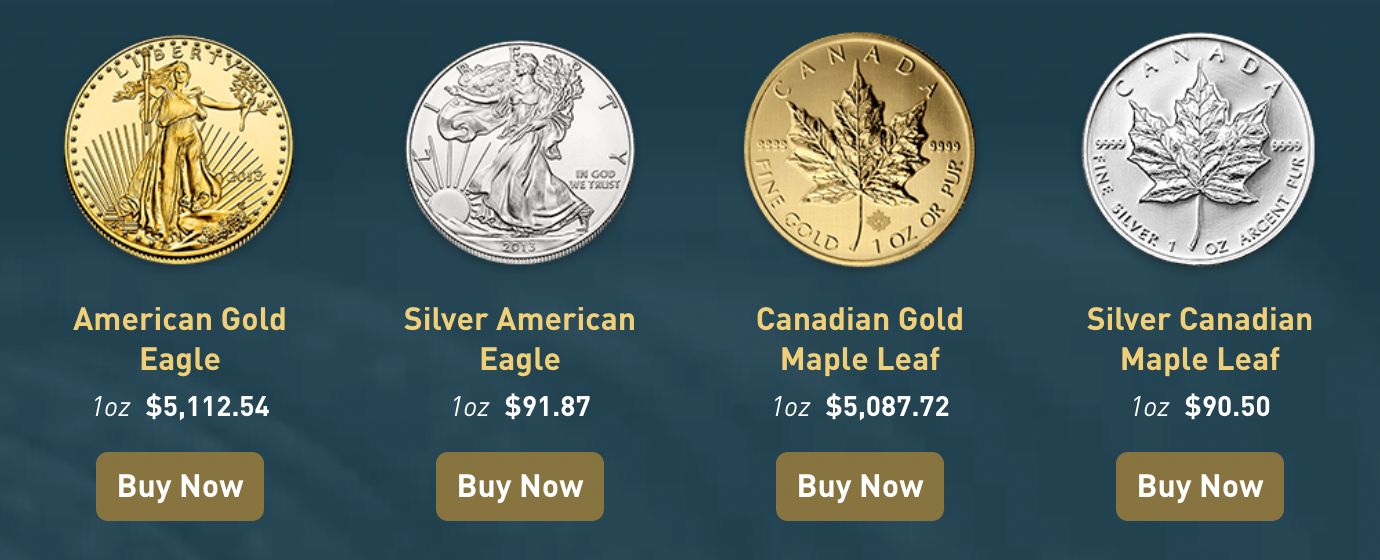
Lear sells two very different products under the same roof, and the difference matters enormously for your return.
The first is IRS-approved bullion for Gold and Silver IRAs: American Gold Eagles, Canadian Gold Maple Leafs, Australian Kangaroos, Austrian Philharmonics, American Silver Eagles, Canadian Silver Maple Leafs, Platinum American Eagles, and various bullion bars meeting IRS fineness standards. These trade at modest premiums over spot.
The second is numismatic and limited-mintage coins, sometimes called “premium” or “collectible” coins. These are not eligible for IRA accounts under IRS Publication 590-A, but Lear sells them heavily to cash buyers and, historically, mixed them into IRA pitches in ways that drew regulatory attention.
The Financial Impact: Common Bullion vs. Limited-Mintage Coins
The spread is everything. A standard one-ounce American Gold Eagle typically carries a premium of 3% to 6% above the spot price of gold.
A “limited mintage” or proof coin marketed as scarce can carry a premium of 20% to 35% above intrinsic metal value.
Why this matters in plain terms:
- Bullion coins track gold prices almost dollar for dollar
- Premium coins require gold to rise substantially just to break even on resale
- Liquidation values on numismatics often fall well below the original purchase price
- The “rare coin” pitch was the exact issue at the heart of the New York lawsuit
If you are buying metals as an inflation hedge or portfolio diversifier, common bullion does the job at a fraction of the markup.
Premium coins make sense only if you are a serious collector who understands grading from PCGS and NGC and has time to find the right buyer on the secondary market.
Storage Partners and Safeguarding Your Physical Metals
Lear partners with the Delaware Depository in Wilmington, an IRS-approved facility insured through London underwriters, including Lloyd’s syndicates.
Metals are stored in segregated or non-segregated accounts, depending on what you select, and the depository is independently audited.
Home storage is not an option for IRA metals. Anyone telling you otherwise is inviting an IRS penalty. The metals must remain in the custody of an approved depository until you take distribution, at which point they can ship to you or be liquidated for cash.
A Direct Look at Transaction Expenses, Annual Costs, and Spreads
Lear publishes its fee schedule online, which puts it ahead of competitors who refuse to disclose costs until you are on the phone with a closer.
Unpacking the Account Maintenance and Insurance Premium Structure
Here is what an IRA account actually costs:
- Minimum investment: $10,000 for an IRA
- Setup fee: $50 (waived on accounts over $10,000)
- First-year total: approximately $280 (covering setup, storage, insurance, custodial admin)
- Annual fees after year one: approximately $200, inclusive of segregated storage and insurance
For an account in the $25,000 to $50,000 range, that puts annual costs at 0.4% to 0.8% of asset value. Reasonable.
For a $10,000 account at the minimum, you are paying closer to 2% annually in flat fees, which eats noticeably into returns.
Price Transparency: What You Actually Pay Above Spot Price
The bigger cost is not the annual fee. It is the spread between what you pay for the coin and its underlying metal value.
Lear’s post-settlement disclosures now require a written agreement showing the price, the premium, and any commission before funds change hands.
The Price Advantage Guarantee promises pricing transparency at the point of sale. The 24-hour risk-free purchase policy lets you cancel without penalty.
These are real protections, but they only work if you read what you sign and question any premium above 8% to 10% on standard bullion. Compare quoted prices against live spot data from sources like Kitco or the LBMA before agreeing to anything.
The Onboarding Experience: Activating an Account and Funding Options
Opening an account is straightforward, assuming you are comfortable doing it by phone. The full application runs about 10 minutes. Accounts are typically active within 24 hours.
The process:
- Request the free investor kit or call the toll-free number
- A dedicated representative walks you through the application
- Funding is coordinated with your existing custodian
- You select specific coins or bars by phone with your rep
- Metals ship via insured transit to the Delaware Depository
If you prefer to research, click, and buy without a sales conversation, Lear is not for you. The phone requirement is a deliberate part of the business model.
Rollover Mechanics and Capital Transfer Timeline
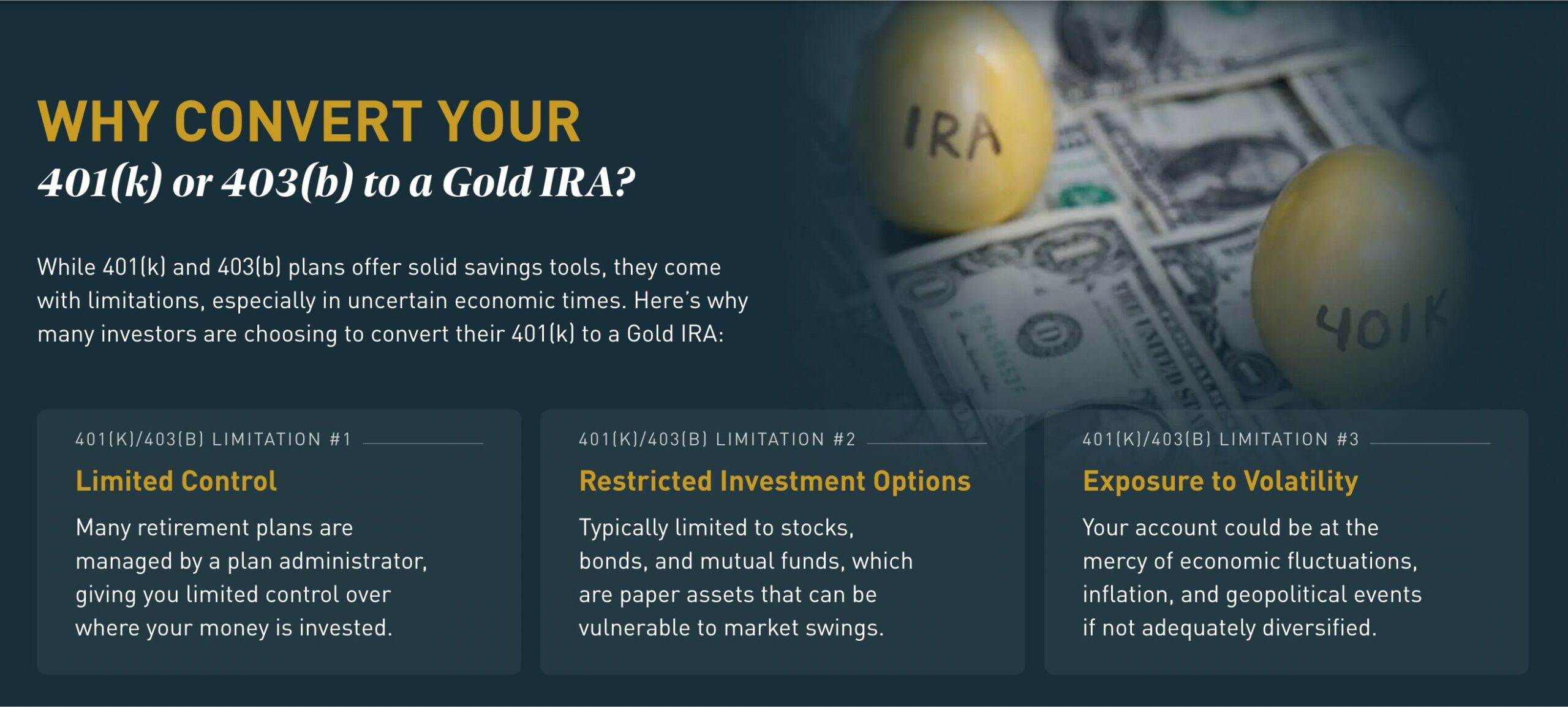
Most Lear customers fund their accounts through a rollover or trustee-to-trustee transfer from a Traditional IRA, Roth IRA, 401(k), or 403(b).
The company coordinates directly with custodians like Equity Trust or STRATA Trust Company to execute the transfer.
Timeline expectations:
- Application and account setup: 24 hours
- Custodian-to-custodian transfer: 3 to 5 business days
- Wire from new custodian to Lear: 1 to 2 business days
- Metal selection and purchase confirmation: same day
- Shipment to depository: 5 to 10 business days
The whole process, start to finish, usually takes two to three weeks. Delays almost always originate at the releasing custodian, not at Lear.
Liquidation Policies: How Easy Is It to Sell Back?
Lear runs a no-fee buyback program for existing customers. You can liquidate part or all of your holdings without paying a separate liquidation charge.
That sounds great until you read the fine print: the buyback price is whatever Lear quotes that day, and for numismatic coins it can be substantially below what you paid.
Bullion buybacks track spot prices closely. Premium coin buybacks are where customers occasionally feel burned, and where most negative recent reviews originate.
If you want reliable self-directed gold IRA providers that prioritize easy exits, stick with standard bullion holdings, and you will avoid most of the friction.
Aggregated Sentiment: Breaking Down Real Customer Feedback Across Platforms
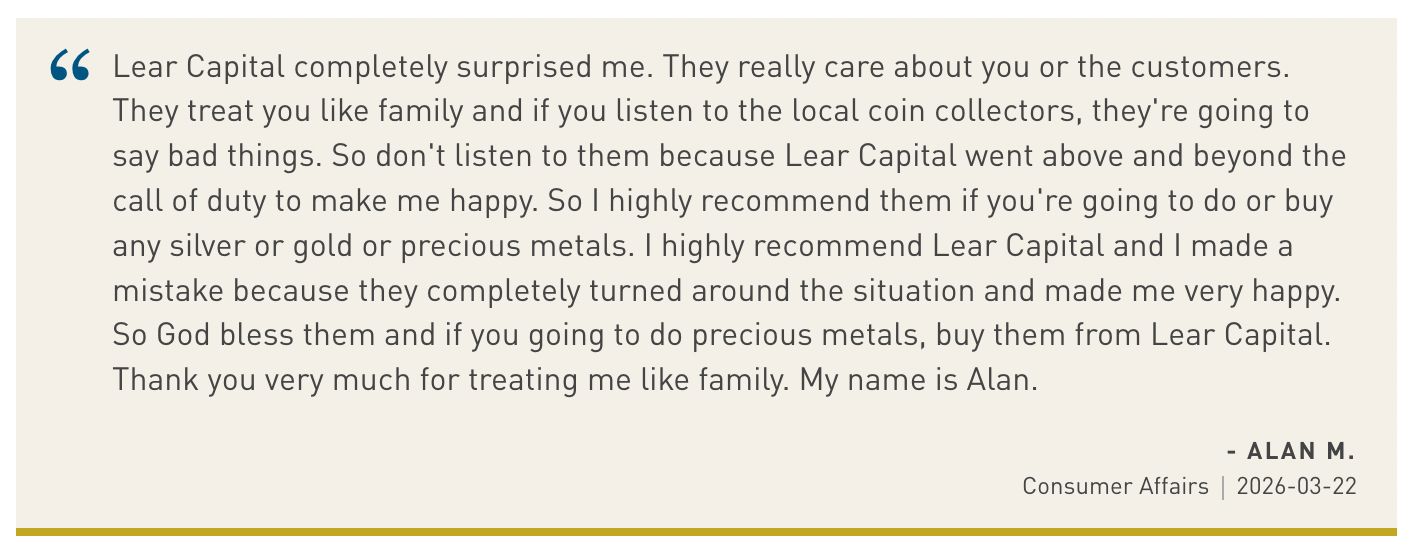
Star ratings tell you very little on their own. The texture of the complaints tells you everything.
| Platform | Rating | Review Count |
| Better Business Bureau | A+ (4.75 stars) | 128 reviews |
| Trustpilot | 4.8 / 5.0 | 3,128 reviews |
| ConsumerAffairs | 4.7 / 5.0 | 1,621 reviews |
| Google My Business | 4.7 / 5.0 | 627 reviews |
Across roughly 5,500 public reviews, Lear maintains an aggregate score well above industry average. The volume is the more interesting figure. A company with 5,500 reviews has been examined far more thoroughly than competitors operating with a few hundred testimonials.
Better Business Bureau (BBB) Standing and Dispute Resolution Rates
Lear has been BBB-accredited since 1997 and holds an A+ rating. Only 28 complaints have been closed in the last three years against a customer base of more than 100,000. That is a remarkably low complaint ratio for a high-ticket retirement product.
Most BBB complaints fall into three buckets:
- Liquidation pricing disputes, usually involving premium coins resold for less than expected
- Communication delays between Lear and third-party depositories
- Confusion about the difference between numismatic and bullion holdings
The pattern points to product mix problems rather than service failures.
Trustpilot and ConsumerAffairs: What Long-Term Clients Say
On Trustpilot and ConsumerAffairs, the praise concentrates on individual account reps. Names like Frank Parrino and Darius Steele come up repeatedly with the same descriptors: patient, informative, not pushy.
ConsumerAffairs currently lists Lear as its “Best Overall” online gold dealer based on 1,621 reviews. Long-tenure customers describe smooth rollovers, secure shipments, and clear follow-through on buybacks. Negative reviews on these platforms are rare and typically involve premium coin liquidation values.
Local Footprint and Feedback via Google My Business Listings
The Google reviews skew toward customers who walked in or made significant cash purchases. The 4.7 average across 627 reviews is consistent with the other platforms.
Local complaints tend to focus on phone wait times during high gold-price volatility, when call volume spikes.
The Trade-Offs: Major Advantages and Red Flags to Watch For
No firm is all good or all bad. Lear has identifiable strengths and identifiable weaknesses, and you should weigh both.
Why Savvy Buyers Choose This Broker
- Published fee schedule available before any sales conversation
- 24-hour cancellation window mandated by settlement terms
- Delaware Depository storage with London-syndicated insurance
- BBB A+ accreditation maintained since 1997
- Business Consumer Alliance AAA rating as a charter member
- Real-time price charts and an investor toolkit accessible online
- Account reps assigned to each customer for continuity
- High review volume across independent platforms
For a buyer who understands what they are buying, sticks to bullion, and uses the 24-hour cancellation window as a research period, Lear is a credible option.
Common Pitfalls and Buyer Grievances
- Phone-only transaction model with no fully digital checkout
- Premium coin spreads that can run 20% to 33% above metal value
- Historical pattern of regulatory action (New York, Los Angeles)
- 2022 Chapter 11 bankruptcy filing
- Liquidation values on numismatics that frequently disappoint
- Minimum $10,000 IRA threshold higher than some competitors
- Occasional administrative friction with third-party depositories
If you let a rep steer you toward “exclusive” or “limited mintage” coins inside a retirement account, you are walking into the exact trap that produced the original lawsuits. The reforms reduced that risk; they did not eliminate it.
How This Vendor Holds Up Against Top-Tier Industry Rivals
Lear operates in a crowded field that includes Augusta Precious Metals, Birch Gold Group, Goldco, iTrustCapital, and newer entrants like GoldenCrest Metals.
Fee Comparison Against Lower-Cost Providers
iTrustCapital and similar fintech-first platforms charge lower flat annual fees (often under $100) and use thinner bullion spreads. They also offer fewer products, no premium coin sales, and limited phone support.
Lear sits in the middle on fees. Its $200 annual maintenance is higher than iTrustCapital but lower than several premium-positioned competitors charging $250 or more. The real cost difference shows up in spreads, not fees.
Transparency Metrics Versus Premium Competitors
Augusta Precious Metals and Goldco have built reputations on transparency-first marketing. They do not publish full fee schedules online either, but they have no settlement history comparable to Lear’s.
Where Lear arguably leads now is in mandated disclosure procedures. The settlement terms forced a level of written documentation that some competitors still avoid.
A buyer who reads the paperwork carefully may actually get more clarity at Lear than at firms operating without regulatory oversight breathing down their neck.
Frequently Asked Questions
Q1. What Is the Exact Minimum Investment Amount Required by Lear Capital?
The IRA minimum is $10,000. Direct cash purchases of bullion can be made at lower amounts, but the self-directed IRA structure requires at least $10,000 to open. Accounts above that threshold qualify for the waived $50 setup fee.
Q2. How Does Lear Capital Handle the Buyback Process if I Want to Liquidate My Assets?
Lear runs a no-fee buyback program for existing customers. You call your account rep, request a quote, and either accept or decline.
Standard bullion buybacks track spot prices closely. Premium and numismatic coin buybacks can come in well below your original purchase price, which is the source of most liquidation complaints.
Q3. Did Lear Capital Resolve Its Recent Attorney General Lawsuits?
Yes. The $6 million New York settlement was finalized in January 2022, and the $2.75 million Los Angeles matter was also resolved.
Lear filed Chapter 11 later that year and emerged with mandated disclosure procedures, a 24-hour cancellation window, and a formal complaint tracking system in place.
Q4. Can I Track My Precious Metals Account Performance Online in Real-Time?
Lear provides a customer dashboard with real-time spot price charts, price alert notifications, and account statements. Holdings are visible online.
Purchase and liquidation transactions, though, still require a phone call with your assigned rep to confirm pricing.
Q5. Why Does Lear Capital Emphasize Premium or Limited-Mintage Coins Over Standard Bullion?
Spread margins. Premium coins carry markups of 20% to 33% over metal value, compared to 3% to 6% for standard bullion. The higher spread produces higher revenue per transaction.
The New York Attorney General’s case centered on exactly this dynamic, and current disclosure rules require Lear to spell out the premium in writing. If a rep steers you toward premium coins inside an IRA, push back hard.
The Bottom Line: Should You Trust This Broker With Your Retirement?
Lear Capital is legitimate. It is also a company with a documented history of aggressive sales practices that required state intervention to fix. Both statements are factually correct, and any honest review has to hold them together.
For a retirement investor who:
- Sticks exclusively to IRS-approved bullion coins and bars
- Uses the 24-hour cancellation window as a hard research period
- Verifies every quoted premium against live spot prices
- Refuses any pitch toward numismatic or “limited mintage” coins
- Reads the written price disclosure before authorizing a wire
Lear is a workable choice with credible storage, published fees, and 27 years of operating history.
For an investor who wants a frictionless digital experience, the lowest possible spreads, or a firm with no regulatory scars at all, look elsewhere.
The market has options, and Lear’s history means you should hold it to a higher disclosure standard than its competitors, not a lower one.
The 24-hour cancellation window is not a marketing perk. It is your single most important protection. Use it.
Goldco Precious Metals
- Goldco Surpasses $2 Billion in Precious Metals Placements
- Over 6,000 Five-Star Ratings on BBB, Trustpilot, and ConsumerAffairs
- Seven-Time Winer on the Inc. 5000 List