
Disclosure: “The owners of this website may be paid to recommend Goldco or other companies. The content on this website, including any positive reviews of Goldco and other reviews, may not be neutral or independent.” Learn More
If you’ve watched cable news in the last decade, you’ve probably seen William Devane standing on a golf course warning you about the national debt. That commercial is a Rosland Capital review in itself, a 30-second pitch aimed at retirement savers worried about inflation eating their nest egg.
I dug into this company because a family member of mine kept asking if those Devane commercials were legitimate or just clever marketing aimed at scared retirees. What I found is a real, registered firm with some genuine strengths and a few sharp edges every cautious investor should know about before picking up the phone.
The Santa Monica Standard: Marin Aleksov and Rosland’s Origins
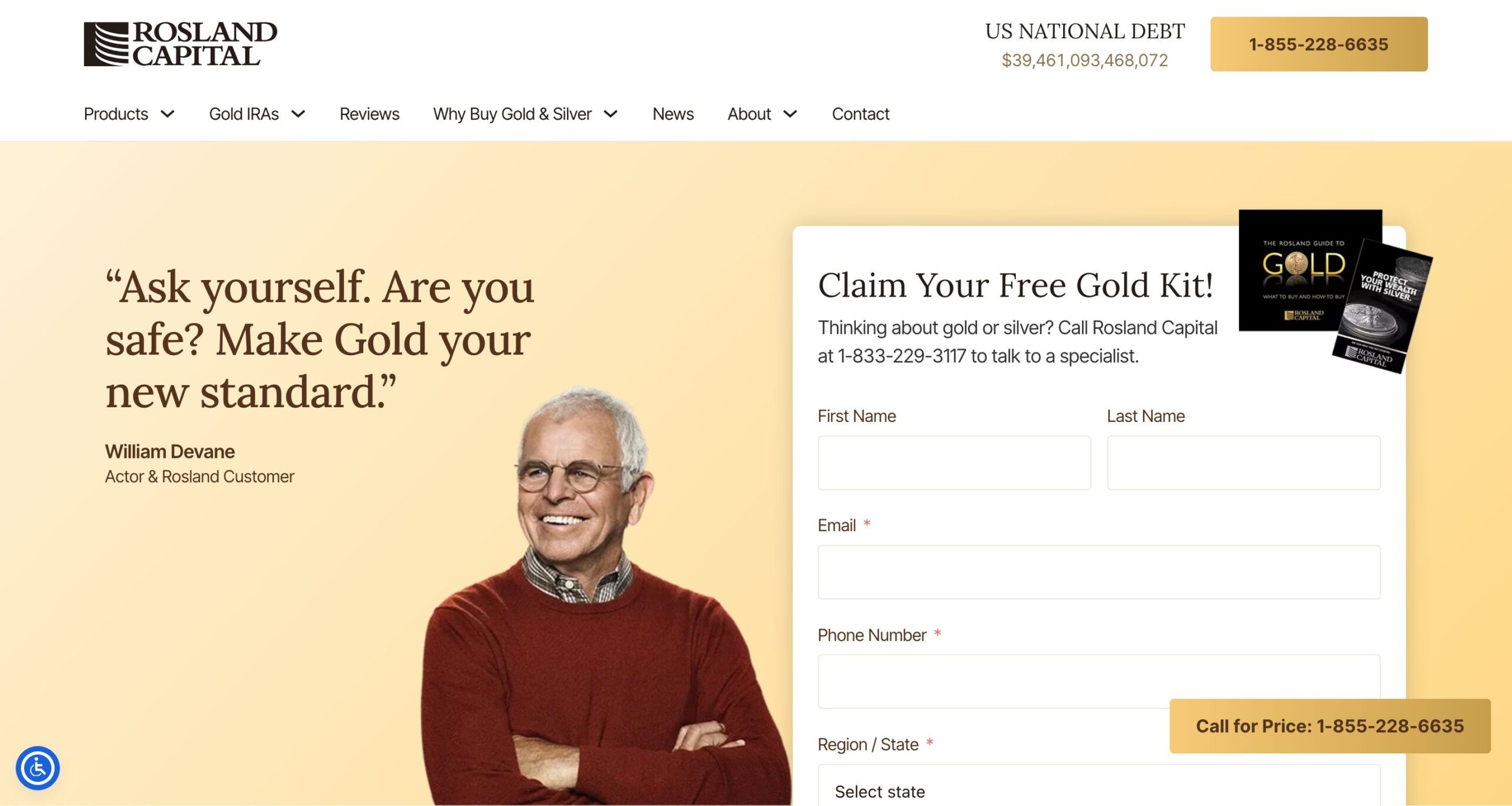
Before you wire a dollar to any precious metals dealer, you should know who runs the shop and how long they’ve been doing it. Rosland Capital has a fairly transparent corporate backstory compared to many competitors that pop up and vanish within a single market cycle.
Established in 2008
Rosland Capital opened its doors in Los Angeles in 2008, right as the financial crisis was teaching Americans painful lessons about counterparty risk. The company sits on Wilshire Boulevard and has grown into an operation with around 73 employees and satellite offices in London, Munich, Paris, Stockholm, and Hong Kong.
That kind of geographic spread matters. Most fly-by-night gold sellers operate out of a single rented suite. Rosland has been around for over 16 years, which puts it in the upper tier of operational longevity for this sector.
The U.S. Mint itself recognizes the importance of dealing with established firms, and the U.S. Mint’s bullion dealer locator is a useful cross-reference for any company you research.
A Traditional Brokerage Model
Rosland does not run like a Silicon Valley startup. There’s no slick mobile app, no live dashboard showing your gold balance in real time, and no chatbot answering questions at midnight. The entire model runs on phone calls between you and a dedicated representative.
For some readers, that’s a feature. For others, it’s a deal-breaker. If you grew up calling your stockbroker on a landline, this setup will feel familiar. If you manage your Roth IRA from your phone during your lunch break, the friction may frustrate you.
The Face of the Brand: William Devane’s “No Gimmicks” TV Campaigns
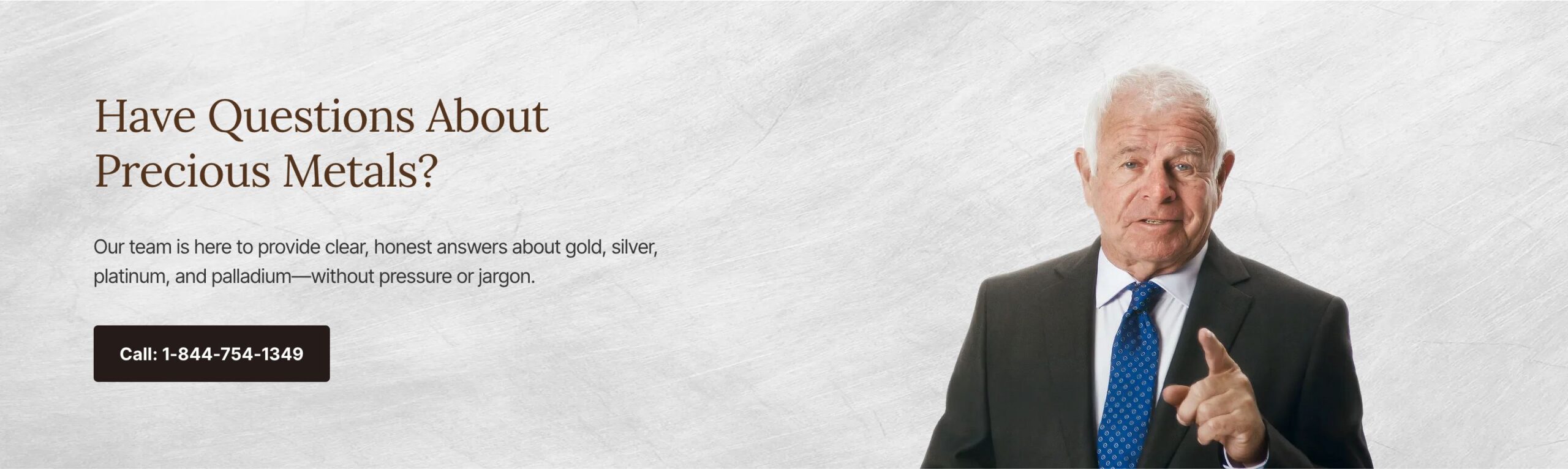
Rosland spends serious money on broadcast advertising, and the face attached to that spending shapes how millions of Americans perceive the company.
Why the Commercials Work
William Devane has been the public voice of Rosland for over a decade. He shows up in commercials on Fox News and other cable outlets dressed in flannel, often near a horse or a tractor, talking plainly about why physical gold matters during inflationary periods.
The advertising works because Devane reads as a believable American grandfather rather than a Wall Street salesman. He doesn’t pitch returns or yields. He talks about preservation, which is exactly what the target audience, pre-retirees aged 55 to 75, wants to hear.
The Federal Reserve’s own data on inflation gives that pitch real weight, since purchasing power erosion is a documented fact, not a marketing invention.
The Constitutional Angle
Rosland’s messaging frequently references Article 1, Section 10 of the U.S. Constitution, which states that no State shall make anything but gold and silver coin a tender in payment of debts. The implication is that paper currency is a modern departure from a constitutional standard.
This framing connects with audiences who distrust the Federal Reserve and feel uneasy about national debt levels. Whether you agree with the political subtext or not, the marketing is precise about who it wants to reach. It’s not aimed at index-fund believers or crypto traders.
The Good and the Bad: A Balanced Assessment (Pros and Cons)
Every gold dealer has trade-offs. Rosland is no exception, and pretending otherwise would do you a disservice.
The Positive Angles
Here’s what genuinely works in their favor:
- Operational track record: Over 16 years in business with consistent BBB accreditation.
- Exclusive product lines: Licensed coin partnerships with Formula 1, PGA Tour, the International Olympic Committee, and the British Museum.
- Low cash-purchase minimum: A $2,500 entry point for direct purchases is more accessible than many competitors.
- Buyback program: They will repurchase metals they originally sold to you, which provides at least one exit option.
- Strong philanthropic ties: Long-running partnerships with the American Red Cross and Fisher House Foundation.
These advantages add up to a recognizable, established brand with real institutional partnerships that smaller dealers cannot match.
The Critical Issues
Now the parts that should give you pause:
- No website pricing: Every quote requires a phone call to a representative.
- High markups on specialty coins: Premium and numismatic items can carry markups of 30% or higher above spot.
- Limited digital tools: No mobile app, no real-time portfolio dashboard, no online account opening.
- Phone-only onboarding: Account setup must run through a sales representative.
- Buyback delays reported: Some customers report waiting longer than the stated 60-day window for liquidation payments.
You can verify customer-reported issues directly through the Better Business Bureau’s complaint database, which logs both grievances and company responses publicly.
Exclusive Licensing: The Formula 1 and PGA TOUR Coin Collections
This is where Rosland separates itself from the bullion-only crowd, and where the most caution is required.
A Collector’s Dream
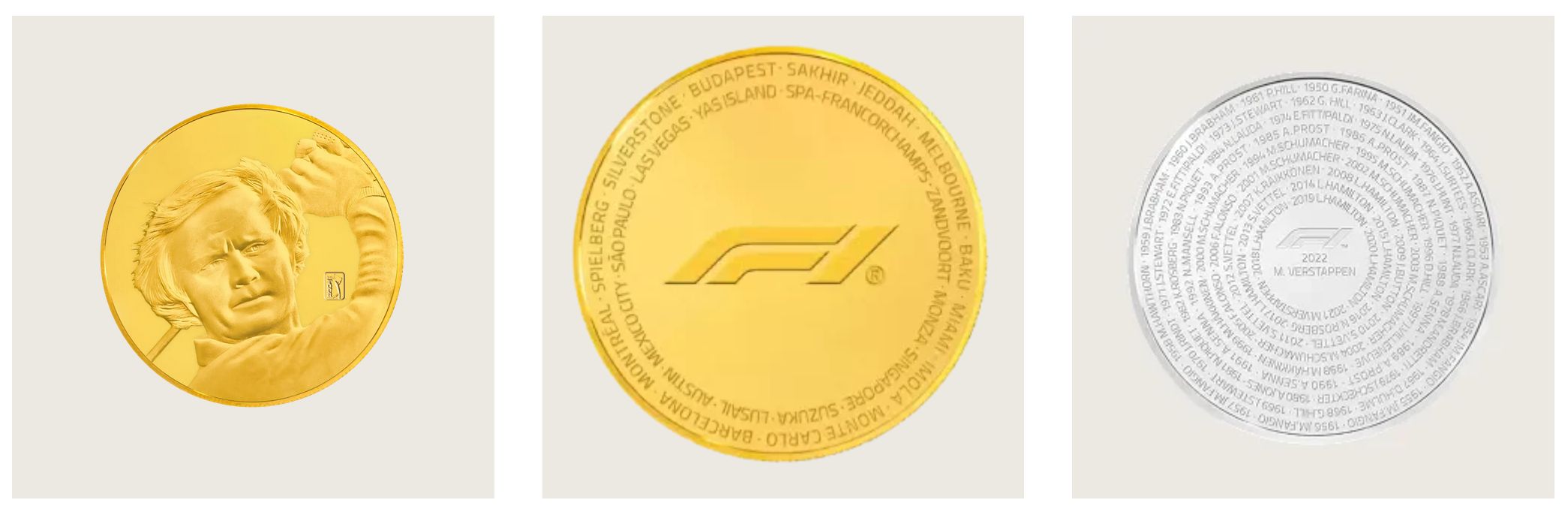
Rosland holds exclusive distribution rights for officially licensed Formula 1 gold and silver coins, PGA Tour commemorative coins featuring legends like Jack Nicklaus and Arnold Palmer, and a British Museum Masterpiece Collection that includes pieces based on artifacts like the Lewis Chessmen.
These are not generic bullion rounds. They are limited-mintage proofs with serialized packaging and certificates of authenticity.
For a collector who loves motorsport or golf, the appeal is obvious. Owning a gold coin commemorating Michael Schumacher or featuring an official Grand Prix logo carries cultural value beyond the gold content itself.
The Big Caveat
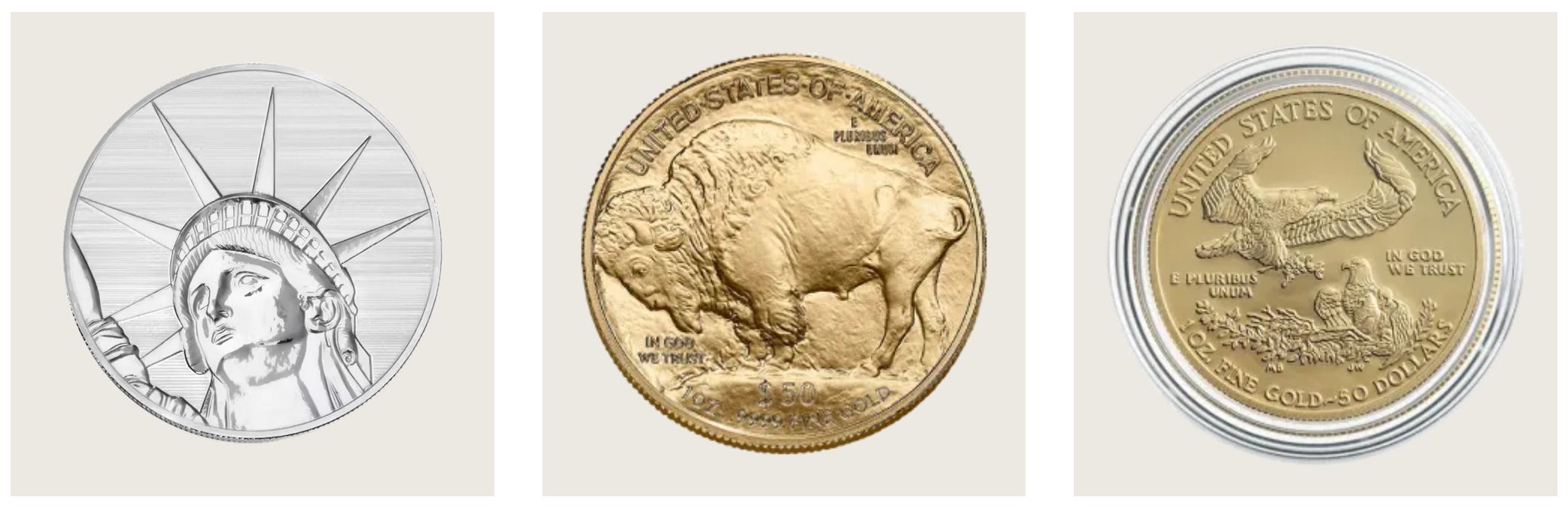
Here’s where I have to be blunt with you. These specialty coins are generally not eligible for a Gold IRA.
The IRS draws a hard line under Internal Revenue Code Section 408(m), which prohibits “collectibles” from tax-advantaged retirement accounts and requires gold to meet a minimum fineness of 99.5%. You can read the IRS rules on IRA-permitted investments directly to confirm this.
If a representative steers you toward a high-markup commemorative coin for your retirement rollover, that should raise an immediate red flag. Specialty coins are for hobbyists paying cash. Standard bullion is for your IRA.
The $10,000 Baseline: Rosland Capital Account Requirements
Rosland operates on two different financial thresholds depending on what you want to do. For a retirement account rollover or transfer, the practical minimum sits around $10,000. Representatives may recommend higher amounts to make the annual fees worth absorbing, but $10,000 gets you in the door for a Gold IRA setup.
For a direct cash purchase of physical metals shipped to your home, the minimum drops to $2,500. This is one of the lower entry points in the industry, and it makes Rosland accessible to buyers who want to test the waters without committing a large portion of their savings.
Your existing 401(k) or Traditional IRA balance will dictate whether the rollover route makes sense. If you have less than $10,000 in retirement savings to move, you’re better off with a smaller dealer or simply buying coins outright.
The Hidden Costs: Spreads, Markups, and Fee Transparency
This is the section where I’d encourage you to take notes. Fee structures in the gold industry are where most investors get blindsided.
The Equity Institutional Partnership
Rosland coordinates with Equity Institutional, a division of Equity Trust Company, as the primary third-party IRA custodian. Equity Trust is a well-known administrator in the self-directed IRA space and oversees billions in client assets.
Here’s the fee breakdown you should expect:
- Account setup fee: Roughly $50, one-time.
- Annual maintenance and storage fee: Approximately $225 or more, depending on metal volume and depository.
- Storage location: Typically the Delaware Depository or Brink’s Global Services, both IRS-approved facilities.
These fees are standard for the industry, neither aggressive nor unusually cheap. The Delaware Depository operates under strict insurance and audit protocols, which provides legitimate security for IRA-held assets.
The 4% to 33% Spread Reality
Now the part that requires real attention. Rosland’s commission markups vary widely based on what you buy:
- Standard bullion bars and government-issued coins: Roughly 4% to 15% above spot price.
- Premium and proof coins: Often 20% to 33%, sometimes higher.
- Exclusive licensed coins (F1, PGA, British Museum): Markups can exceed 33% due to limited mintage and licensing costs.
The math matters here. If you pay a 30% markup on a coin, the underlying gold price must rise 30% before you break even on the metal value alone. That can take years, and the “collectible premium” you paid may or may not hold up at resale.
Always demand a written quote that shows the spot price, the markup, and the final per-ounce cost before agreeing to any purchase.
The Paper Statement Upcharge
A small but worth-mentioning detail: Rosland charges roughly $60 per year for paper mail statements. Opt for digital delivery and you keep that $60 in your pocket. It’s a minor fee, but it’s the kind of small leak that adds up over a 20-year retirement timeline.
The Phone-Line Funnel: What to Expect When Setting Up an Account
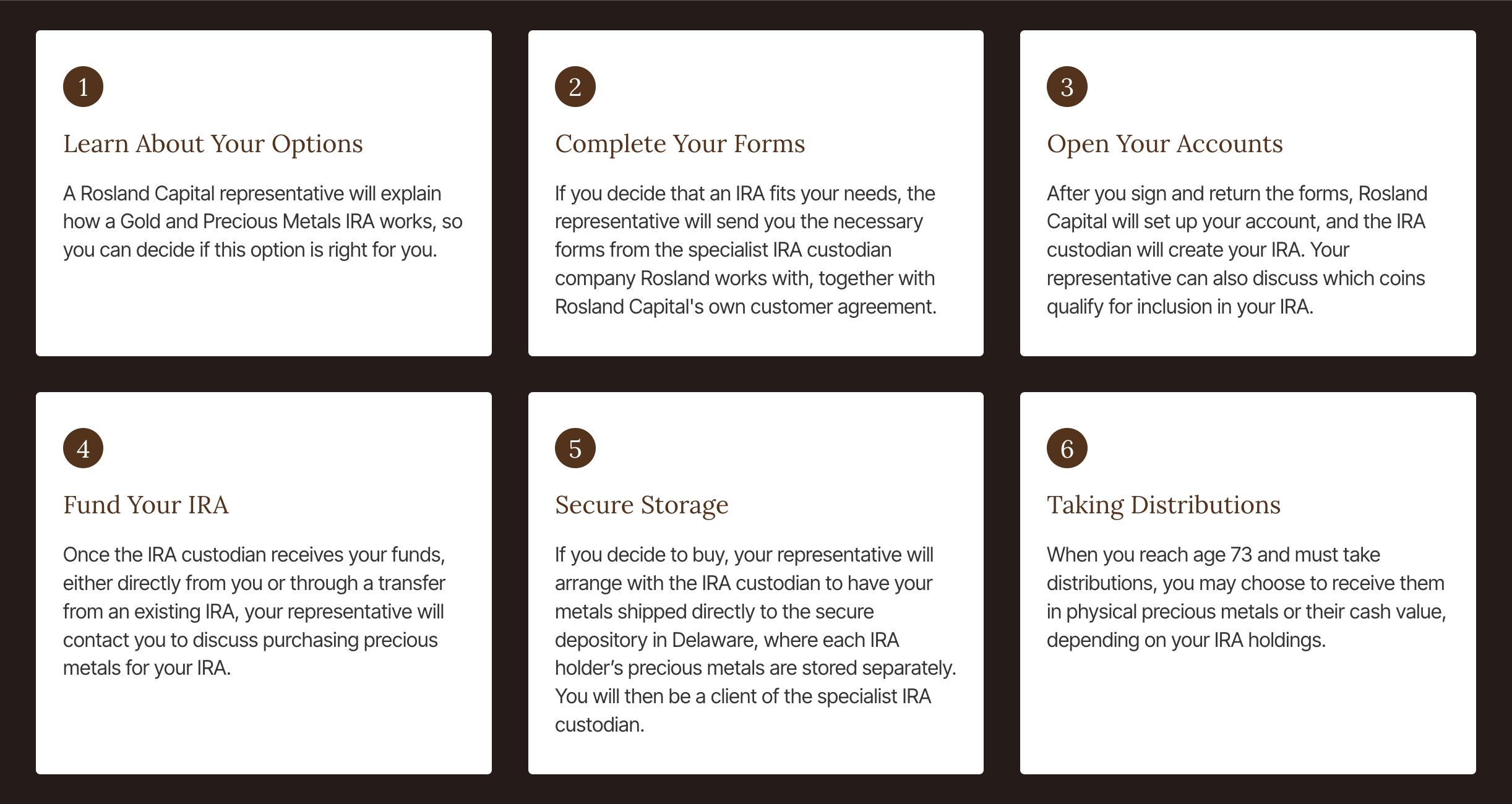
The Rosland onboarding process is structured, repetitive across customer accounts, and entirely human-driven.
Step 1: The Initial Inquiry Call
After you request the Free Gold Kit (typically a 24-page guide plus DVD), a representative calls you within a day or two.
The first call is mostly discovery. They want to know your age, retirement timeline, current account balances, and goals. Expect questions about your existing 401(k), IRA, or 403(b) accounts.
This call is also where the sales orientation begins. A skilled representative will educate you on rollover mechanics and IRS rules. A pushy one will steer you toward high-markup specialty coins. You can tell the difference within five minutes.
Step 2: The Document Sign-Off
Once you decide to proceed, Rosland sends a Customer Agreement and disclosure brochure. Read every page.
The agreement spells out that Rosland does not provide tax, legal, or investment advice, that markups apply, and that buyback prices depend on market conditions at the time of sale.
You’ll also complete paperwork to open your self-directed IRA with Equity Institutional. This is standard custodial onboarding and takes about a week to process.
Step 3: Liquidating and Shipping
For an IRA rollover, your existing custodian wires funds to Equity Institutional. The transfer typically takes 7 to 14 business days.
Once funds clear, Rosland executes the purchase, and the metals ship directly to the Delaware Depository or your chosen vault.
You never physically touch the metals if they’re in an IRA, since IRS home storage rules prohibit personal possession of IRA-held precious metals.
Reading Between the Lines: Polarized Trustpilot and BBB Feedback
Third-party reviews tell a more honest story than any company website ever will.
| Platform | Rating | Review Count |
| Better Business Bureau (BBB) | A+ (4.36 stars) | 274 reviews |
| Trustpilot | 4.3/5.0 (Great) | 319 reviews |
| Google Reviews | 4.8/5.0 | 145 reviews |
| Business Consumer Alliance | AAA | N/A |
These numbers are strong by industry standards, but the spread between satisfied and dissatisfied customers tells a more useful story than the average.
The 5-Star Success Stories
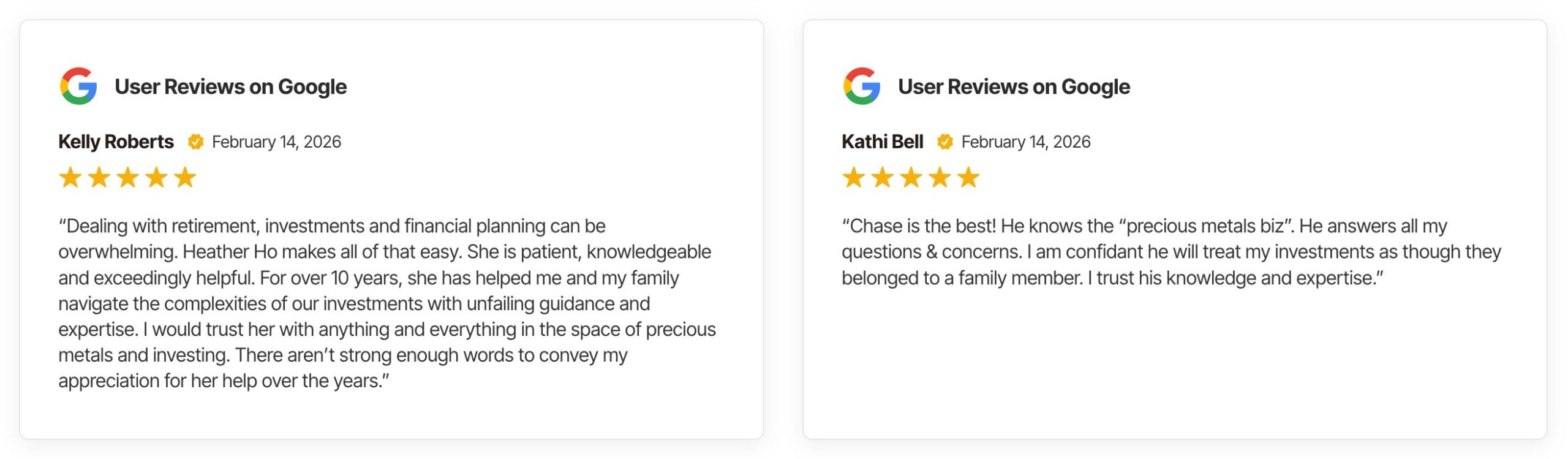
Positive reviews repeatedly mention specific representatives by name, which suggests Rosland trains its sales force well on relationship building. Satisfied buyers praise:
- Patient, no-pressure education from individual reps.
- Clear walkthroughs of the rollover process.
- Reliable shipping for direct cash purchases.
- Smooth coordination with Equity Institutional for IRA setups.
The pattern here suggests that when you get a good representative, the experience is genuinely positive.
Analyzing the 1-Star Grievances
The complaints follow a consistent pattern across BBB and Trustpilot. The main themes include:
- Buyback payment delays beyond the stated 60-day window, sometimes stretching to 90 or 120 days.
- High-markup specialty coins sold to retirees who later realize they paid significantly above spot.
- Difficulty reaching representatives after the initial sale closes.
- Liquidation values that fall well below the original purchase price due to the premium paid upfront.
These are real friction points, not isolated grievances. If you proceed with Rosland, stick to standard bullion for any IRA holdings and treat specialty coins as long-term cash purchases you don’t expect to flip quickly.
For comparison shopping among trusted gold retirement account firms, cross-reference reviews on multiple platforms rather than relying on a single source.
Should Rosland Capital Handle Your Wealth?

Whether Rosland fits your situation depends almost entirely on what kind of investor you are.
Who Fits This Model Best
Rosland makes sense for:
- Traditional investors who prefer phone-based service over digital interfaces.
- Pre-retirees aged 55+ who value relationship-driven sales support.
- Coin collectors who want access to F1, PGA, or British Museum licensed products.
- Buyers who appreciate brand recognition and a long operational history.
If you watch cable news, prefer paper documents, and want a dedicated human to call when you have questions, this firm was built for you.
Who Should Walk Away
Rosland does not fit:
- Tech-savvy investors who want real-time online portfolio tracking.
- Cost-focused buyers hunting for the lowest possible markup on bulk bullion.
- Younger investors building a position over decades through small monthly purchases.
- Anyone uncomfortable with phone-only transactions and paper-heavy onboarding.
For digital-first investors, dealers like JM Bullion or APMEX offer transparent online pricing that Rosland’s model simply doesn’t match.
Specific Questions Answered (FAQ)
Q1. Can I Put the Rosland Capital Formula 1 or PGA Tour Coins into My Gold IRA?
Generally, no. The IRS requires IRA-eligible gold to meet a minimum fineness of 99.5% and explicitly bans collectibles under Section 408(m) of the Internal Revenue Code.
The F1 and PGA coins carry markups based on limited mintage and sports licensing rather than raw metal weight, so they don’t make financial sense for retirement accounts even if some technically meet purity standards. They are meant for cash-paying hobbyists, not tax-deferred savings.
Q2. Why Are There No Coin Prices Listed on the Rosland Capital Website?
Rosland operates as a traditional phone-brokerage desk. Precious metal markets move constantly throughout the trading day, and the spreads vary widely between standard bullion and limited-edition coins.
The company requires a live conversation with a representative to lock in a spot quote and confirm availability. This model favors relationship selling over instant transactions.
Q3. Who Actually Holds My Physical Metals if I Use Rosland?
Rosland Capital does not store gold in their corporate office. For retirement accounts, metals go to independent IRS-approved storage providers such as the Delaware Depository or Brink’s Global Services.
Your account custodian, typically Equity Institutional, oversees the tracking and reporting. You can verify storage facility credentials directly through the Commodity Futures Trading Commission for additional peace of mind.
Q4. What Is the Main Reason Behind the Negative Reviews for Rosland Capital?
The most common complaints involve pricing surprises and slower-than-expected liquidation. The sales team heavily promotes premium and numismatic coins, so some buyers later realize they paid a significant markup over the raw gold spot price.
That makes breaking even harder and takes longer. Slower buyback payment turnaround times have also been flagged by multiple users on Trustpilot and BBB.
Q5. Is Marin Aleksov Still Running the Company?
Yes. Marin Aleksov founded Rosland Capital in 2008 and remains the CEO. He appears regularly on financial media discussing precious metals markets, which gives the company a more visible corporate leadership presence than some quieter competitors. His public profile adds an accountability layer that smaller, anonymous dealers can’t offer.
Conclusion
Rosland Capital is a legitimate, long-established precious metals firm with real institutional partnerships and a recognizable brand. It works well for older, phone-comfortable investors who value relationship-driven service and don’t mind paying for it.
The risks come from high markups on specialty coins, slow buyback payments, and a complete absence of digital tools. Stick to standard bullion for any IRA, demand written price quotes before purchasing, and read the Customer Agreement line by line. Do that, and Rosland can be a reasonable choice. Skip those steps, and you may regret it.
Goldco Precious Metals
- Goldco Surpasses $2 Billion in Precious Metals Placements
- Over 6,000 Five-Star Ratings on BBB, Trustpilot, and ConsumerAffairs
- Seven-Time Winer on the Inc. 5000 List