
Disclosure: “The owners of this website may be paid to recommend Goldco or other companies. The content on this website, including any positive reviews of Goldco and other reviews, may not be neutral or independent.” Learn More
Most Advantage Gold review write-ups read like recycled affiliate brochures, which is exactly why I spent a few days pulling apart this Los Angeles firm’s operational record, custodian relationships, and consumer complaint files.
The question isn’t whether the company exists or processes rollovers competently. The question is what happens to your capital between the day you sign the paperwork and the day you sell metal back to fund a required distribution. That gap is where investors win or lose money, and that’s where I focused.
Origins of Advantage Gold: The Founders and Their Intentions
Advantage Gold was registered in 2014 and operates out of two offices: a Wilshire Boulevard headquarters in Los Angeles and a secondary location on Burnet Road in Austin.
The firm sells physical gold, silver, platinum, and palladium for both direct cash purchase and placement inside self-directed retirement accounts.
Behind the Scenes: The Trading Principles of Kirill Zagalsky and Partners

The leadership trio brings a commodities pedigree that shapes how the firm talks to prospects. Kirill Zagalsky worked as a licensed commodities broker dealing in energy and metals futures before pivoting fully to physical bullion in 2011.
Adam Baratta wrote The Great Devaluation and More Gold, Less Federal Reserve, two books that read as monetary policy warnings aimed squarely at retirees who fear dollar erosion. Larry Levin rounds out the bench with a futures trading background.
The combined effect: sales conversations lean heavily on macroeconomic anxiety. Federal Reserve policy, sovereign debt levels, currency debasement.
Whether you agree with the thesis or not, recognize the framing. You’re being sold a hedge against a specific worldview, and the markup you pay reflects how convinced you are that the worldview is correct.
Membership in the Industry Council for Tangible Assets and the American Numismatic Association gives the firm trade-group standing, though neither body functions as a regulator.
The Educational Focus: A Strategy Designed for Less Experienced Account Holders

Advantage Gold pushes a free “Ultimate Gold IRA Investment Guide” through every advertising channel, and reps spend extended phone time walking first-timers through rollover mechanics.
On paper, this sounds generous. In practice, education-heavy sales models do two things at once.
- They build trust through patient explanation of mechanics you could find on the IRS website for free.
- They create rapport that makes it harder for a buyer to push back when the rep steers them toward premium proof coins carrying spreads two to four times higher than standard bullion.
That second outcome is where the educational pitch turns from service into sales lubrication.
A buyer who feels personally guided rarely interrogates the price difference between an American Gold Eagle bullion coin and its proof version.
The former trades close to spot. The latter carries a numismatic premium the buyer absorbs the moment ownership transfers.
The Administrative Pipeline: Evaluating Custodial and Vault Partners
Advantage Gold doesn’t custody anything. The firm sells metal, then hands the paperwork to third-party administrators and depositories that hold the assets under IRS rules.
Institutional Alliances: Why They Route Assets to STRATA and Equity Trust
The two primary custodians are STRATA Trust Company (a subsidiary of Horizon Bank, based in Waco, Texas) and Equity Trust Company (headquartered in Westlake, Ohio).
Both are IRS-approved non-bank trustees authorized under Internal Revenue Code Section 408 to administer self-directed accounts holding alternative assets.
What this means for the account holder:
- The custodian, not Advantage Gold, mails your annual statements.
- The custodian charges its own setup fee, annual maintenance fee, and transaction processing fee separate from anything Advantage Gold collects on the metal sale.
- If you have a dispute over recordkeeping or asset valuation on a statement, you contact the custodian directly, not the broker that sold you the coins.
Custodian fees typically run between $80 and $225 annually depending on whether the schedule is flat or tiered against account value.
Advantage Gold representatives are sometimes vague on which structure applies until paperwork is in motion, which is worth pinning down before you fund.
Secured Vaulting: Safe Storage Through Brink’s and Delaware Depository
Physical bullion goes to one of two depositories: Brink’s Global Services or Delaware Depository in Wilmington. Both carry Lloyd’s of London insurance and offer segregated or non-segregated storage.
Segregated storage costs more but keeps your specific coins identified as yours, rather than commingled with other clients’ identical inventory.
For investors who want to take in-kind distributions later (receiving the exact coins they purchased rather than cash equivalent), segregated storage matters.
For investors who only care about market value at sale, non-segregated is cheaper and functionally identical.
What Investors Pay at Advantage Gold: Fees, Spreads, and Margins
The firm publishes no price sheet. None. Every quote happens by phone, which is the single biggest operational red flag in the entire Advantage Gold business model.
The Threshold for Entry: Capital Requirements for Funding
The advertised minimum to open an IRA with Advantage Gold sits around $25,000, though reps have flexibility on that floor depending on rollover size and product mix. Promotional tiers reward larger accounts:
- $10,000 invested triggers around $100 in free silver.
- Mid-six-figure accounts unlock several thousand dollars in bonus metals.
- $1 million-plus accounts can receive up to $10,000 in complimentary bullion.
Free metal promotions sound generous until you calculate them as a percentage of the markup you paid. A $100,000 account paying a 7% spread funded $7,000 of margin. A few hundred dollars in free silver is a rounding error against that commission.
Missing Numbers: The Impact of Withholding Online Catalog Pricing
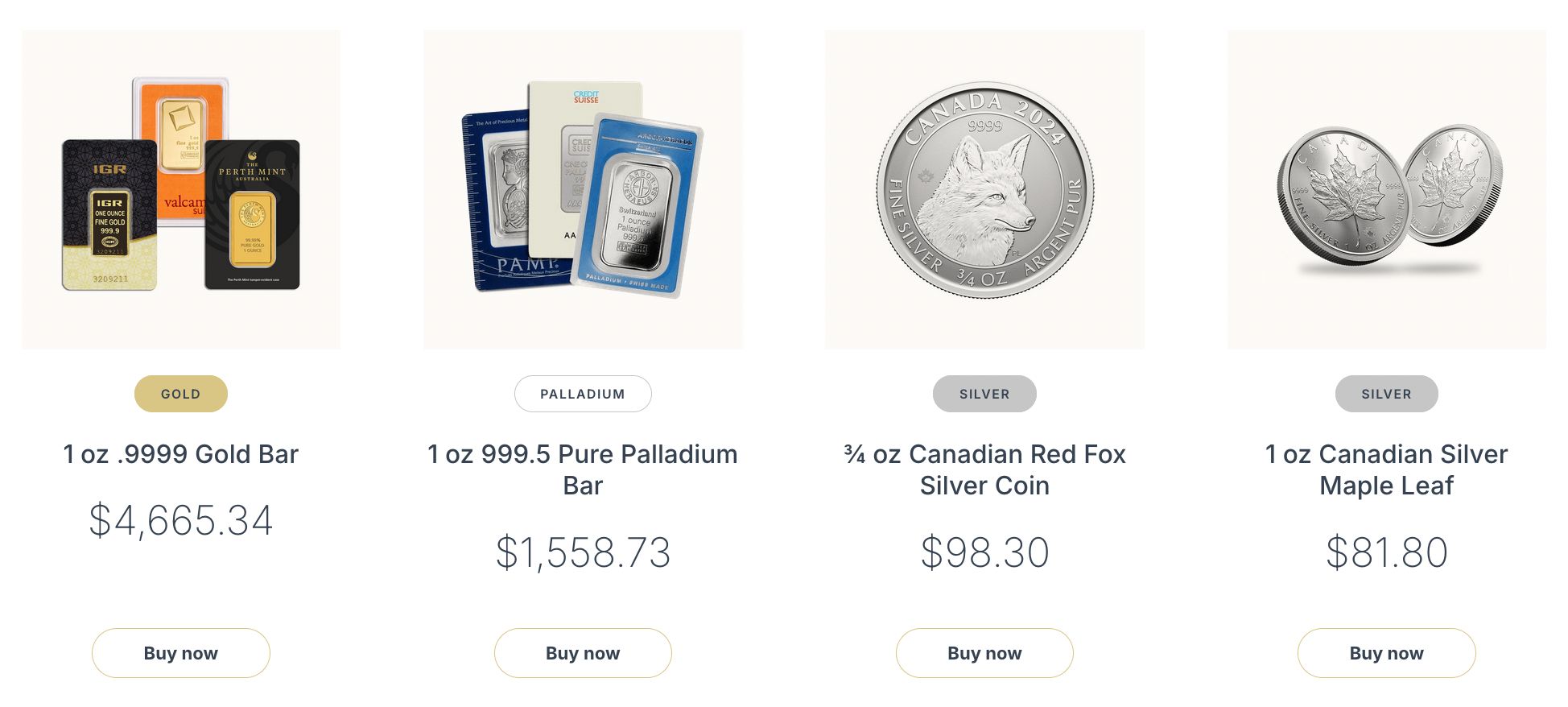
Standard bullion coins from reputable competitors sell with markups in the 2% to 5% range. Premium and proof coins commonly carry spreads of 15% to 35% over spot.
Advantage Gold’s product mix leans toward the higher-margin end of that spectrum, particularly with newer buyers.
What this looks like in practice: a buyer who funds a $50,000 IRA and is steered into proof American Eagles may see their account valued at $40,000 to $42,000 the moment the custodian marks holdings to spot.
That gap isn’t theft or fraud. It’s the spread the firm earned, disclosed in the fine print, and rarely emphasized during the warm consultation phase.
Before you sign anything, request the following in writing:
- The exact product name, mint, year, and quantity for every coin or bar being purchased.
- The per-unit price you are paying.
- The current spot price reference at the moment of quote.
- The custodian’s full fee schedule including setup, annual, and termination fees.
A firm operating in good faith will produce this list without resistance. Hesitation is information.
Verified Performance: Scoring the Firm Across Independent Registries

Public review scores look strong on aggregate, but the texture of the complaints matters more than the averages.
| Review Platform | Rating | Review Volume |
| Better Business Bureau | A+ (4.2 stars) | ~15 reviews |
| Trustpilot | 4.8/5.0 | 1,903 reviews |
| ConsumerAffairs | 4.8/5.0 | 477 reviews |
| Google My Business | 4.9/5.0 | 985 reviews |
The volume disparity is worth a closer look. Trustpilot and Google carry thousands of glowing reviews.
The BBB profile, where complaint resolution carries legal weight, shows a much smaller sample with a noticeably lower average.
That gap suggests the firm actively cultivates positive reviews on consumer-facing platforms while complaints filter to the BBB only when the issue is serious enough to warrant formal escalation.
Analyzing Better Business Bureau (BBB) A+ Files and Dispute Resolutions
The BBB profile shows accreditation since 2014 and an A+ rating. The complaints that do appear cluster around a consistent theme: buyers discovering after purchase that their account value sits well below the price they paid, driven by premium coin spreads they didn’t fully grasp during the sales call.
Resolutions in those cases tend to involve partial buyback accommodations or the firm pointing to disclosure documents the buyer signed. The legal position holds. The customer service position is murkier.
Trustpilot and ConsumerAffairs Profiles: Patterns in Long-Term Satisfaction
Trustpilot reviews skew overwhelmingly positive, with most five-star entries citing specific account executives by first name. Common praise:
- Patience during the initial consultation.
- Willingness to coordinate with the prior 401(k) administrator for rollover paperwork.
- Quick callbacks and accessible communication during business hours.
ConsumerAffairs shows a similar pattern with longer-form testimonials. The criticisms that appear, while infrequent, line up with the BBB pattern: clients who felt the metals they received didn’t match the value they expected once independent valuation was applied.
Assessing Regional Sentiments via Google My Business Listings
Google reviews for the Austin location run nearly perfect, with detailed praise about specific representatives. Watch for two markers when reading these:
- Reviews posted within days of account funding reflect the sales experience, not the actual investment outcome.
- Long-term reviews from clients three or more years into ownership are rarer and more useful for judging buyback satisfaction and ongoing service.
Advantage Gold’s Strengths and Weaknesses: A Core Evaluation

This is where the audit lands. No firm in the precious metals space is universally good or bad. The question is whether Advantage Gold’s strengths align with your actual needs.
High Points: Exceptional Onboarding Support and Endorsements
Where Advantage Gold genuinely outperforms:
- Rollover coordination is smooth. Account executives manage the paperwork flow between the surrendering custodian and the new self-directed account, which removes a real friction point for investors who haven’t done this before.
- Customer-facing communication is responsive during standard business hours through their main lines.
- Asset selection covers all four IRS-approved metals, including platinum and palladium products that some competitors don’t carry.
- The buyback program is formally documented, not a verbal promise that evaporates when liquidation time arrives.
Public endorsements come from figures including former CIA officer Jason Hanson and commentator Benny Johnson.
Those are paid relationships, which doesn’t invalidate them but should be weighed as marketing rather than independent vetting.
Warning Signs: Client Friction Regarding High Markups and Buybacks
The persistent issues across review platforms:
- Premium coin steering during initial purchases, leading to immediate paper value drops.
- Buyback offers at required minimum distribution time that fall well short of original purchase price even after gold spot has risen.
- Online pricing opacity that forces every quote into a phone conversation where sales skill carries more weight than catalog clarity.
This is the structural critique of the firm. The mechanics work. The cost of the mechanics is where unprepared buyers get hurt.
Market Placement: Head-to-Head Against the Field

If you want to compare gold IRA providers with operational rigor, Advantage Gold sits in the middle of the pack: better than the bottom-tier high-pressure boiler rooms, behind a small handful of competitors that publish transparent pricing and lower minimums.
Strategic Advantages Over Alternative Investment Firms
Advantage Gold beats several competitors on:
- Speed of rollover execution.
- Quality of one-on-one onboarding for retirement-age buyers who want a human walking them through paperwork.
- Inventory breadth across platinum and palladium products.
For an investor whose primary anxiety is the procedural complexity of moving 401(k) funds into physical metal, the firm delivers operational confidence that has measurable value.
Areas Where Industry Competitors Hold the Edge
Where rivals outperform:
- Firms with published online pricing eliminate the spread guessing game entirely.
- Competitors with lower account minimums (some at $5,000 or $10,000) open the door to smaller diversification allocations.
- Operations that focus on standard bullion rather than premium proof coins keep the bid-ask spread tight, which matters enormously at sale time.
The right benchmark before committing is to obtain identical quotes from two or three firms on the exact same product (say, one ounce American Gold Eagle bullion coins) and let the spread do the talking.
Exiting Your Investment: How the Voluntary Repurchase System Operates
The buyback program is one of Advantage Gold’s marketing pillars, and the mechanics deserve scrutiny.
When you sell metal back to the firm, the price is tied to current spot with a guarantee of at least spot value. That sounds generous until you remember what you paid going in.
A buyer who paid spot plus 20% for premium coins, then sells back at spot three years later, has lost the entire premium even if gold’s market price rose modestly during the holding period.
The buyback works smoothly as a logistical service. The metal moves, the funds clear, the custodian processes the distribution. What it doesn’t do is recover the spread that funded the firm’s sales operation.
For buyers planning to hold metals as a long-term hedge and pass them to heirs via in-kind distribution, the buyback question matters less.
For buyers who expect to liquidate within five to ten years to fund retirement income, the buyback math needs to be on the table from day one.
Frequently Asked Questions
Q1. What Is the Absolute Lowest Capital Amount Required to Open an Account Here?
The published minimum hovers around $25,000 for new self-directed IRA accounts, though reps have flexibility on smaller rollovers. Direct cash purchases outside an IRA have lower thresholds, sometimes as low as $5,000.
Q2. Which Independent Financial Institutions Handle the Custody and Recordkeeping for This Broker?
STRATA Trust Company (Waco, Texas) and Equity Trust Company (Westlake, Ohio) are the primary self-directed IRA administrators.
Both are IRS-approved non-bank trustees operating under Section 408 rules. Physical metal storage goes to Brink’s Global Services or Delaware Depository, both insured through Lloyd’s of London.
Q3. Does This Group Allow Clients to Track Their Metal Holdings via a Digital Platform?
Account access runs through the custodian’s portal, not Advantage Gold’s. STRATA and Equity Trust both offer online statement access and basic balance reporting.
Real-time market valuation of specific coin inventory is generally not available within those portals, since pricing depends on the buyback bid at the time of sale rather than continuous market quotes.
Q4. How Does Their Formal Buyback Policy Work When a Client Needs Cash?
The investor contacts Advantage Gold, the firm quotes a buyback price based on current spot with the at-spot guarantee, the custodian processes the liquidation, and funds disburse either as a check, wire, or in-kind metal shipment depending on the distribution election. Tax treatment follows standard IRA distribution rules.
Q5. Are There Any Pending Regulatory Sanctions or Government Actions Against This Firm?
Public records show no SEC or FTC enforcement actions against Advantage Gold as of the most recent review of regulatory databases.
Precious metals dealers are not registered as broker-dealers or investment advisers, so the regulatory oversight comes from state-level consumer protection laws and the FTC’s general advertising compliance framework rather than securities regulators.
Final Assessment: Is This Broker the Right Fit for Your Capital?
Advantage Gold is a legitimate operation. The custodian network is real, the depositories are real, the buyback program is documented, and the firm has processed thousands of rollovers without significant regulatory friction since 2014.
That isn’t the same as being the optimal choice for your retirement capital.
The right fit profile:
- You have $50,000 or more to allocate.
- You value high-touch onboarding and want a real human walking you through paperwork.
- You plan to hold metals long-term as a hedge rather than trade them tactically.
- You are willing to push hard on product selection to stay in standard bullion rather than premium proof coins.
The wrong fit profile:
- You want transparent online pricing before you commit to a sales call.
- You are under the published minimum and don’t want to argue about exceptions.
- You expect to liquidate within five years and need the tightest possible buy-sell spread.
- You are uncomfortable with sales conversations driven by macroeconomic fear framing.
Walk in with the product list, the spot reference, and the custodian fee schedule on paper. Get them on paper. If the firm balks at putting numbers in writing before you fund, you have your answer.
The system isn’t broken at Advantage Gold. It’s just built to favor the firm’s margin over the buyer’s exit value, which is true of nearly every precious metals dealer in the country. Knowing that going in is worth more than any free silver coin promotion.
Goldco Precious Metals
- Goldco Surpasses $2 Billion in Precious Metals Placements
- Over 6,000 Five-Star Ratings on BBB, Trustpilot, and ConsumerAffairs
- Seven-Time Winer on the Inc. 5000 List