
Disclosure: “The owners of this website may be paid to recommend Goldco or other companies. The content on this website, including any positive reviews of Goldco and other reviews, may not be neutral or independent.” Learn More
You searched for Hard Assets Alliance, clicked a link, and landed on a website that calls itself GBI Direct. That’s not a scam page or a redirect gone wrong.
It’s the same company under a new name as of early 2026, and the confusion is exactly why I started digging through their account docs, fee pages, and review profiles.
Short answer: Hard Assets Alliance (now GBI Direct) is a real, operating precious metals platform with allocated vault storage and a genuine two-way marketplace. But there are warts worth knowing about before you wire a dollar.
Below is what I found, receipts included, including the parts the company keeps a little vague.
The Name Change Nobody Warned Customers About: Hard Assets Alliance Is Now GBI Direct
If you opened your account expecting “Hard Assets Alliance” and saw “GBI Direct” instead, you weren’t hallucinating.
The rebrand happened quietly in early 2026, and from what I can tell, a lot of longtime holders found out the hard way.
This is the freshest, most-searched question about the company right now, so let’s settle it first.
Why It Rebranded and What Actually Stayed the Same
Hard Assets Alliance was always built on the trading and custody infrastructure of Gold Bullion International (GBI), a New York firm that launched its physical metals service back in 2010.
The two entities tightened over the years until the consumer brand simply became “GBI Direct,” reflecting that the GBI machinery was running things underneath all along.
So what changed? The name, the logo, and the front-facing brand. What stayed the same:
- The same accounts, balances, and stored metal
- The same SmartMetals marketplace and custody system
- The same leadership that had merged years earlier
- The same vault partners and IRA options
In practice, the company you opened an account with is still the company holding your gold. The label on the door is what moved.
What This Means If You Already Have an Account
Here’s the part that rubbed people raw. The switch happened over a weekend with little advance notice, and some customers were asked to re-enter personal details, including Social Security numbers, to confirm their accounts under the new brand.
One ConsumerAffairs reviewer said the sudden changeover “felt like a scam” precisely because nobody warned them. The company isn’t gone, your metal isn’t gone, but the communication around the move was clumsy.
If you hold an account, log in, confirm your balances match your last statement, and contact support at support@gbidirect.com if anything looks off.
Where Hard Assets Alliance Came From and Who Runs It Now
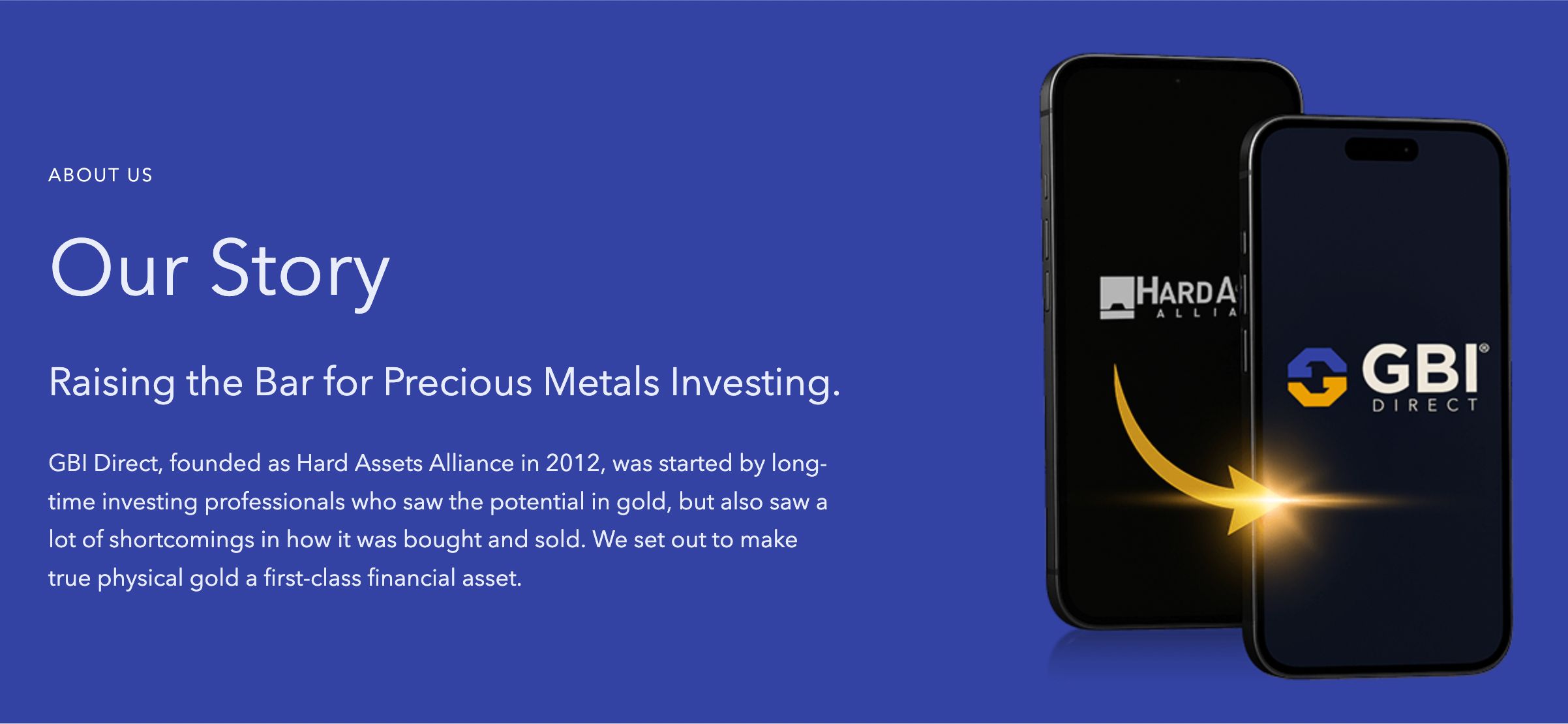
The backstory matters here because it explains both the strengths and the messy edges. This isn’t a company that sprang up overnight to chase a gold ad budget.
Steven Feldman and the Goldman Sachs–to–Gold Pedigree
The man at the top is Steven Feldman, co-founder and CEO. His résumé reads like a finance brochure: Wharton undergrad, NYU Law, and a stretch at Goldman Sachs where he helped build a gold-related business.
He also founded Goldcrest Farm Trust Advisors, a farmland asset manager running over $300 million, and co-founded a gold jewelry brand called Auvere.
The point: the people running this aren’t gold-coin hustlers. They come from the institutional side of the table.
The GBI Engine Behind the Platform
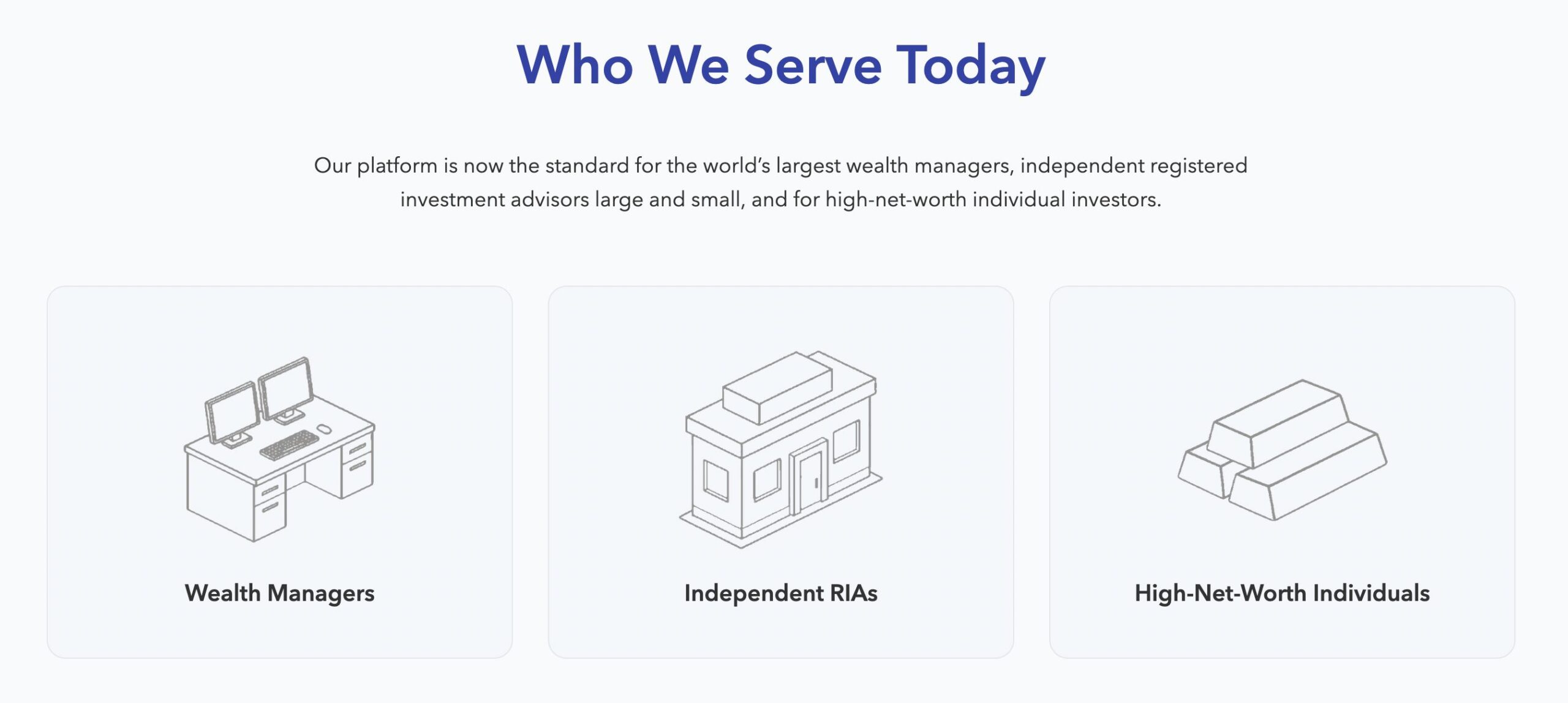
Underneath the consumer brand sits Gold Bullion International, the real plumbing. GBI services wealth managers, registered investment advisors, and high-net-worth individuals, and the company claims four of the six largest U.S. financial institutions use its infrastructure.
That institutional backbone is the genuine selling point. The trading engine, the vault relationships, and the custody system were built to serve professionals first, then opened up to regular savers.
A Quick Note on the 2012-vs-2018 Founding Confusion
Here’s a small thing nobody else flags. The company markets a 2012 founding date, but public business records tell a slightly different story.
The Better Business Bureau file lists a formal U.S. registration dated 7/30/2018, with the BBB file opened 2/8/2018. The BBB also lists “years in business” as roughly seven, which lines up with 2018, not 2012.
It’s not necessarily sinister. Companies restructure entities, merge, and re-register all the time. But if a review tells you the firm has been around since 2012 without mentioning the 2018 registration, you’re getting half the picture.
What You’re Actually Signing Up For
Strip away the marketing, and you’re buying real, physical metal that either sits in a vault with your name on it or ships to your door. Let’s walk through what’s on the menu.
The Metals on Offer: Gold, Silver, Platinum, Palladium
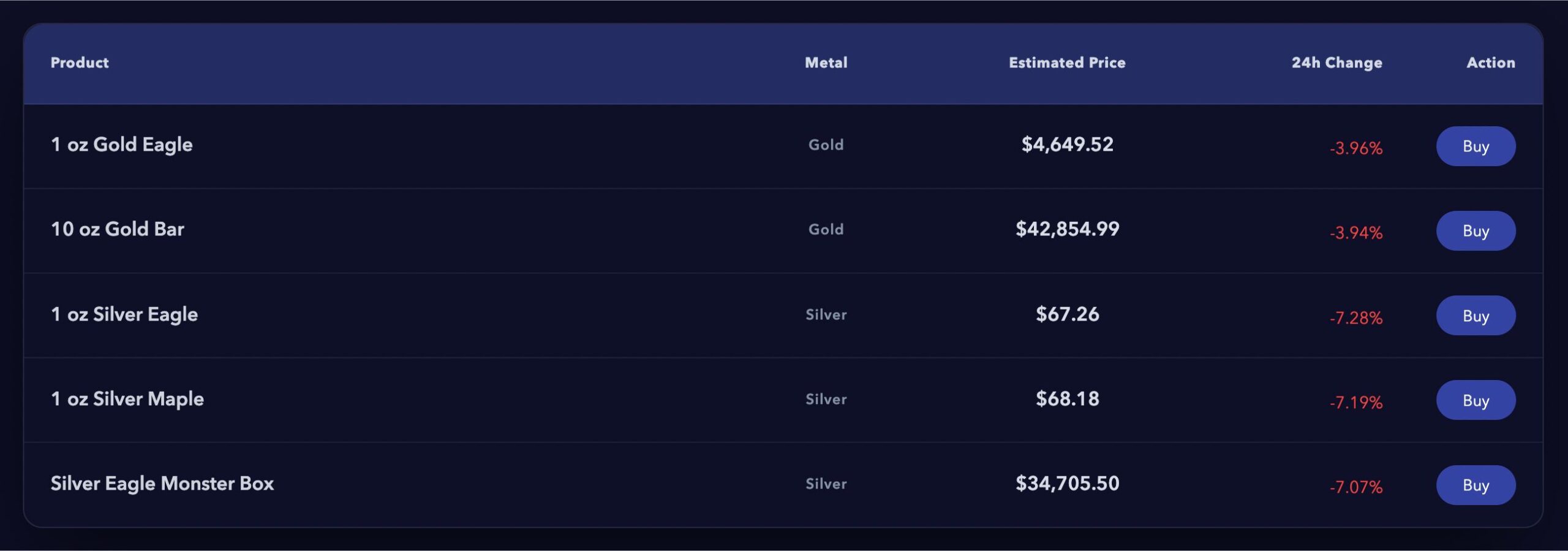
You can buy physical gold, silver, platinum, and palladium in coins, bars, and ingots. Examples I saw listed include the 1 oz Gold American Eagle, the 1 oz Silver American Eagle, a 1 oz LBMA-approved gold bar, and a Credit Suisse 1 oz gold bar.
The selection covers the popular sovereign coins and recognized bars. It’s a solid lineup, though a couple of reviews note the coin and bar selection is a bit narrower than some sprawling retail dealers.
The SmartMetals Account (Their Flagship)
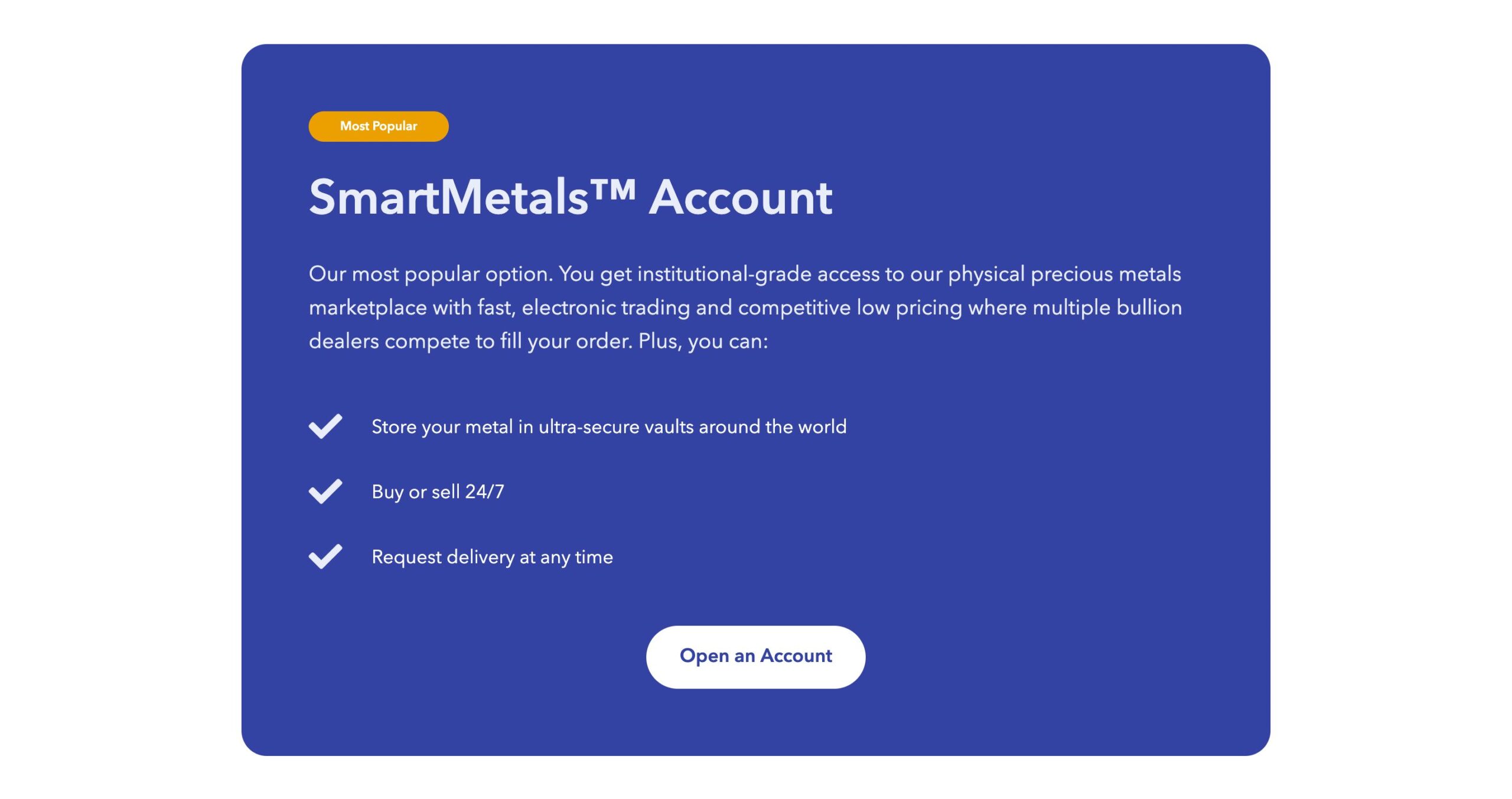
The flagship is the SmartMetals Active Account. This is your full marketplace access, the dashboard where you buy, sell, store, and request delivery.
It’s the core product everything else hangs off of. Open this, fund it, and you can trade metal almost any hour of the day through the app or website.
MetalStream: Drip-Buying Metal From $25 a Month
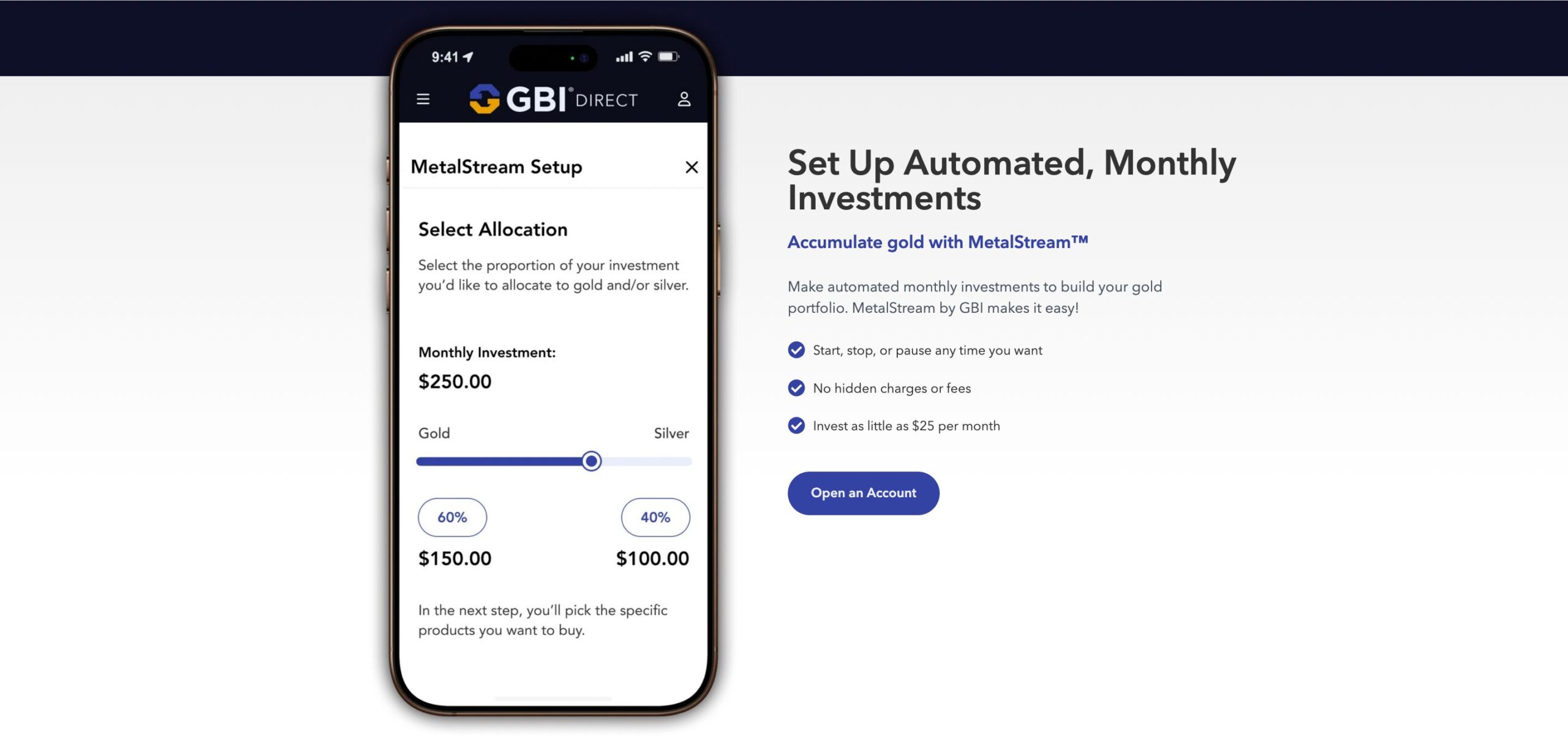
This one I genuinely like. MetalStream lets you auto-invest from as little as $25 a month, buying metal on a recurring schedule the way you’d contribute to a retirement fund.
- Start, pause, or stop anytime
- No added fees for the automation
- Assets may be exempt from the storage minimum
For a saver who’d rather build a position slowly than drop a lump sum, this is one of the more sensible features on the platform. Several Trustpilot reviewers praised it specifically for being reliable month after month.
The Precious Metals IRA Option (Traditional, Roth, SEP, SIMPLE)
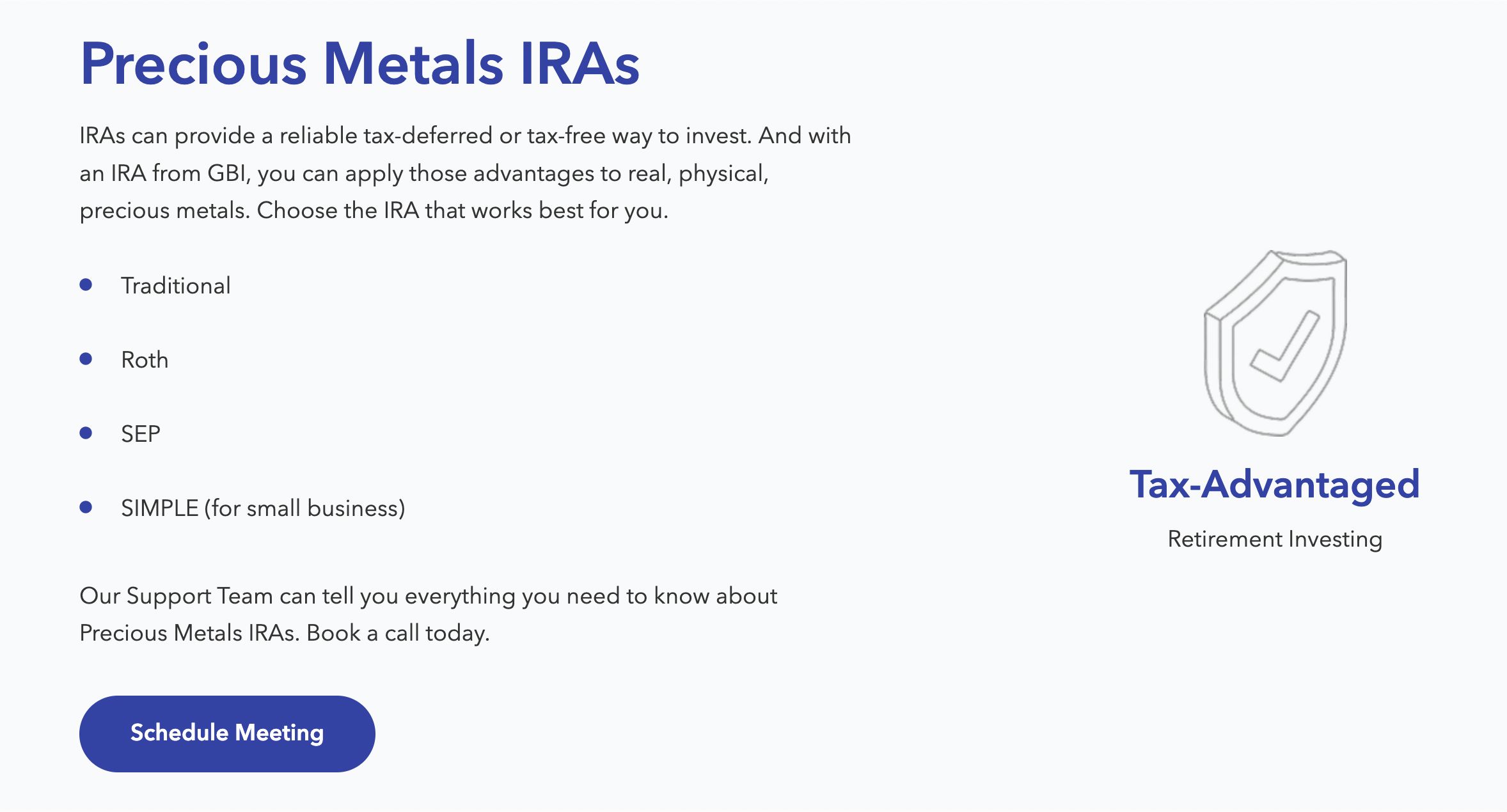
You can hold metal inside a self-directed IRA, with Traditional, Roth, SEP, and SIMPLE structures all supported. The IRA custodian partner is reported to be Equity Trust, a well-known name in self-directed retirement accounts.
This is the path most of the retirement-saver crowd lands here for. The metal is held tax-advantaged in an allocated vault, and the company handles the rollover paperwork.
Accounts for Businesses, Trusts, and Minors
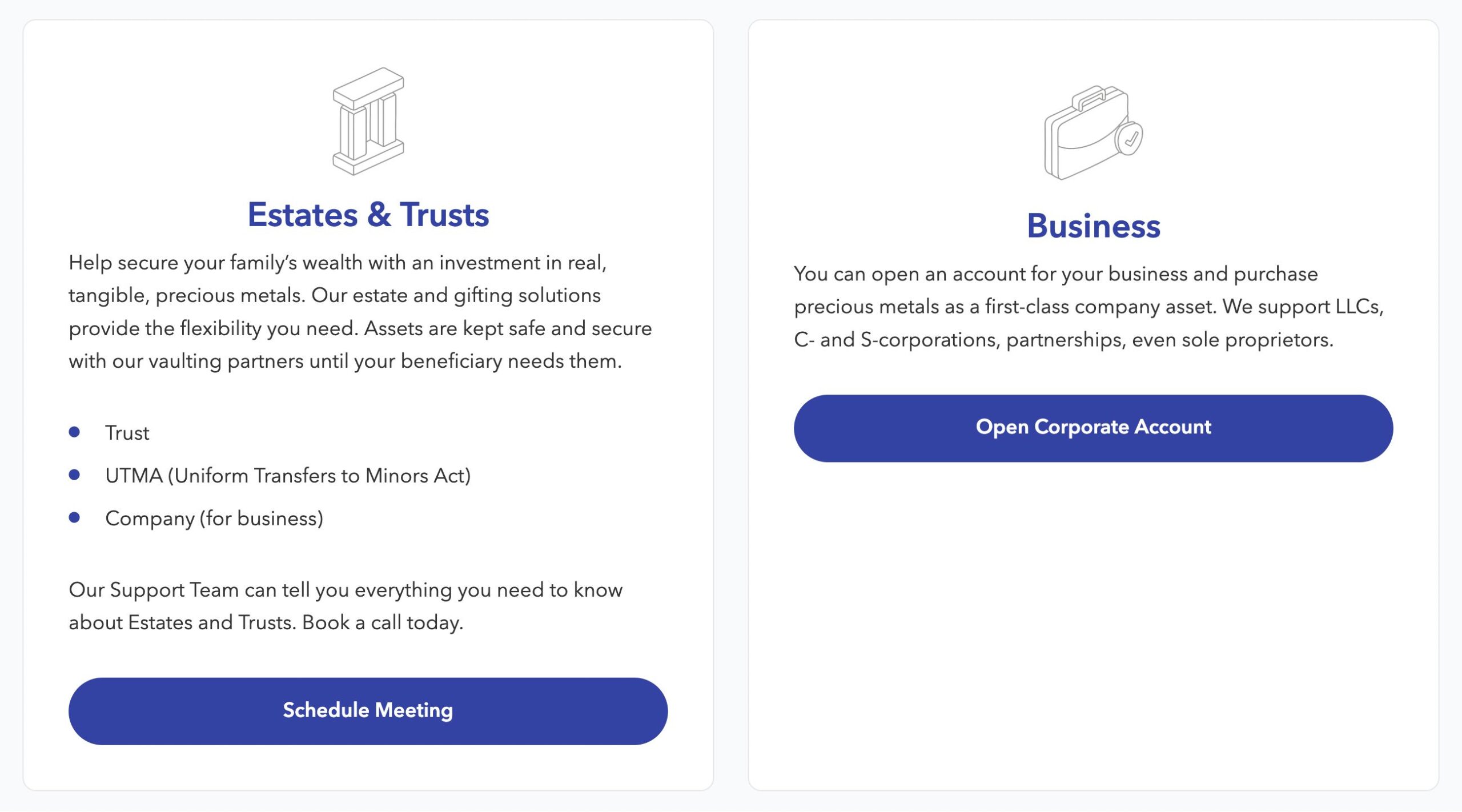
Beyond personal accounts, the platform supports trusts, estates, UTMA accounts for minors, and business entities including LLCs, C-corps, S-corps, partnerships, and sole proprietors.
Accredited investors also get access to alternative assets like private equity, private credit, and collectibles. That’s a wider account menu than most metal dealers bother offering.
The Marketplace Model: Why Dealers Compete for Your Order
This is the real structural difference, and it deserves more than a footnote.
Most retail gold dealers work on a fixed markup. They set a price, you take it or leave it, and the spread is whatever they decide. Hard Assets Alliance runs a marketplace instead, branded SmartMetals.
When you place an order, multiple bullion dealers compete to fill it. In theory, that competition tightens the price you pay because providers are bidding against each other rather than dictating a single take-it-or-leave-it number.
The company cites ten-plus metals providers feeding the marketplace, including names like Asahi, Heraeus, and Veritas.
For buyers who hate the opaque “call for our price” routine of old-school dealers, this is a meaningful upgrade in how pricing gets set. Whether it always beats the cheapest online dealer is a separate question I’ll get to under fees.
What It Costs to Use Hard Assets Alliance
Now the part that decides whether this is worth it. The cost structure is mostly transparent, with two frustrating exceptions.
Markups That Are “Market-Driven” but Not Publicly Posted
On gold and silver, the purchase markup is listed simply as “Varies.” Live, executable pricing only shows up once you’ve opened and funded an account. The public site gives you indicative estimates, nothing you can act on.
I understand the logic, since marketplace pricing genuinely moves. But it does mean you can’t comparison-shop the premium before committing your information, and a handful of reviewers felt the prices they eventually saw weren’t the cheapest around.
The Tiered Storage Fee Table, From 0.50% to 0.80%
Storage fees scale down as your account grows. Here’s the breakdown:
| Account Value | Gold/Platinum/Palladium | Silver |
| $0–$100,000 | 0.70%/yr | 0.80%/yr |
| $100,000–$500,000 | 0.65%/yr | 0.75%/yr |
| $500,000–$1,000,000 | 0.60%/yr | 0.70%/yr |
| Over $1,000,000 | 0.50%/yr | 0.60%/yr |
Fees accrue daily based on resale value and bill quarterly, pulled automatically from your cash balance. These rates are fair for fully allocated insured storage, but more than one reviewer pointed out you could pay a vault like Brink’s directly for less. That’s a legitimate gripe if you’re storing large amounts and don’t need the platform wrapper.
The IRA Annual Fee ($125) and the Storage Minimum Mix-Up
The IRA carries a $125 annual maintenance fee, which is normal for the category. Here’s the part that bugged me though.
The storage minimum is stated two different ways on the company’s own pages. One page says $5 per month minimum. The fee-detail page says $15 minimum per quarter per account.
Those aren’t the same number. $5 a month is $15 a quarter only if you round oddly, and the inconsistency on a firm’s own fee page is a small but real sloppiness. Ask support to confirm exactly what your account will be charged before you assume.
Funding, Shipping, and Insurance Costs
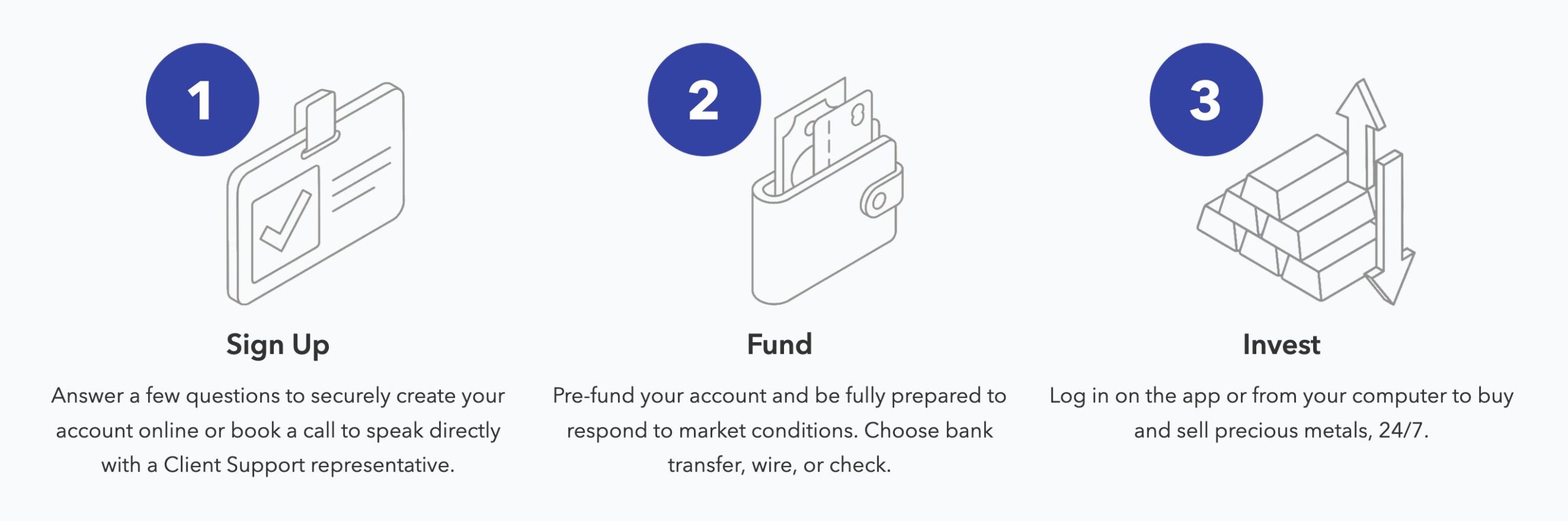
You fund by bank transfer (ACH), wire, or check, and the company recommends pre-funding before you trade. Shipping costs fall on you when you take delivery, with the cost specified per order based on your address of record.
High-value orders get special handling, and shipping insurance is addressed on a per-order basis rather than blanket-included. Read the delivery terms at checkout, so the shipping bill doesn’t surprise you.
How the Vaulting and Security Hold Up
This is where the institutional pedigree pays off. The storage setup is the strongest part of the whole operation.
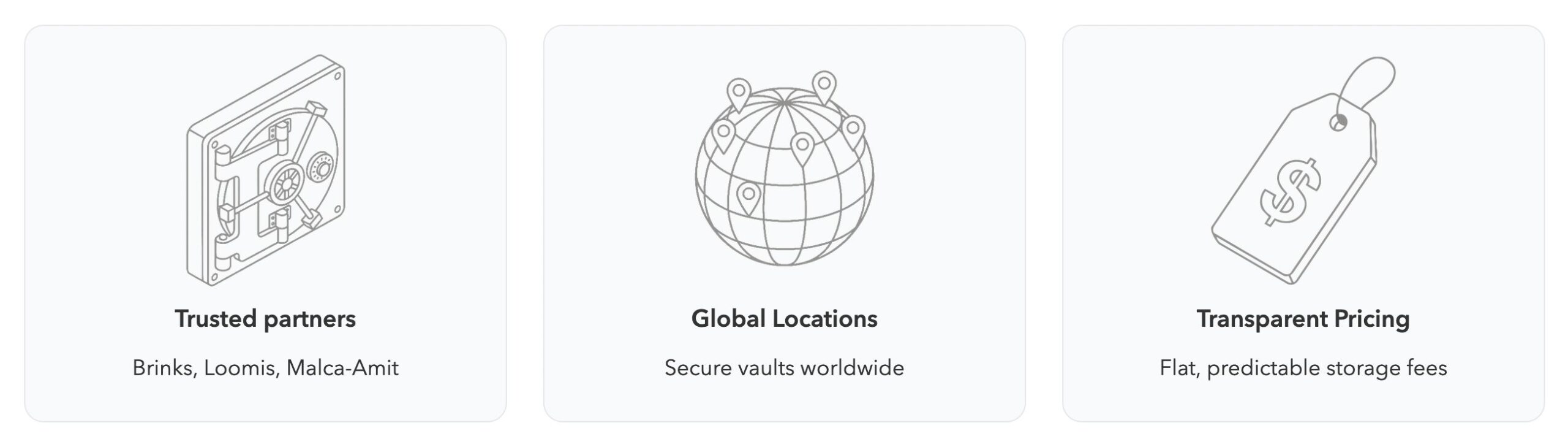
Your metal is fully allocated, segregated, and insured, held in non-bank, Class-3 ultra-secure vaults with 24/7 surveillance and armed security. Allocated and segregated matters: it means specific bars are yours, not a paper claim on a shared pile.
Where Your Metal Physically Sits
The vault partners are top of the industry: Brink’s, Loomis, and Malca-Amit. The vault locations span the globe, giving you geographic and political diversification:
- New York
- Salt Lake City
- Zurich
- London
- Singapore
- Sydney / Melbourne
You can store now and take delivery later, and you can transfer metal between vault regions. For an investor worried about keeping everything inside one country’s borders, that international footprint is a real benefit.
Audits, Insurance, and the “Golden Ledger” Statements
The company runs regular audits and sends monthly statements through a system it calls the Golden Ledger. Every holding is meant to be audited, insured, and validated, with documentation arriving when your metal lands in the vault.
Allocated storage backed by Brink’s and independent audits is about as clean as it gets for retail metal custody. This is the area where the “institutional-grade” pitch actually holds up.
Selling Back and Getting Your Cash Out
A lot of gold dealers love selling to you and go quiet when you want to sell back. This platform does better, though not perfectly.
How the Selling From Storage Works
You can sell your stored metal back directly through the platform, online, at current market prices. The buyback shows up right in your account, and the proceeds land in your GBI Direct cash balance.
True two-way liquidity is a genuine edge over sell-only retail outfits. You’re never stuck hunting for a buyer when you want out.
The Waiting Period That Frustrates Some Sellers
Here’s the catch that shows up in review after review. Once you sell, the money doesn’t move instantly. There’s a clearing and settlement period before you can withdraw cash to your bank.
One BBB reviewer put it bluntly, complaining that after selling physical gold from the vault, the funds “must wait for it to clear” before they were usable.
It’s standard settlement mechanics, but if you expect same-day cash, you’ll be annoyed. Plan around the delay rather than counting on instant access.
What the Rating Sites and Real Customers Reveal
This is where the story gets interesting, because the ratings don’t agree with each other at all. One major platform gives the company a strong score.
Another hands it the lowest grade possible. That gap is exactly what a comparison-stage reader needs to understand.
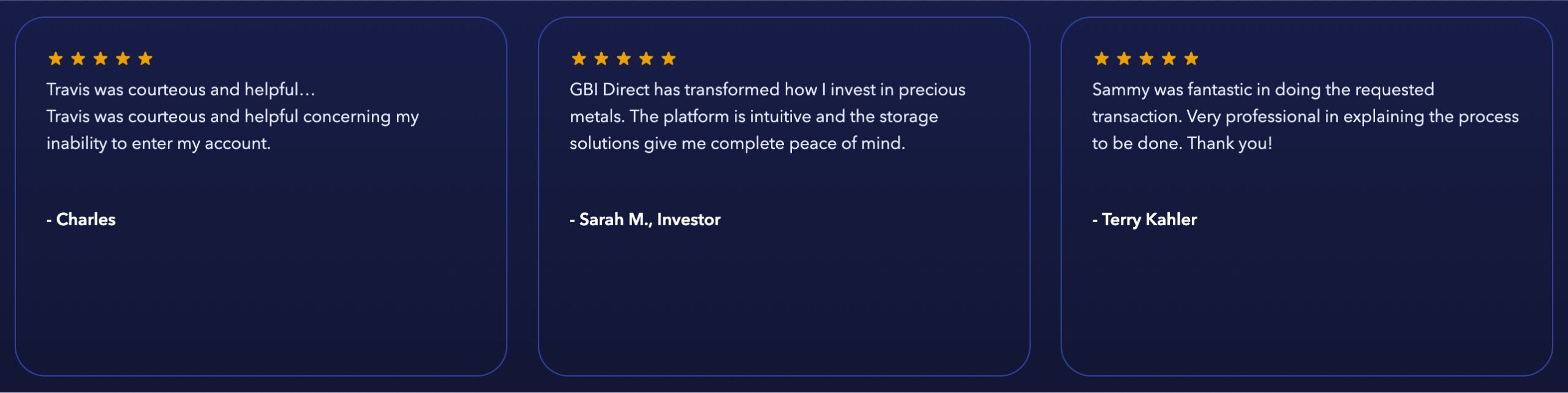
Trustpilot — 4.3 Out of 5 Across 368 Reviews
On Trustpilot, GBI Direct holds a 4.3 out of 5 across 368 reviews, roughly a four-star score. The profile merged from the old Hard Assets Alliance listing, so the count has been climbing steadily.
The recurring praise:
- Knowledgeable, patient staff (by far the most-cited positive)
- An easy app and website
- Smooth transactions and on-time transfers
- Reliable MetalStream auto-investing
- Helpful support with estate and 401(k) rollovers
That’s a lot of satisfied buyers describing the same good experiences. Customer service is clearly the company’s strongest human asset.
Better Business Bureau — An F Grade and Two Unanswered Complaints
Now the gut punch. The BBB gives Hard Assets Alliance LLC an F rating, the lowest grade on the scale. The company is not BBB accredited.
What drove the F: two complaints were filed and the company failed to respond to them. The single BBB customer review sits at 1 out of 5, from a long-term customer who complained that storage fees ran double what they paid Brink’s directly, that sell proceeds didn’t clear quickly, and that the referral-commission model shaped recommendations.
An F at the BBB is the single biggest red flag here, and the cause is as much about not answering complaints as the complaints themselves. A company that ignores BBB inquiries earns that grade.
ConsumerAffairs — 1 Out of 5 From a Single Reviewer
On ConsumerAffairs, the rating is 1 out of 5, but it’s from exactly one review. That single reviewer was furious about the weekend rebrand and having to re-enter personal info.
Worth noting: ConsumerAffairs’ own editorial verdict still calls the company a legitimate dealer and praises its fee transparency. So one angry review pulls the star count down while the editors themselves vouch for legitimacy.
Google Reviews and Other Mentions
Coverage elsewhere is thin. Google’s business listing shows a 1 out of 5 rating from a single review, which is too small a sample to draw any conclusion from.
I’d rather tell you the data is sparse than invent a number. Outside Trustpilot, there simply isn’t a large volume of independent feedback to lean on yet.
The Praise and the Gripes That Keep Repeating
Pull it all together and the same themes surface across every source:
- Praised: standout customer service, ease of the app, true buy-and-sell liquidity, insured allocated storage
- Criticized: storage fees seen as high versus a direct vault, purchase premiums not always the cheapest, slow cash access after selling, and the jarring 2026 rebrand
The honest read is a company people generally enjoy using, hampered by pricing complaints and one ugly BBB grade it brought on itself by going silent.
Where Hard Assets Alliance Wins and Where It Falls Short
Let me give it to you straight, the way I’d tell a friend who asked.
Where it wins: the storage is genuinely first-rate. Allocated, segregated, insured, sitting in Brink’s and Loomis vaults across six locations on multiple continents.
The marketplace model, where dealers bid for your order, is a real improvement over the take-it-or-leave-it pricing of typical gold shops.
The app is clean, the auto-invest feature is sensible, and the customer service earns honest praise. Two-way liquidity means you can actually sell, not just buy.
Where it falls short: the markups aren’t posted publicly, so you can’t price-shop before handing over your details. Storage fees are reasonable but beatable if you’d vault metal yourself. Cash takes time to clear after a sale.
The rebrand was handled poorly. And that BBB F, driven by unanswered complaints, is the kind of thing a careful person can’t just wave away. A company that ignores formal complaints is telling you something about how it handles friction.
Who This Platform Genuinely Fits
This isn’t a one-size answer. The platform fits some people well and others poorly.
It’s a strong match for:
- The app-comfortable investor who wants to buy physical metal on a screen, not over a sales phone call
- The auto-invest saver who likes the $25-a-month MetalStream drip
- The retirement saver wanting allocated metal inside an IRA with real vault security
- The advisor-adjacent investor who values the institutional GBI backbone and international vaulting
It’s a weaker match for:
- Anyone chasing rock-bottom premiums who’ll happily comparison-shop a dozen online dealers
- Someone who wants warm, hand-holding phone sales and lots of guidance
- A large holder who’d rather contract directly with a vault and skip the platform storage fee
Match yourself honestly to one of those buckets before you decide. The platform is good at what it’s good at, and meh at what it isn’t.
Frequently Asked Questions
Q1. Is Hard Assets Alliance the Same Company as GBI Direct?
Yes. Hard Assets Alliance rebranded to GBI Direct in early 2026. Same accounts, same metal, same vaults, same leadership, just a new name reflecting the Gold Bullion International infrastructure that always ran underneath it.
Q2. Is There a Minimum Amount I Need to Start Investing?
The MetalStream auto-invest feature starts at just $25 a month, which is one of the lowest entry points in the industry. For one-time purchases, you’ll see live pricing once your account is funded.
Q3. Can I Take Physical Delivery of My Metals Instead of Storing Them?
Yes. You can request delivery of your metal, including international delivery in many cases. Shipping goes to your address of record, you pay the shipping cost, and you can store first and take delivery later if you prefer.
Q4. How Long Does It Take to Get My Money After I Sell?
Sale proceeds land in your platform cash balance quickly, but there’s a clearing and settlement period before you can withdraw to your bank.
This delay is the most common customer complaint, so plan around it rather than expecting same-day cash.
Q5. Does Hard Assets Alliance Work for Investors Outside the United States?
Yes, to a degree. The platform offers international vault storage in Zurich, London, Singapore, and Australia, plus international delivery with some restrictions. International support has its own phone line at +1-646-530-8445.
My Final Take on Hard Assets Alliance
So is Hard Assets Alliance legit? Yes, with eyes open. It’s a real platform with serious storage, a genuine marketplace that makes dealers compete for your order, and a leadership team that came from the institutional side of finance rather than the coin-shop side.
The marketplace model and the Brink’s-backed allocated vaulting are the real reasons to consider it. Those aren’t marketing fluff, they’re structural advantages most retail dealers can’t match.
But I won’t paper over the warts. The undisclosed markups, the storage fees you could sometimes beat elsewhere, the slow cash clearing, the fumbled rebrand, and especially that BBB F grade for ignoring complaints, those are all real.
The contrast between a 4.3 on Trustpilot and an F at the BBB tells you this is a company that treats most customers well but drops the ball when things go sideways.
Would I trust it with real money? For the app-savvy diversifier or the IRA saver who values top-tier storage and is willing to accept market-set pricing, yes, cautiously.
For the bargain hunter or the person who wants instant cash and a friendly voice on the phone, look elsewhere. The honesty is the whole point: this is a solid platform with specific, knowable flaws. Now you know them.
Goldco Precious Metals
- Goldco Surpasses $2 Billion in Precious Metals Placements
- Over 6,000 Five-Star Ratings on BBB, Trustpilot, and ConsumerAffairs
- Seven-Time Winer on the Inc. 5000 List