
Disclosure: “The owners of this website may be paid to recommend Goldco or other companies. The content on this website, including any positive reviews of Goldco and other reviews, may not be neutral or independent.” Learn More
Before you move a dollar of your retirement savings into gold, you deserve a straight answer about who you’re handing it to.
This U.S. Gold Bureau review pulls together the company’s own policies, its state depository connection, and what real buyers report across five rating sites.
I dug into this because too many “reviews” read like sales pages dressed up as research. What I found is a company with real credentials and a few practices that should make you slow down and ask questions.
Where U.S. Gold Bureau Came From and How It Got So Big
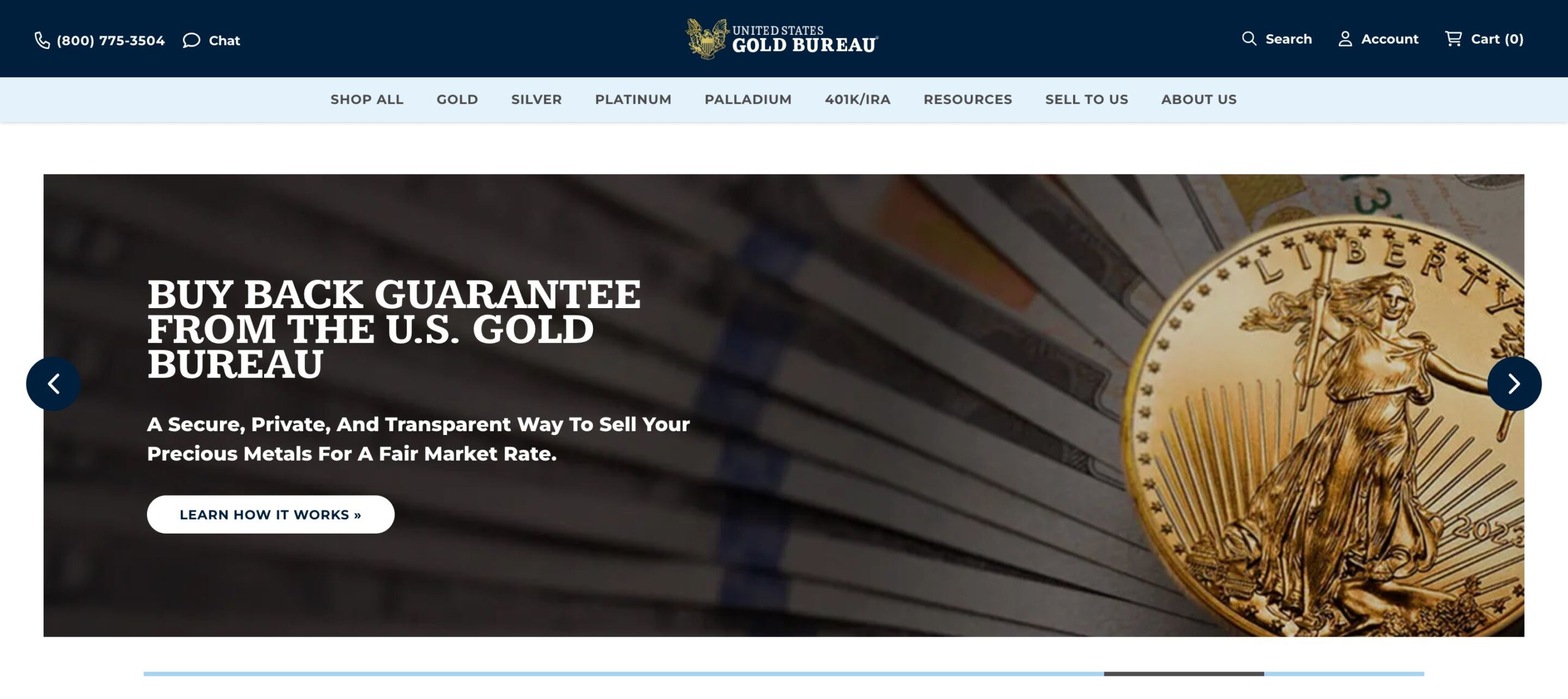
U.S. Gold Bureau opened its doors in 2003 with a simple promise: bring some honesty to a business that has long attracted sharp operators. That founding date matters because longevity in precious metals weeds out the fly-by-night sellers fast.
The real turning point came in 2008. A change in ownership reshaped the company and kicked off the growth that turned a regional dealer into a national name.
By 2021, the brand absorbed Wholesale Coins Direct, widening its reach further. The company now reports more than $2 billion in transactions since it started. That figure tells you it processes serious volume, not that every buyer walked away happy.
The Lone Star Tangible Assets Connection Most Buyers Miss
Here’s the piece almost nobody explains: U.S. Gold Bureau operates under a parent company called Lone Star Tangible Assets, LP.
That parent is the entity actually approved by the IRS to serve as a nonbank trustee and custodian for fiduciary accounts.
That structure carries weight. A dealer with an IRS-recognized custodial parent can keep your retirement metals inside one corporate family instead of bouncing you between strangers.
You can read the IRS rules on approved nonbank custodians directly through the IRS retirement plans guidance.
Who Actually Runs the Company Today
The website does not publish executive bios, which I found mildly annoying. The names show up instead on the Better Business Bureau profile, which lists three principals:
- Boots Crossley — Chief Operating Officer
- Matt Ferris — Director
- Miranda Kiefer — Director of Operations
Knowing real people stand behind the operation beats a faceless brand. I’d still like to see the leadership listed on the company’s own site.
The Texas Bullion Depository Tie That Sets Them Apart
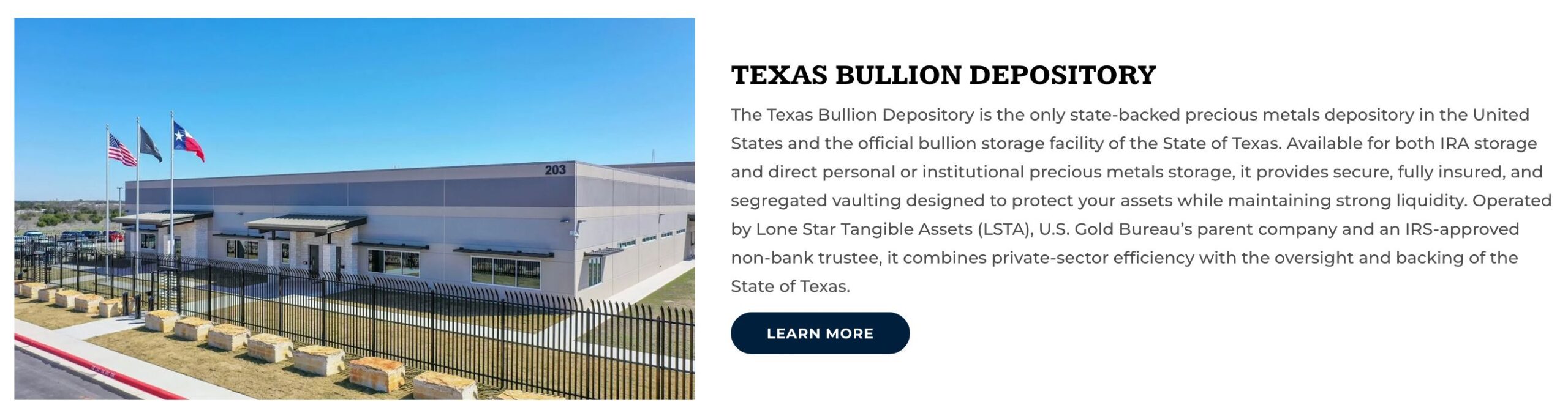
This is the single feature that genuinely separates U.S. Gold Bureau from most rivals, and it gets buried in nearly every other review I read.
In 2017, the State of Texas chose Lone Star Tangible Assets to build and run the Texas Bullion Depository — the only state-administered precious metals storage facility in the country.
State-administered changes the math in a few ways:
- Your metals sit in segregated storage, meaning your bars and coins stay assigned to you rather than pooled.
- The facility carries 100% all-risk insurance placed through the Lloyd’s of London marketplace.
- State oversight adds a layer of accountability you don’t get from a private vault answering only to itself.
Why care? Because storage you can trust protects liquidity and gives you a cleaner paper trail when you sell. A state-backed vault is harder to ignore than a warehouse nobody audits.
Everything U.S. Gold Bureau Sells, Broken Down by Metal
The company carries the four major precious metals in coins, bars, and rounds, plus rare and certified coins. Here’s how the lineup breaks down, so you know what’s actually on the shelf.
Gold: Eagles, Buffalos, Bars, and Pre-1933 Vintage
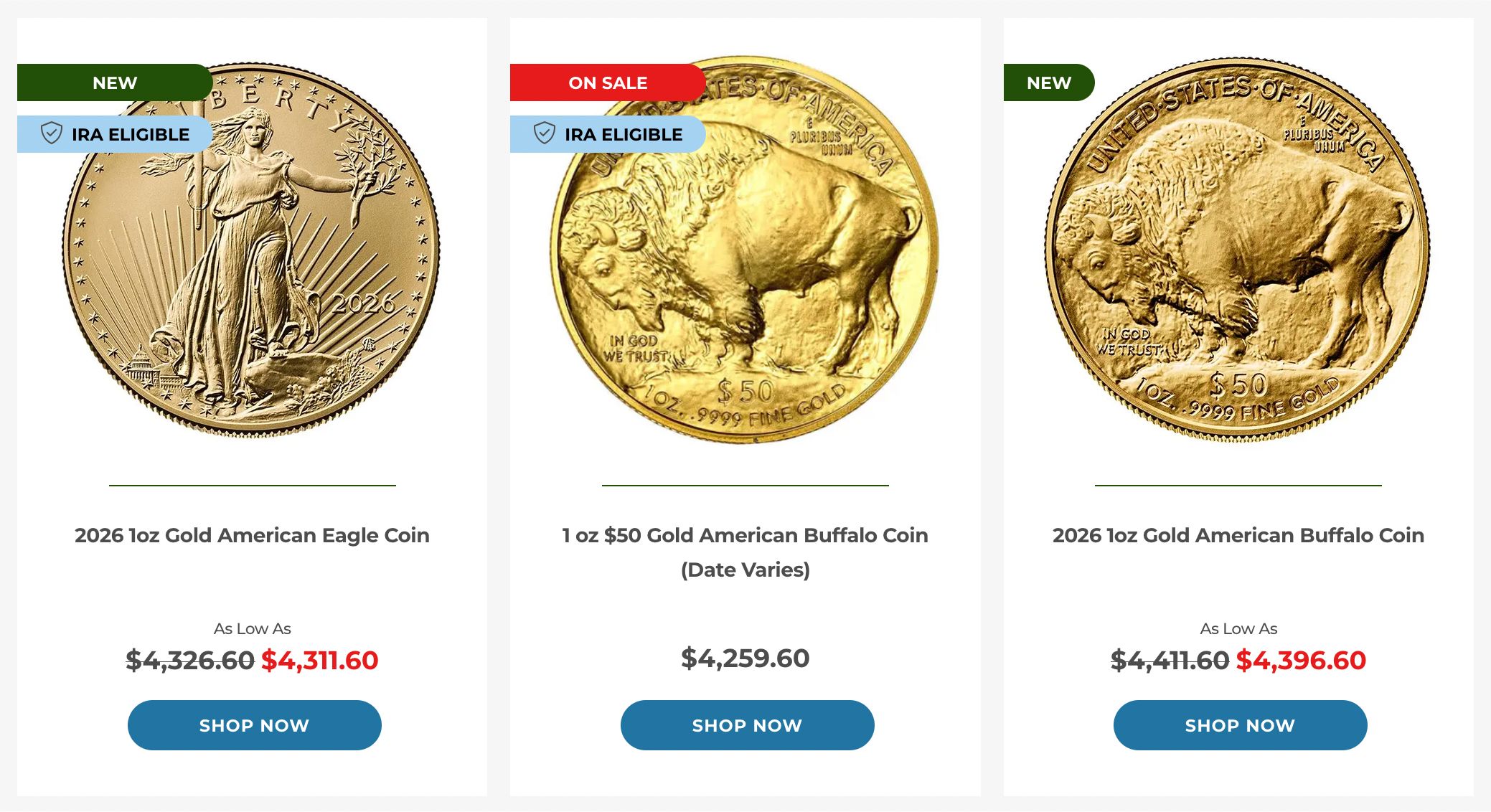
Gold buyers get the full menu. American Eagles and American Buffalos anchor the bullion side, joined by international coins like the Austrian Philharmonic, Canadian Maple Leaf, and South African Krugerrand.
Gold bars range from tiny 1-gram pieces up to full kilo bars. For collectors, there’s pre-1933 vintage gold including Saint-Gaudens, Liberty Head, and Indian Head coins. The pre-1933 pieces carry collector premiums, so treat them as a different animal from plain bullion.
Silver: Coins, Rounds, and Bars From 1 oz to 1,000 oz
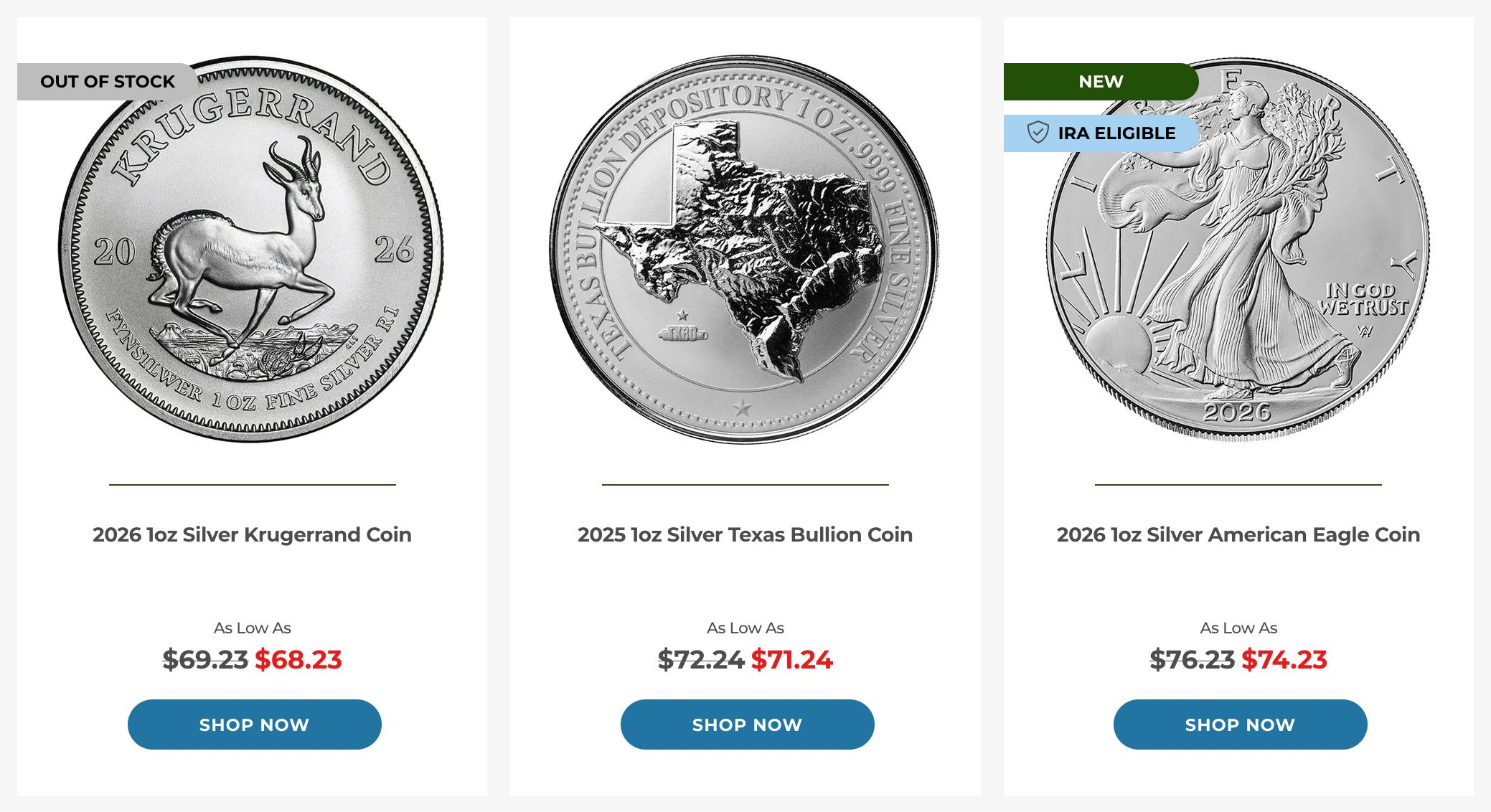
Silver is where the low entry point shines. The selection spans American Silver Eagles, Buffalos, classic Morgan and Peace dollars, generic rounds, and bars.
Bar sizes climb from 1 ounce all the way to 1,000-ounce monsters. That range fits both the first-timer buying a few rounds and the stacker hauling in serious weight.
Platinum and Palladium Options
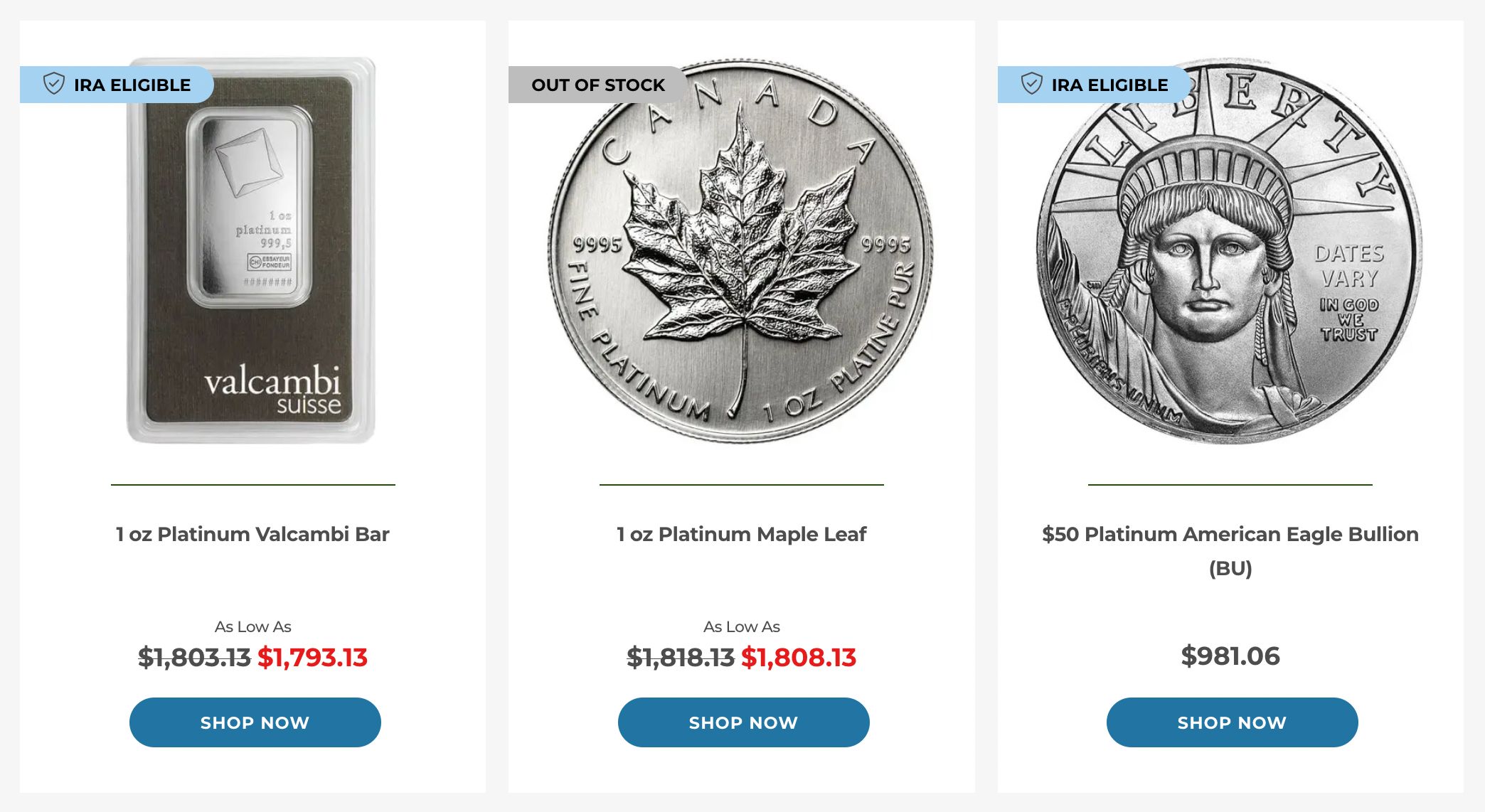
Platinum and palladium round out the catalog in both coin and bar form. These metals trade thinner than gold and silver, so spreads can run wider.
They suit buyers who want to diversify beyond the two big metals and understand the lower liquidity that comes with them.
The Ed Moy Signature Series and What That Signature Is Worth
The company’s headline product is the Ed Moy Signature Series, with labels hand-signed by Edmund C. Moy, who ran the U.S. Mint from 2006 to 2011. You can verify his tenure through the U.S. Mint’s historical records.
A former Mint Director’s signature adds prestige and a story. Be clear-eyed about it though: that signature inflates the premium and does little for the melt value if you ever need to liquidate fast. Buy it because you like it, not because you expect the autograph to pay you back.
Bullion vs. Their “Investment Grade Coins”: Read This Before You Buy
This is the section that matters most for protecting your money, so read it twice. The most serious recurring complaint against U.S. Gold Bureau is that some reps nudge buyers away from straightforward bullion and into high-premium graded or proof coin sets.
The difference is everything:
- Bullion prices track the spot price of the metal. Premiums stay thin, and resale is straightforward because the value is the metal itself.
- Investment Grade Coins are NGC or PCGS-certified, “slabbed” collector pieces. Their prices ride on rarity and grading, often running far above spot.
One buyer reported paying roughly $7,000 for a coin with a true market value near $3,300. Another alleged a $30,000 overpayment on graded sets. When they tried to sell, the gap swallowed a chunk of their savings.
Here’s how to protect yourself:
- Ask point-blank whether a recommended product is bullion or numismatic.
- Compare the quoted price against spot using a live tracker like the World Gold Council price page.
- If a rep keeps steering you toward “rare” or “proof” sets after you asked for bullion, push back or hang up.
None of this means every graded coin is a rip-off. It means the premium has to make sense for your goals, and inflation hedging rarely calls for collector pieces.
What It Actually Costs: Minimums, Premiums, and Payment Fees
Pricing here has real upsides and a couple of traps. The company adds no commission to its quoted price, charging only sales tax where it applies and any payment-type fee. Let’s break down what hits your bill.
The $99 Minimum and Free Shipping Threshold
The order minimum is just $99 per transaction, which is refreshingly low. Many competitors set floors at $5,000 or $10,000, locking out smaller buyers entirely.
Even better, shipping is free on every order of $99 or more. For a first-timer testing the waters, that low bar is one of the strongest reasons to consider U.S. Gold Bureau over a high-minimum dealer.
Credit Card, ACH, and Wire: Which Fees Apply to Each
Payment method changes both your cost and your timeline:
- Credit cards are accepted up to a limit generally at least $20,000, but card processing fees apply and show at checkout.
- ACH (electronic check) works for all order sizes as a one-time authorized debit.
- Wire transfers must go through over the phone and clear fastest.
Check or check-by-phone orders sit through a funds-verification period of up to six business days. If you want your metals moving quickly, a bank wire is the cleanest route.
The Market Loss Policy (“Ask to Ask”) You’re Agreeing To
When you confirm an order and the company prices and allocates your metal, you generally cannot cancel it outright. You can only offset it at the company’s current ask price, which means you eat any market movement against you.
This is standard in volatile bullion, but plenty of buyers skim past it. Read that clause before you click, because it’s a binding agreement, not boilerplate.
Placing an Order, Step by Step (Online and by Phone)
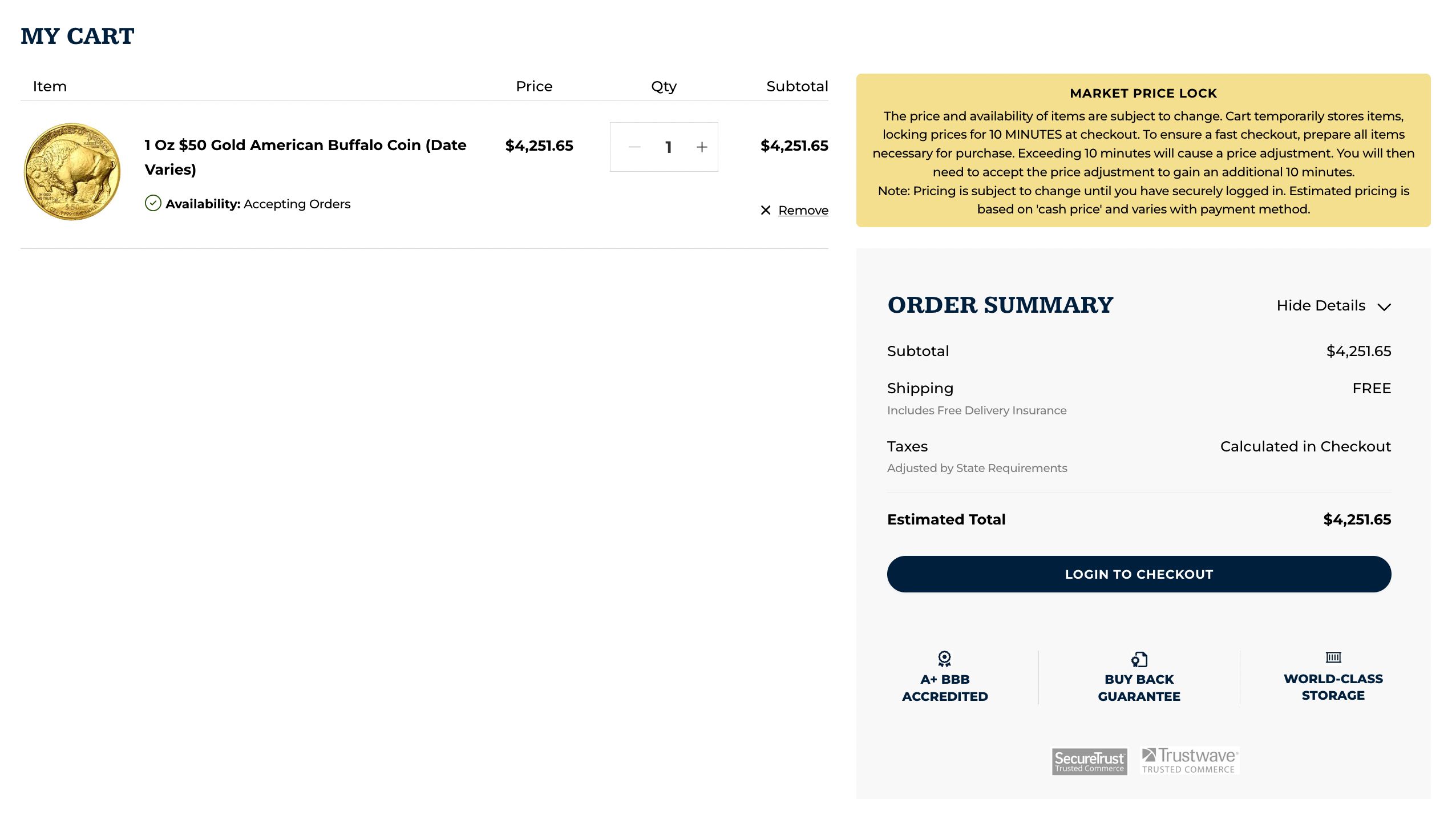
Buying is straightforward whether you click or call. You can order directly on the website or by phone at the company’s main sales line. You must be 18 or older and agree to the Terms and Conditions of Sale.
Price Locks and How Long They Hold
Your price locks at different moments depending on how you pay:
- Online: locked when payment is made.
- Phone: locked upon verbal verification.
- Wire: locked when funds arrive.
- Credit card or ACH: locked at order placement, assuming payment clears.
Knowing exactly when your price freezes saves you from nasty surprises in a fast-moving market.
Shipping Times, Discreet Packaging, and Delivery Signatures
Orders typically pack and ship within 14 business days of good funds clearing, with delivery running 3 to 5 business days after that. Shipments go out via UPS, USPS, or FedEx with tracking and full transit insurance.
Packaging arrives plain and unbranded, so nobody on your street knows what’s inside. A government-issued ID and signature may be required at delivery, which protects you.
A heads-up: that 14-day window frustrates buyers expecting two-day shipping, so set your expectations accordingly.
How the Buy Back Guarantee Holds Up in Practice
The company advertises a Buy Back Guarantee, and on paper it sounds reassuring. Here’s the honest version though, pulled straight from their own risk disclosures: they do not guarantee a direct bid on every item, especially products they didn’t originally sell you.
Some sellers report being declined outright or offered roughly half of what they paid. That gap usually traces back to numismatic premiums that never had melt value to begin with. This is exactly why the bullion-versus-graded-coin distinction matters so much before you buy.
Selling Metals Back: The Three-Step Process
The buy-back process generally works like this:
- You contact the company and tell them what you want to sell.
- They quote a price at the current bid, usually near the COMEX spot price.
- You ship the metal back and receive payment once it’s verified.
For bullion the company sold you, this tends to go smoothly. For high-premium collector coins, brace for a number well below your purchase price.
The Return Windows That Differ by Product Type
Returns depend entirely on what you bought:
- Bullion metals: all sales final, with only limited cancellation under the Market Loss Policy.
- Investment Grade Coins: a 30-day inspection window for a product-only refund. You need an RMA number obtained within 30 days, and it expires 15 days after issuance. Returns 1 to 15 days past the window carry a 10% restocking fee.
- Proof Coins and Special Order Items: all sales final, no refunds.
Shipping, handling, and insurance are never refunded, and you pay to insure the return trip. Read the product type before you assume you can send something back.
Running Their Precious Metals IRA Through Retirement Funds

U.S. Gold Bureau runs a dedicated Retirement Services Division for buyers using 401(k) or IRA money. Since you already grasp the gold IRA basics, here’s what’s specific to this company.
The setup uses the parent company’s IRS-approved custodial status, and IRA-held metals can sit at the Texas Bullion Depository.
The division provides guidance on IRA-eligible metals, custodians, depositories, and required minimum distributions.
One rule you cannot bend: IRA metals cannot be stored at home. The IRS treats home storage of IRA metal as a distribution, which can trigger taxes and penalties. You can confirm the current contribution and distribution rules on the IRS IRA page.
A plain note here: I’m sharing research, not personalized financial advice. Talk to a tax professional before rolling retirement funds into metal.
What Real Customers Are Saying Across the Review Sites

Ratings tell a split story, and any honest review has to show both halves. The praise centers on service and education. The complaints center on pricing pressure and phone calls. Here’s how the numbers break down across five platforms.
Better Business Bureau
The company holds an A+ rating and has been BBB Accredited since October 2024. Its customer review average, though, sits at 3.6 out of 5 across a small batch of reviews.
Those two numbers measure different things. The A+ letter grade reflects how the company handles complaints and meets BBB standards, while the star score reflects customer sentiment. Don’t confuse a high grade with universal happiness.
Trustpilot
Trustpilot shows the most favorable picture, with a score near 4.7 out of 5 across roughly 1,448 reviews. That’s a large sample tilting positive.
Be skeptical of third-party blogs here. Some affiliate sites cite figures as low as 2.7 or 3.5, which clash sharply with Trustpilot’s own display. Always pull the live score yourself before trusting any number.
ConsumerAffairs
ConsumerAffairs lists roughly 3.6 out of 5 from 57 reviews, and the distribution is telling. About 54% gave five stars while 37% gave one star.
That polarized split is the whole story in one stat. Buyers either love the experience or feel burned, with little middle ground.
Yelp and Google Business Profile
The lower-volume platforms run more negative. Yelp shows around 2.7 out of 5 from 23 reviews, while Google Business Profile sits near 3.9 out of 5 from about 200 reviews.
Smaller review counts tend to amplify the angriest voices, so weigh these against the larger Trustpilot sample rather than in isolation.
The Complaints That Keep Repeating
Across every platform, the same four grievances surface again and again:
- Numismatic upselling that pushed buyers into high-premium coins.
- Aggressive phone calls after requesting free information.
- Slow shipping, with some waiting 2 to 4 weeks.
- Resale difficulty, including declined buy-backs or low offers.
To the company’s credit, it publicly responds to most negative reviews and invites people to call and resolve issues. That responsiveness counts for something, even if the patterns themselves should give you pause.
Where U.S. Gold Bureau Genuinely Shines, and Where It Frustrates People
Let me give you the balanced read I’d give a friend over coffee. The strengths are real. That $99 minimum opens the door for small buyers, and the free shipping above it removes a common nuisance.
The account reps earn repeated praise by name, with buyers describing relationships that span years and consultations that feel educational rather than pushy.
Packaging arrives secure and discreet, and the Texas Bullion Depository connection gives storage a credibility most dealers can’t match.
The frustrations are just as real. The numismatic premium issue is the one that can actually cost you money, and it shows up too often to dismiss.
The telemarketing wears people down, with reports of repeated and sometimes robotic calls after a single web form. And the 14-day fulfillment window leaves some buyers wondering where their order went.
So the company is neither a scam nor a saint. It’s a legitimate, long-running dealer with genuine strengths and a few practices that demand caution.
Is This the Right Dealer for You? Matching the Company to the Buyer
The smarter question isn’t whether U.S. Gold Bureau is good. It’s whether it fits you. Here’s how I’d sort it:
- Bullion-focused buyers who stick to Eagles, Buffalos, and bars will likely find competitive pricing and a clean experience, as long as they refuse the numismatic upsell.
- Collectors who genuinely want graded and proof coins, and who understand the premiums, may enjoy the selection and the Ed Moy series.
- Hands-on buyers who want to click and go online will appreciate the low minimum and self-service options.
- Guided buyers who want a named rep walking them through choices will value the consultative approach, with the caveat to stay firm on bullion.
- IRA rollover buyers benefit from the state depository tie and the IRS-approved custodial parent.
If you fall into more than one camp, lean toward the bullion path and treat collector coins as a separate, eyes-wide-open decision.
Frequently Asked Questions
Q1. Is U.S. Gold Bureau Affiliated With the U.S. Government?
No. Despite the official-sounding name, the company is a private dealer with no government affiliation, and its own site carries a disclaimer saying so. The name draws on its U.S. Mint authorized bulk purchaser status, not any federal connection.
Q2. What’s the Minimum Amount I Need to Start Buying?
Just $99 per transaction, in any combination of items. That low floor is one of the company’s strongest selling points for first-time buyers.
Q3. How Long Does U.S. Gold Bureau Take to Ship an Order?
Orders typically ship within 14 business days of cleared funds, with delivery 3 to 5 business days after. A bank wire speeds up the funds-clearing step compared to check or ACH.
Q4. Will U.S. Gold Bureau Buy My Metals Back When I’m Ready to Sell?
Usually, for metals they originally sold you, near the current bid price. But they don’t guarantee a bid on every item, and high-premium collector coins often fetch far less than you paid.
Q5. Why Do I Keep Getting Phone Calls After Requesting Information?
The company says calls follow web-form opt-ins. If they bother you, ask to be placed on their Do-Not-Call list, and you can also register with the FTC’s National Do Not Call Registry.
My Honest Take on U.S. Gold Bureau
After all this digging, here’s where I land. U.S. Gold Bureau is a legitimate company with more than two decades behind it, real credentials, and a state depository relationship that genuinely sets it apart.
For a bullion buyer who knows what they want, the low minimum and named, no-pressure reps make it a reasonable choice.
The caution is just as honest. Watch the numismatic upsell like a hawk, expect some phone calls, and plan for shipping that takes a couple of weeks.
Confirm current pricing and policies on the company’s own site before you act, and remember I’m handing you research, not financial advice.
Go in informed, stick to bullion unless you truly want collector coins, and this company can serve you well.
Goldco Precious Metals
- Goldco Surpasses $2 Billion in Precious Metals Placements
- Over 6,000 Five-Star Ratings on BBB, Trustpilot, and ConsumerAffairs
- Seven-Time Winer on the Inc. 5000 List