
Disclosure: “The owners of this website may be paid to recommend Goldco or other companies. The content on this website, including any positive reviews of Goldco and other reviews, may not be neutral or independent.” Learn More
Choosing where to park your retirement savings in physical gold is a high-stakes decision, and Augusta Precious Metals and American Hartford Gold sit at the top of nearly every shortlist.
One demands $50,000 to walk through the door. The other lets you in for $10,000. That single gap decides which company you should even bother reading about.
This breakdown shows you exactly which one fits your money, your timeline, and your comfort level before you ever pick up the phone.
Quick Overview

- CEO: Isaac Nuriani
- BBB: 4.93/5 Out of 129 Customer Reviews
- Available Metals: Gold and Silver
- Minimum Investment: $50,000
- Promotions: No
- Free Kit Available: Yes

- CEO: Sanford Mann
- BBB: 4.77/5 Out of 711 Customer Reviews
- Available Metals: Gold and Silver
- Minimum Investment: $10,000
- Promotions: Get Up to $5,000 in Free Silver on Qualified Purchases
- Free Kit Available: Yes
Side-by-Side Snapshot Before You Read Further
Most people researching a Gold IRA want the answer first and the reasoning second. The table below gives you the core facts at a glance, so you can decide whether the rest of this article applies to your situation.
| Feature | Augusta Precious Metals | American Hartford Gold |
| Founded | 2012 | 2015 |
| Headquarters | Casper, Wyoming | Los Angeles, California |
| IRA Minimum | $50,000 | $10,000 |
| Non-IRA (Cash) Minimum | $50,000 | $5,000 |
| Metals Offered | Gold, Silver | Gold, Silver, limited Platinum |
| Fee Structure | Flat annual fees | Flat fees + frequent waivers |
| Buyback Policy | No-fee, price-match approach | No-fee repurchase |
| BBB Rating | A+ | A+ |
| Trustpilot | ~4.8 / 5 | ~4.6 / 5 |
| Lead Spokesperson | None (education-first model) | Bill O’Reilly, others |
If the $50,000 figure already rules out Augusta for you, skip ahead to the American Hartford Gold sections. If you have six figures sitting in a 401(k), keep reading both.
These are two of the gold IRA firms that consistently appear in industry comparisons, and the differences between them matter more than the surface-level marketing suggests.
Where Each Company Came From and Who Runs It
A company’s history and leadership tell you a lot about how it treats customers years after the sale. Both firms built their reputations differently, and those origins still shape the experience you get today.
Augusta’s Wyoming Roots and the Devlyn Steele Education Model

Augusta Precious Metals launched in 2012 and runs its operations out of Casper, Wyoming, with a media and education office in Beverly Hills. Founder and CEO Isaac Nuriani built the firm around a single idea: teach first, sell second.
The heart of that approach is Devlyn Steele, Augusta’s Director of Education and a Harvard-trained economic analyst.
Steele personally leads the one-on-one web conferences that every prospective customer is encouraged to attend before funding an account.
Augusta also connects to the larger Augusta Group of Companies, led by mining veteran Richard Warke, who brings more than 35 years in mineral exploration.
That tie gives the firm a window into how gold and silver move from the ground to the vault, a perspective most retail dealers simply do not have. You can verify their accreditation directly through the Better Business Bureau.
American Hartford Gold’s Los Angeles Rise and Celebrity-Backed Growth
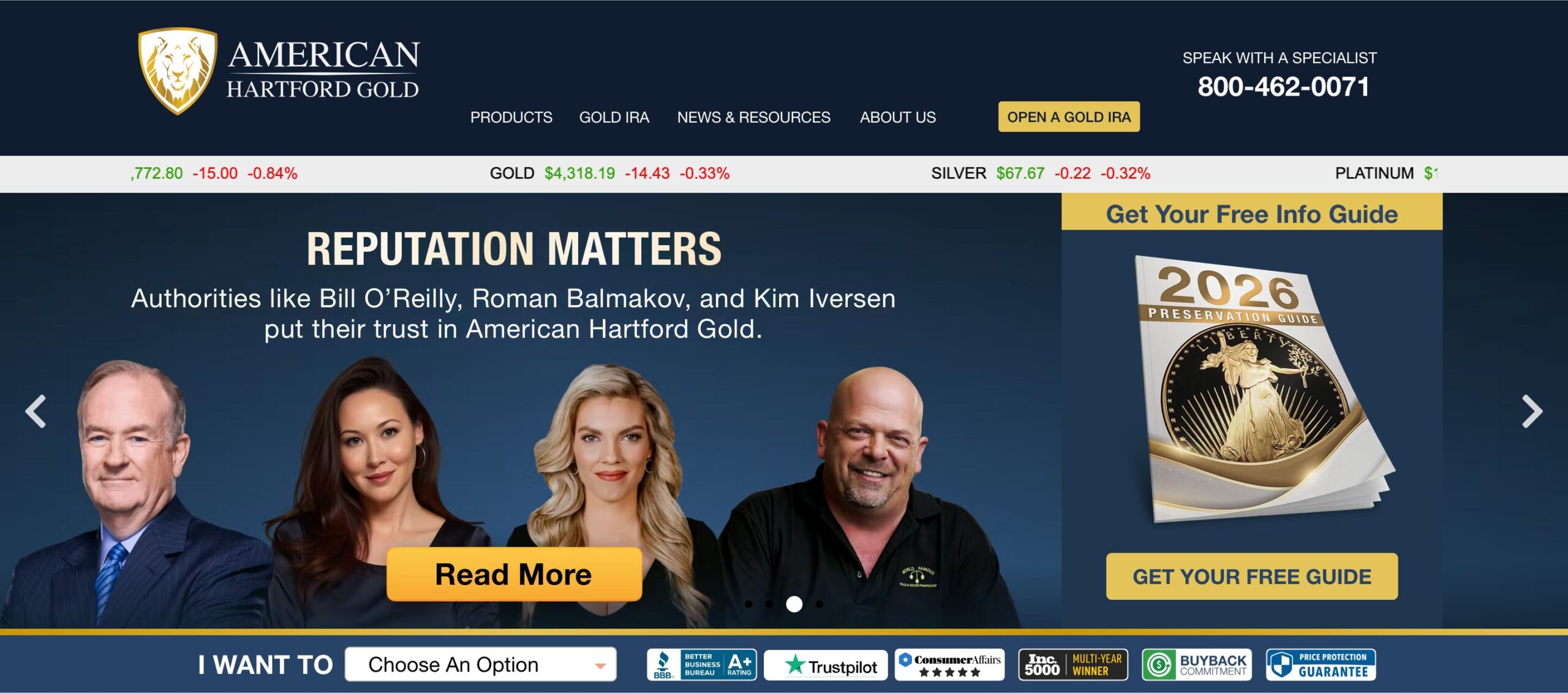
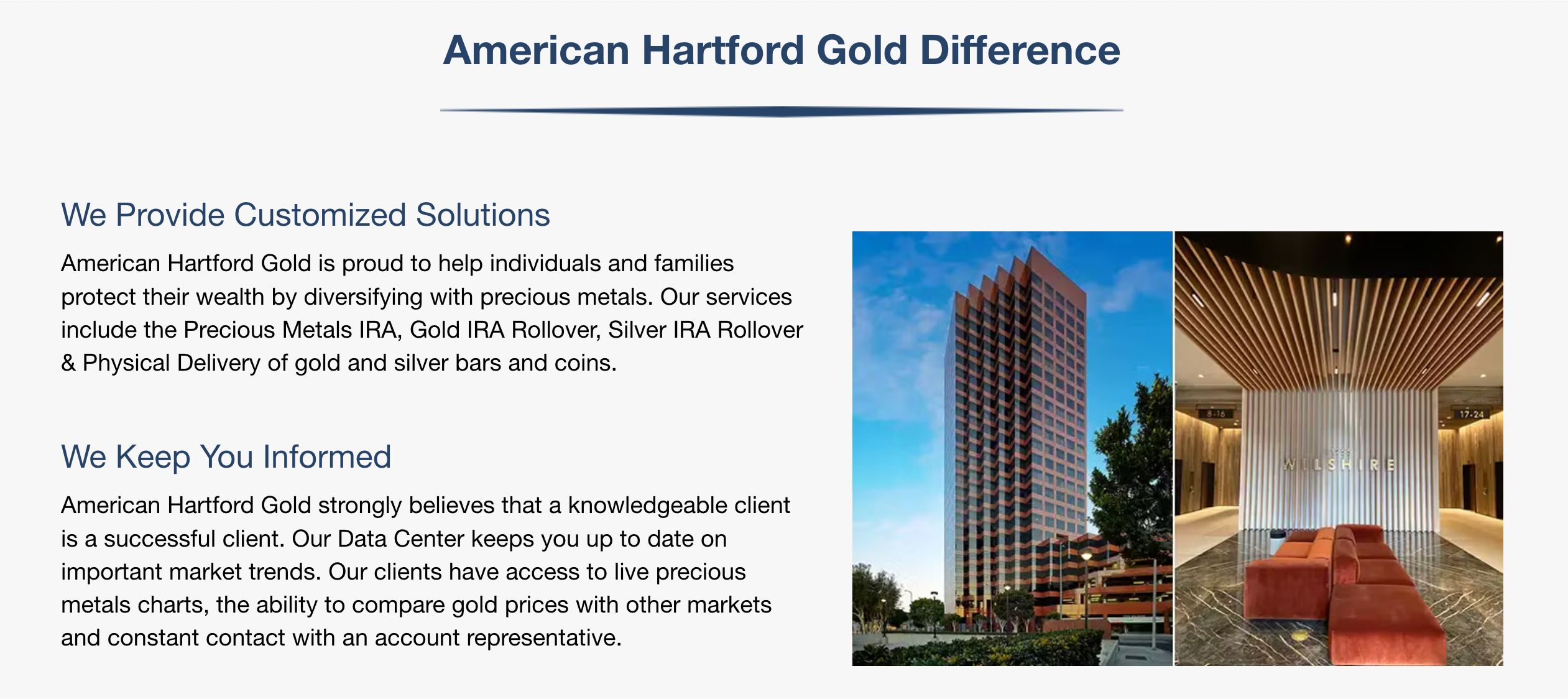
American Hartford Gold opened in 2015 under founder and CEO Sanford Mann. The family-owned firm operates from Los Angeles, with additional offices in West Palm Beach and Woodland Hills.
In a decade, the company has reportedly delivered between $1.5 billion and $4 billion in precious metals and earned a spot on the Inc. 5000 list of fast-growing private companies four separate times.
That growth came from a different playbook than Augusta’s: high media visibility paired with a low barrier to entry.
The Endorsement Factor: O’Reilly, Huckabee, and Harrison vs. Augusta’s No-Spokesperson Stance
American Hartford Gold leans heavily on recognizable names. Here are the faces most people associate with the brand:
- Bill O’Reilly, its most visible advocate
- Rick Harrison of Pawn Stars fame
- Mike Huckabee and other conservative media figures
- A multi-year NASCAR sponsorship for broad public reach
Augusta took the opposite road for years, relying on education instead of celebrity. Its one notable partner, Hall of Fame quarterback Joe Montana, became an ambassador only after his own financial team vetted the company and he became a paying customer.
That distinction matters: one model sells through familiarity, the other through information. Neither is wrong, but they attract very different buyers.
The $50,000 Wall vs. the $10,000 Door
The single biggest difference between these two companies is the price of admission. Before fees, products, or service even enter the conversation, the minimum investment decides who qualifies.
Who Gets Locked Out of Augusta and Why That’s Intentional
Augusta requires $50,000 to open an account, whether you roll over a 401(k) or pay cash. That figure shuts out a large share of first-time savers, and the company designed it that way on purpose.
A higher minimum lets Augusta assign each customer a dedicated success agent and pour hours into education without stretching its staff thin.
The flat-fee model also works better at scale, which I’ll cover below. For savers with substantial balances, the wall is a feature, not a barrier.
American Hartford Gold’s Lower Entry and the $5,000 Non-IRA Path
American Hartford Gold opens its IRA door at $10,000 and drops the bar to $5,000 for cash purchases delivered to your home. That accessibility is the company’s core advantage.
This lower threshold makes the firm a natural starting point for people testing precious metals for the first time or working with a modest portion of their retirement savings.
The IRS rules governing these accounts apply equally regardless of size, and you can review the official guidance on self-directed IRAs from the IRS.
Reading the Real Cost: Flat Fees vs. Scaling Fees
Fees quietly eat into returns over a multi-decade hold, so the structure matters as much as the dollar amount.
Both companies use flat annual fees rather than percentage-of-assets charges, which is good news, but the math plays out differently depending on your balance.
How Augusta’s Flat Structure Rewards Bigger Balances
Augusta charges the same flat dollar amounts no matter how large your account grows. That means a bigger balance pays a smaller percentage in fees over time.
Here is the typical Augusta fee breakdown:
- IRA setup: $50 one-time
- Annual maintenance: $100 to $125
- Annual storage (pooled): $100
- Annual storage (segregated): $150
- Shipping and insurance: $0 on qualifying purchases
- Buyback fees: $0
First-year costs usually land between $250 and $275, dropping to roughly $200 to $225 in following years. Qualifying accounts may receive fee waivers for up to 10 years.
Running the Numbers on a $50k, $100k, and $300k Account
The flat structure shows its strength as the account grows. Watch how the percentage shrinks:
- $50,000 account: ~$225/year equals about 0.45%
- $100,000 account: ~$225/year equals about 0.23%
- $300,000 account: ~$225/year equals about 0.08%
The dollar cost never changes, but the percentage drops sharply. For a six-figure investor, that flat fee becomes almost negligible, which is precisely why Augusta’s model favors larger balances.
American Hartford Gold’s Fee Waivers and Free Silver Incentives
American Hartford Gold uses promotions to soften its entry cost. Its “Freedom Package” can waive storage, maintenance, and insurance fees for up to three years on qualifying investments, typically those at or above $50,000.
The firm is also known for “free silver” offers, ranging from $10,000 to $25,000 in silver coins depending on the size of your purchase and the current promotion.
These incentives lower the upfront sting, though savers should weigh whether the underlying product pricing offsets the bonus.
The Pricing Disclosure Problem Neither Company Fully Solves
Both firms share a frustrating habit: neither lists exact coin prices online. You have to call to get a real-time quote, which makes side-by-side comparison harder than it should be.
The markup, or spread, between the metal’s spot price and what you pay is where dealers earn much of their money. Standard bullion carries lower spreads than premium or numismatic coins. Asking for the spread in plain numbers before you buy is the smartest move any saver can make.
Two Philosophies: Guided Learning vs. Fast Execution
How each company onboards you reveals its entire personality. One slows you down to teach. The other clears the path to buy quickly.
Inside Augusta’s Mandatory One-on-One Web Conference

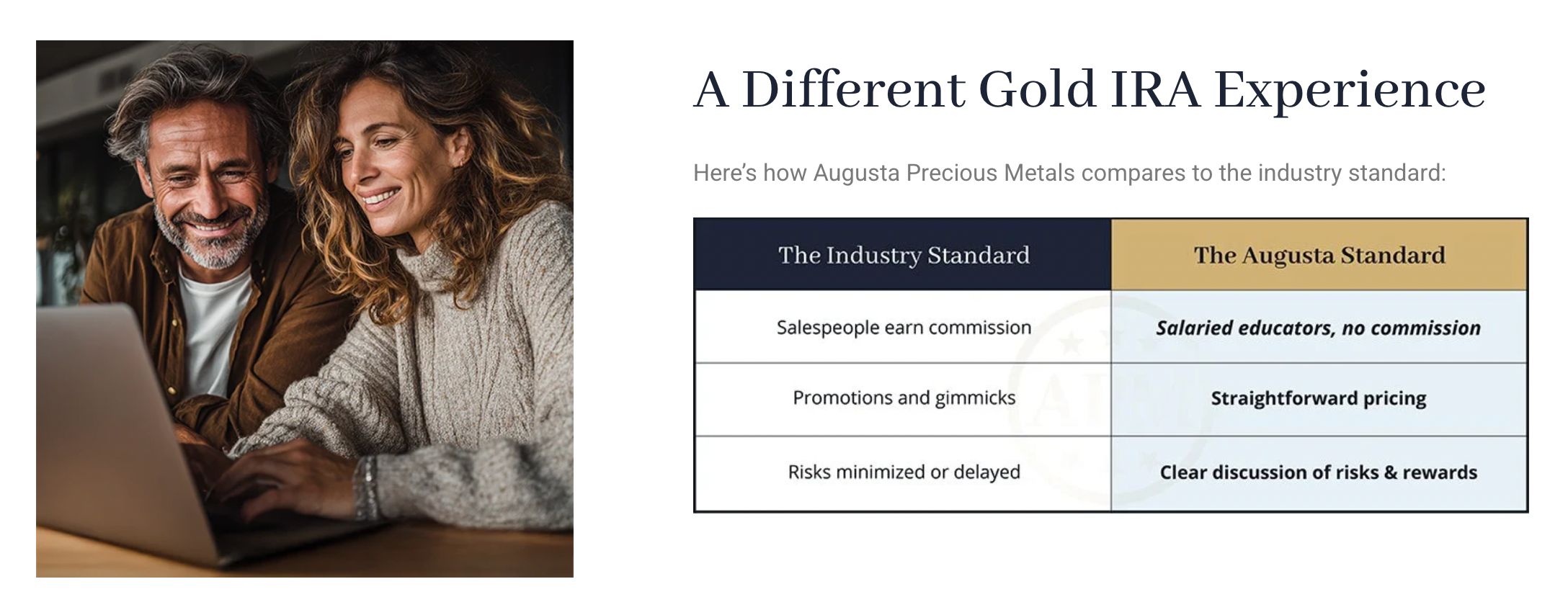
Augusta encourages every prospective customer to attend a private web conference led by Devlyn Steele before funding an account. The session covers the macroeconomic case for precious metals and how to spot industry gimmicks.
Topics typically include currency devaluation, Federal Reserve policy, and the role of gold as a defensive holding. For deliberate investors who want to understand what they own, this depth is reassuring rather than tedious.
American Hartford Gold’s Skip-the-Lecture Onboarding

American Hartford Gold moves faster. A specialist walks you through your options, coordinates with the custodian, and funds your account, often within three to ten business days.
This approach suits people who already grasp the basics and simply want to act. There is no required economics lesson standing between you and your first purchase, which appeals to confident, time-pressed buyers.
Matching the Approach to Your Experience Level
Your comfort level should guide the choice. Use this quick filter:
- New to precious metals? Augusta’s education-first model prevents costly mistakes.
- Already understand Gold IRAs? American Hartford Gold’s speed saves you time.
- Want a dedicated agent and slow, careful guidance? Augusta fits.
- Prefer minimal friction and quick execution? American Hartford Gold delivers.
Neither philosophy is better in the abstract. The right one depends entirely on how much hand-holding you actually want.
What You Can Actually Buy and Hold
The products available shape your portfolio for years, and the two firms stock their shelves differently. IRA rules require gold at .995 fineness and silver at .999, with the American Gold Eagle as the one government-backed exception.
Augusta’s Curated IRA-Eligible Lineup
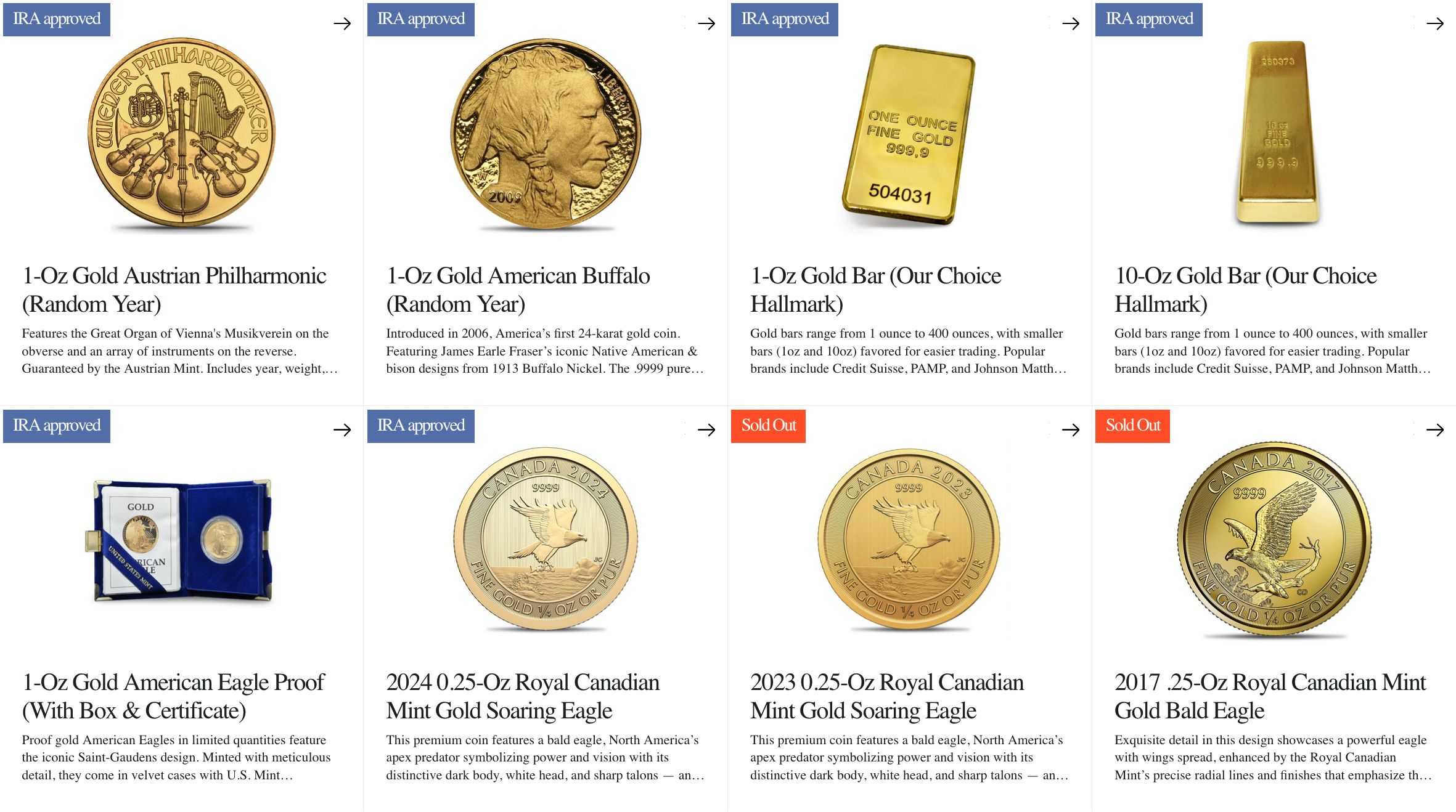
Augusta keeps its inventory focused on gold and silver, deliberately. Its catalog includes recognizable, liquid products:
- Gold: American Gold Eagle, Canadian Gold Maple Leaf, Austrian Philharmonic, and approved bars
- Silver: American Silver Eagle, Canadian Silver Maple Leaf, and accredited bars
- Premium coins: Select proof and special-edition pieces
The curated approach reduces decision fatigue and steers buyers toward metals that resell easily.
American Hartford Gold’s Wider Catalog and Direct-Purchase Metals
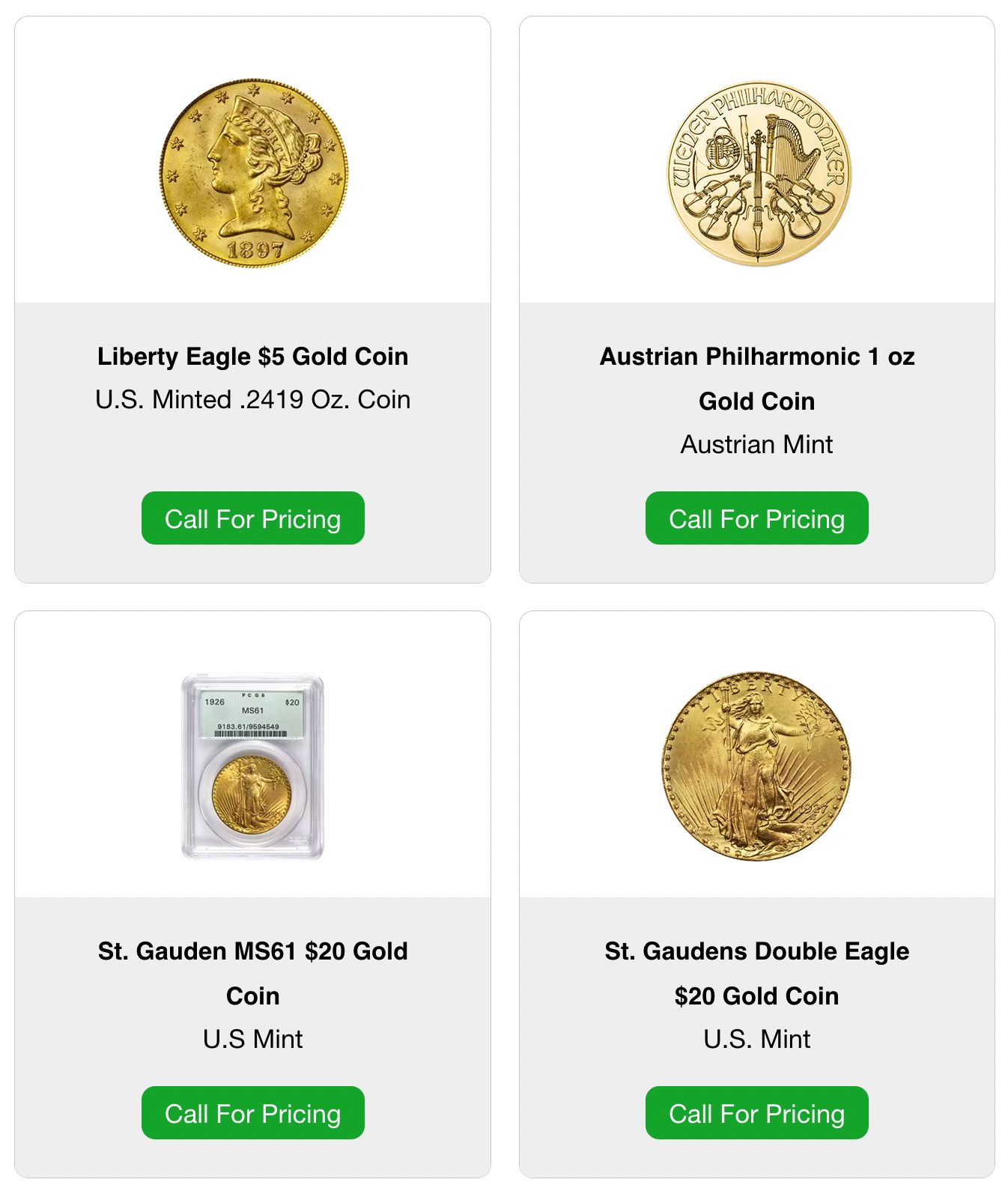
American Hartford Gold stocks a broader range, including limited platinum, historical pre-1933 coins, and a deep silver selection from mints worldwide. It also offers direct cash purchases shipped to your door in insured, discreet packaging.
That wider catalog gives collectors more to choose from, but variety brings a trade-off worth understanding before you commit.
The Numismatic Coin Question: Convenience or Resale Trap?
Numismatic and semi-numismatic coins carry higher markups than standard bullion. Some American Hartford Gold reviews mention feeling steered toward these premium pieces.
The danger is simple: a coin with a 15% spread loses value the moment you buy it, even if gold’s spot price holds steady.
For most retirement savers, standard bullion bars and recognized coins offer better resale value. If a representative pushes premium coins hard, ask why, and ask for the exact spread.
Vaulting, Insurance, and the Storage Details Buyers Overlook
Where your metals physically sit, and how clearly the company explains it, separates a trustworthy dealer from a vague one. IRS rules forbid storing IRA metals at home, so an approved depository is mandatory.
Segregated vs. Pooled: What Augusta Lets You Choose
Augusta gives you a clear choice between two storage types:
- Segregated storage: Your exact coins and bars sit separately, set apart from everyone else’s
- Pooled storage: Your metals are held alongside others of the same type
Segregated costs slightly more ($150 vs. $100 annually) but guarantees you receive back the identical items you purchased. Augusta works with respected vaults including the Delaware Depository and Brink’s Global Services.
The Disclosure Gap in American Hartford Gold’s Storage Setup
American Hartford Gold uses the same caliber of depositories, including Brink’s and the Delaware Depository, with segregated and commingled options. The vaults themselves are secure and insured.
The weaker point is upfront clarity. Some buyers report that storage details and the segregated-versus-pooled distinction were not explained as plainly as they would have liked until they asked directly. The fix is easy: confirm in writing which storage type you are getting and what it costs.
Cashing Out: Comparing the Two Buyback Commitments
Buying gold is easy. Selling it without losing a chunk to fees is where many investors get stung. Both firms address this, though neither can legally guarantee a repurchase price.
Augusta’s Price-Match Promise
Augusta maintains a consistent buyback policy with no transaction fees. Liquidation prices track current spot values plus or minus a set spread, and the company handles moving metals from the depository and returning funds.
The firm has built a reputation for fair, transparent buyback pricing, which gives long-term holders a clear exit when required minimum distributions arrive.
American Hartford Gold’s No-Fee Repurchase Approach
American Hartford Gold offers a similar no-fee buyback commitment and asks clients to contact them first when ready to sell. The three-step process is straightforward, with no extra liquidation charges on metals it originally sold.
The common complaint here involves communication speed, with some sellers reporting delays in receiving buyback quotes. Setting expectations in advance about turnaround time helps avoid that frustration.
What Third-Party Watchdogs Actually Say
Marketing claims mean little next to what independent rating bodies report. Here is where the two companies actually stand with the organizations that track complaints and customer sentiment.
BBB and Business Consumer Alliance Standings
Both firms hold strong watchdog ratings, but the volume of feedback differs sharply:
- Augusta: A+ BBB rating, accredited since 2014, with a notably clean complaint record
- American Hartford Gold: A+ BBB rating and accredited, with a higher complaint count tied to its larger customer base
- Business Consumer Alliance: Both carry top-tier AAA ratings
You can confirm either company’s current standing directly through the Business Consumer Alliance.
Trustpilot, ConsumerAffairs, and Google Reviews Compared
On consumer review platforms, both score well across thousands of ratings:
- Augusta: ~4.8 on Trustpilot, ~4.9 on ConsumerAffairs, ~4.9 on Google
- American Hartford Gold: ~4.6 on Trustpilot, strong ConsumerAffairs and Google marks across far more reviews
Augusta’s reviews praise its educational depth and no-pressure approach. American Hartford Gold’s praise its accessibility and responsive account managers. You can browse verified feedback on Trustpilot for both before deciding.
Reading Complaint Volume Honestly: Why Bigger Isn’t Always Worse
American Hartford Gold logs more complaints than Augusta, but raw numbers mislead. A company serving far more customers at a lower entry point will naturally collect more feedback of every kind.
What matters is the resolution rate and the nature of the complaints. American Hartford Gold actively resolves disputes, often using recorded confirmation calls and goodwill credits to keep its A+ standing. Judge the pattern, not just the count.
Picking the Right Fit for Your Situation
There is no universal winner here, only the right match for your money and mindset. Your balance and your goals point clearly toward one company or the other.
When American Hartford Gold Is the Smarter Move
American Hartford Gold fits a specific saver well. Choose it if you:
- Have less than $50,000 to invest
- Want a low $10,000 IRA entry or $5,000 cash purchase
- Already understand Gold IRAs and want fast execution
- Value home delivery for non-IRA metals
- Want celebrity-backed brand familiarity
For first-timers and budget-conscious savers, the lower door makes this the practical starting point.
When Augusta Earns the Larger Commitment
Augusta rewards a different profile. Choose it if you:
- Have $50,000 or more to invest
- Want deep education before committing
- Prefer flat fees that shrink as a percentage on larger balances
- Value a dedicated success agent and a no-pressure pace
- Prioritize transparency and a clean complaint record
For deliberate, higher-net-worth savers, the premium service justifies the higher minimum.
The Six-Figure Investor’s Tie-Breaker
If you have $100,000 or more and both companies are open to you, the deciding factor is how much guidance you want.
A reader weighing this should study a comprehensive Augusta Precious Metals review alongside an updated American Hartford Gold review before committing.
It’s also worth noting that Goldco, another well-regarded name in this space, sits between the two on minimums and earns consistently strong marks for service. Looking at all three gives a six-figure investor the fullest picture.
Frequently Asked Questions
Q1. Can You Switch From One Company to the Other After You’ve Already Opened an Account?
Yes. Your metals are held by an independent custodian, not the dealer, so you can transfer or sell and move providers. Expect some paperwork and confirm any buyback terms before you start.
Q2. Does Either Company Let You Take Physical Possession of Your Metals at Home?
Not for IRA metals. IRS rules require approved depository storage for retirement accounts. American Hartford Gold does allow home delivery for direct cash purchases outside an IRA, starting at $5,000.
Q3. How Long Does Funding a New Account Take With Each Company?
American Hartford Gold typically completes rollovers in three to ten business days. Augusta’s timeline runs similarly, though its mandatory education step can add time before you fund.
Q4. Are the Celebrity Endorsements Behind American Hartford Gold a Reason to Trust or Question It?
Treat them as marketing, not proof of quality. Endorsements raise visibility but say nothing about your specific pricing or service. Judge the company on fees, spreads, and watchdog ratings instead.
Q5. Which Company Makes More Sense if You Plan to Keep Adding Metals Over Time?
Augusta’s flat fees favor growing balances, since the cost stays fixed as your account expands. American Hartford Gold’s lower entry suits someone starting small and building gradually.
The Verdict: Matching the Company to the Investor, Not the Hype
The right choice comes down to your balance. If you have under $50,000 or want fast, accessible entry, American Hartford Gold opens the door. If you have six figures and want education plus flat fees that shrink with scale, Augusta earns the larger commitment.
Both hold A+ ratings and honest buyback policies. Skip the celebrity noise, ask for the exact spread, and let your own numbers decide.
Goldco Precious Metals
- Goldco Surpasses $2 Billion in Precious Metals Placements
- Over 6,000 Five-Star Ratings on BBB, Trustpilot, and ConsumerAffairs
- Seven-Time Winer on the Inc. 5000 List