
Disclosure: “The owners of this website may be paid to recommend Goldco or other companies. The content on this website, including any positive reviews of Goldco and other reviews, may not be neutral or independent.” Learn More
Buying gold used to mean handing over cash for a coin you’d hide in a sock drawer. OneGold promises something different: real metal, stored and insured, that you can buy from your phone at 3 a.m.
I spent days pulling apart its fees, ownership records, and the withdrawal complaints buried in review sites. Here’s what I found, the good and the ugly, so you can decide before wiring a dollar.
My Take After Digging Into OneGold
OneGold is legit. That’s my short answer after checking its corporate paperwork, its parent company, its storage partners, and its ratings across four review platforms.
It’s a digital platform where you buy fractional positions of physical gold, silver, and platinum held in insured vaults. You own the actual metal, not a paper claim on it. APMEX, one of the largest bullion dealers in the country, owns the operation outright.
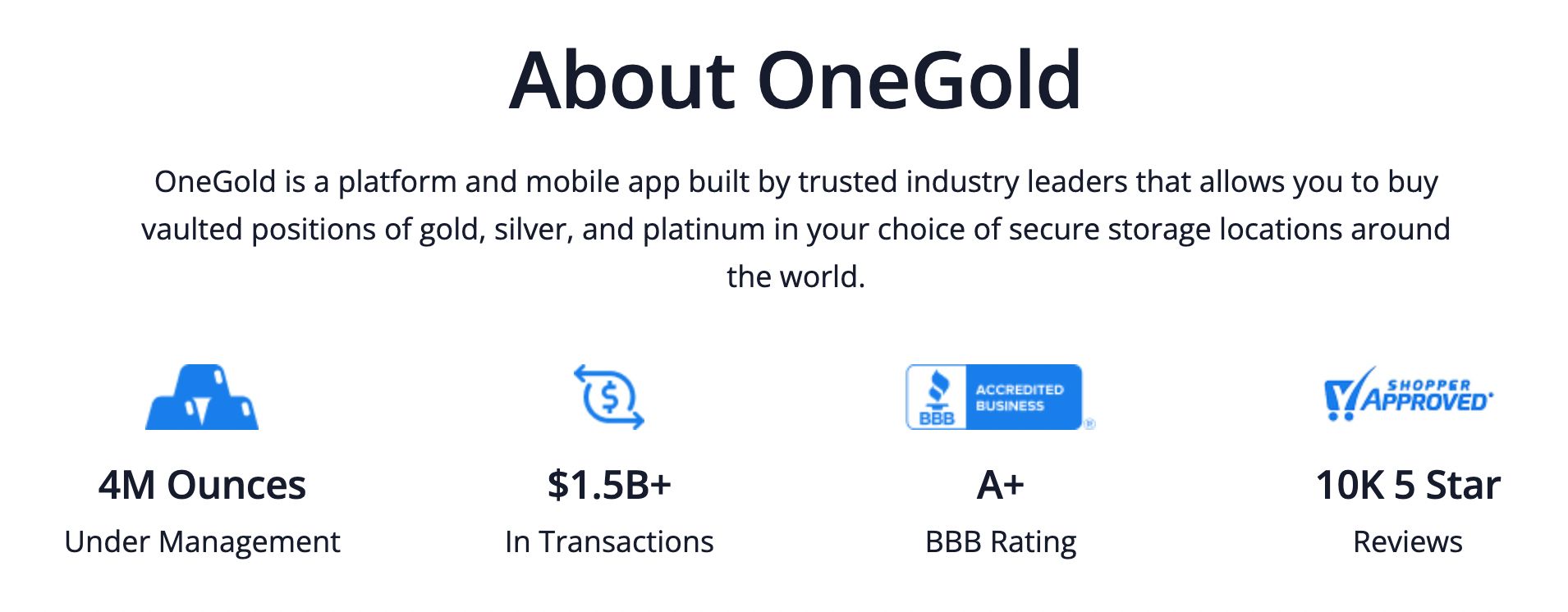
The self-reported numbers are large:
- $1.5 billion+ in total transactions
- 4 million+ ounces under management
- 500,000+ app downloads
- A 4.8/5 average review score on Shopper Approved
Those figures signal real scale. But scale doesn’t erase the withdrawal complaints I’ll get to later. Keep reading before you open an account.
What OneGold Actually Does
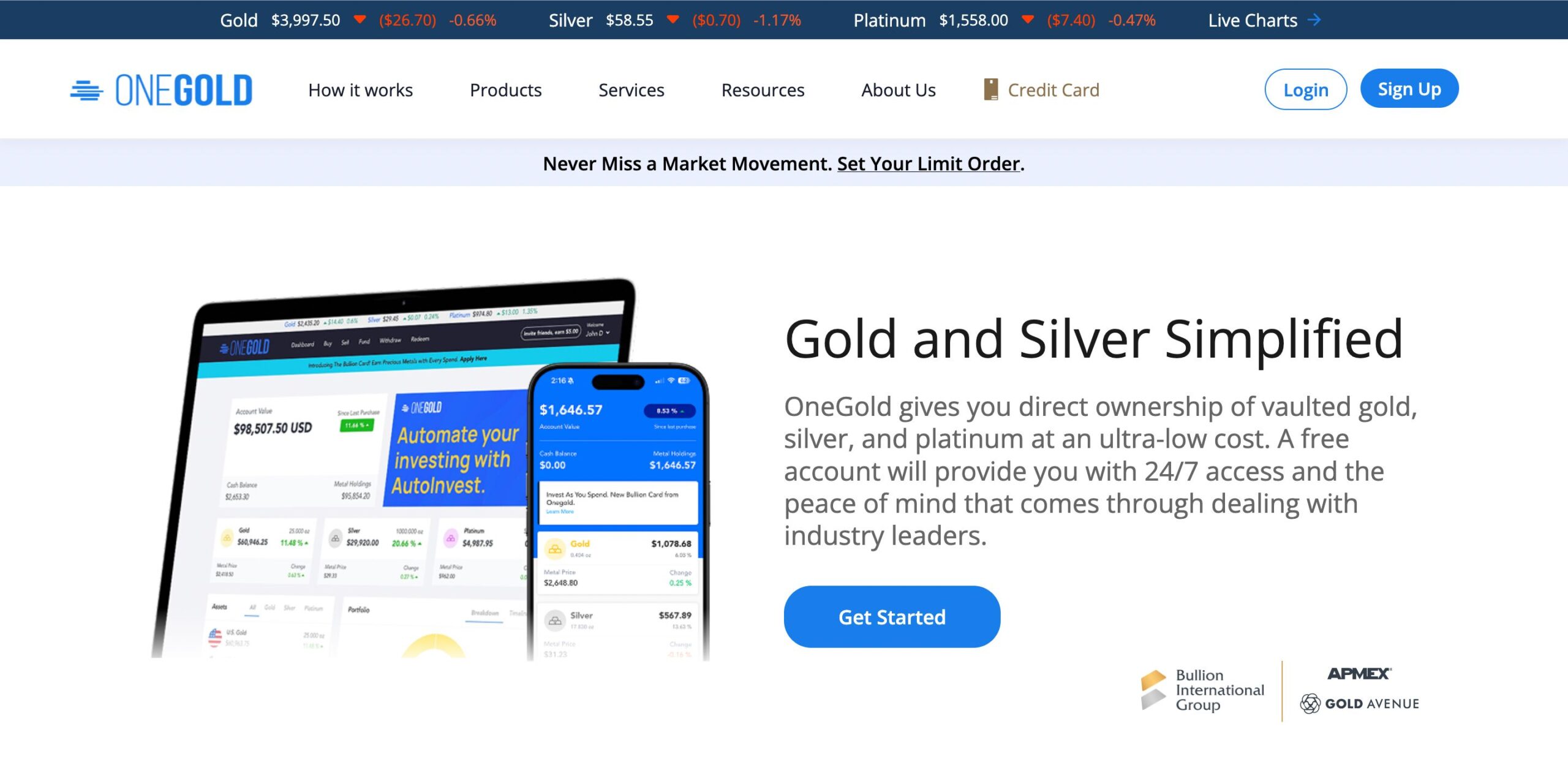
OneGold lets you buy metal by the dollar or by the ounce, store it in a professional vault, and sell it back any time day or night. Think of it as a savings account you fund with gold instead of cash.
Vaulted Ownership vs. Paper Metal
This is the part most people get wrong. A gold ETF like GLD gives you exposure to the price of gold, but you don’t own bars you can pull out.
OneGold sells allocated metal, meaning specific, insured ounces are set aside for your account and audited by outside firms.
That distinction matters if the goal is holding a hard asset outside the banking system. With OneGold, you can convert your digital balance into physical coins shipped to your door. Paper products rarely offer that.
Who It’s Built For (and Who Should Skip It)
OneGold fits a specific type of buyer. Here’s who gets the most out of it:
- Dollar-cost-average savers who buy small amounts monthly
- Fractional buyers who don’t want to spend $2,000+ on a single coin
- Mobile-first investors who want 24/7 access
- Cost-conscious people comparing storage fees against ETF expense ratios
Who should skip it? Anyone who wants coins in hand today, prefers palladium or rare numismatic pieces, or needs a financial advisor holding their hand. OneGold gives you no personalized advice. You make your own calls.
The Backstory: From APMEX and Sprott to Bullion International Group
A company’s ownership history tells you whether it’s a fly-by-night operation or a real business with accountability. OneGold’s roots run deeper than its 2018 launch date suggests.
The 2018 Launch and the Sprott Exit
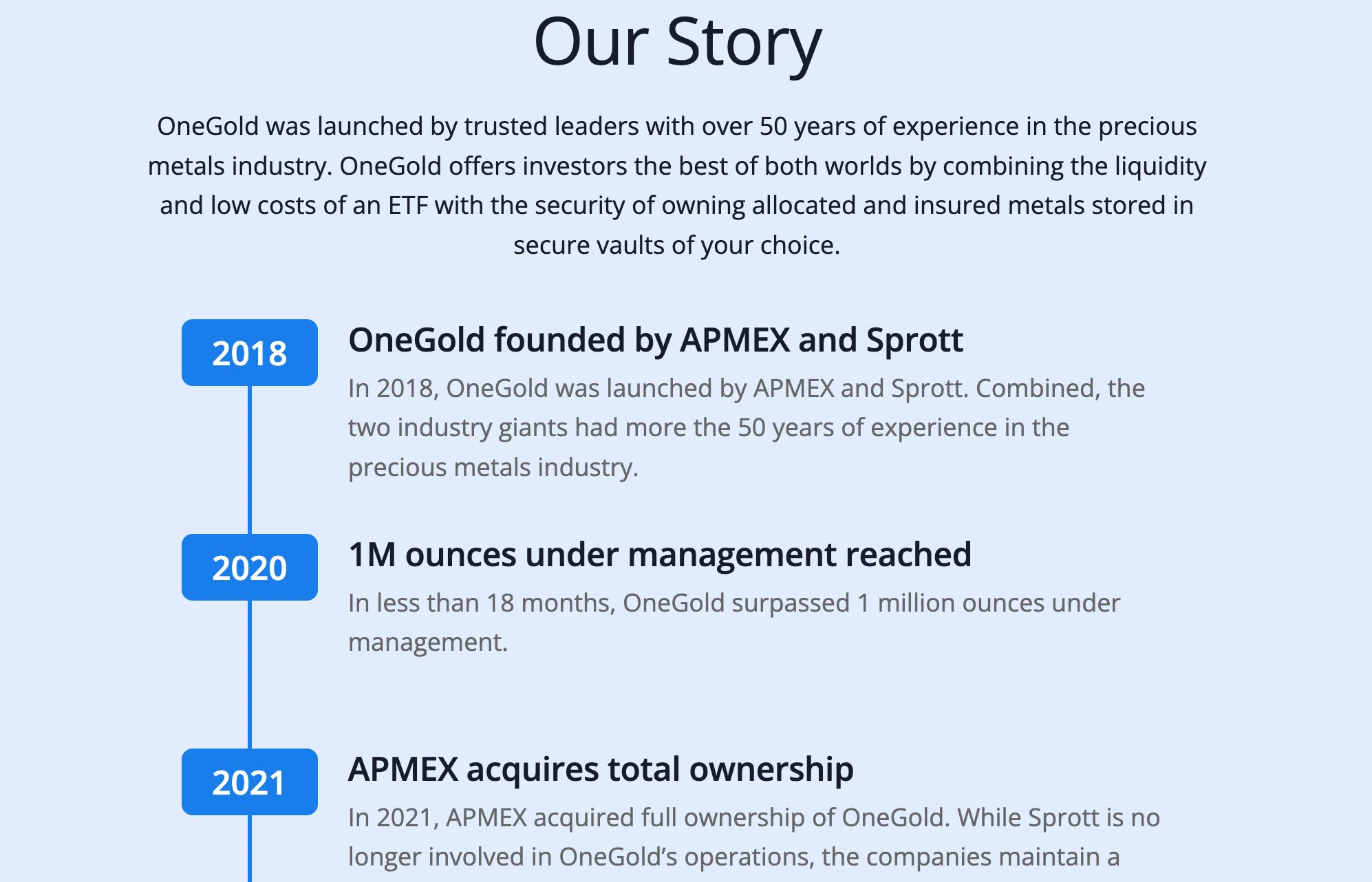
OneGold started in 2018 as a joint venture between APMEX and Sprott Inc., a well-known precious-metals asset manager. Together they brought more than 50 years of industry experience to the table.
By 2020, the platform crossed 1 million ounces under management in under 18 months. In 2021, APMEX bought out Sprott’s stake and took full ownership. The two firms reportedly parted on good terms.
Landing Under APMEX and the Bullion International Group
In 2025, OneGold became part of the Bullion International Group (BIG), a global precious-metals parent spanning minting, vaulting, wholesale, and retail. Sister brands include APMEX, MTB, and Gold Avenue.
APMEX remains the direct corporate parent. That backing is a real credibility marker, since APMEX has processed billions in bullion sales over two decades.
Who Runs OneGold Today
The CEO is Kenneth “Ken” Lewis, who also leads APMEX and appears in OneGold’s own inventory-audit videos. The BBB profile lists Kevin Helm as a company contact. Leadership isn’t hidden behind a shell, which is a good sign for a metals company.
Where OneGold Is Based and How to Reach a Human
You can find OneGold at 226 Dean A. McGee Ave, Oklahoma City, OK 73102, the same city as APMEX headquarters. That physical address is confirmed on both its BBB profile and Trustpilot listing.
The support line is 1-800-492-9144, open Monday through Friday, 8 a.m. to 5 p.m. CST, closed weekends. You can also reach the team by email, chat, and the help center at support.onegold.com.
One quirk worth flagging: the BBB lists only 4 employees. That number almost certainly reflects the local legal entity, not the full APMEX/BIG workforce behind the platform. Still, phone hours are limited to business days, which matters if a withdrawal issue pops up on a Saturday.
Metal You Can Buy and Where It’s Kept
OneGold keeps the product menu simple. You buy investment-grade metal priced per ounce, with fractional ownership, so you’re never forced to buy a whole coin.
Gold, Silver, and Platinum Options by Vault Location
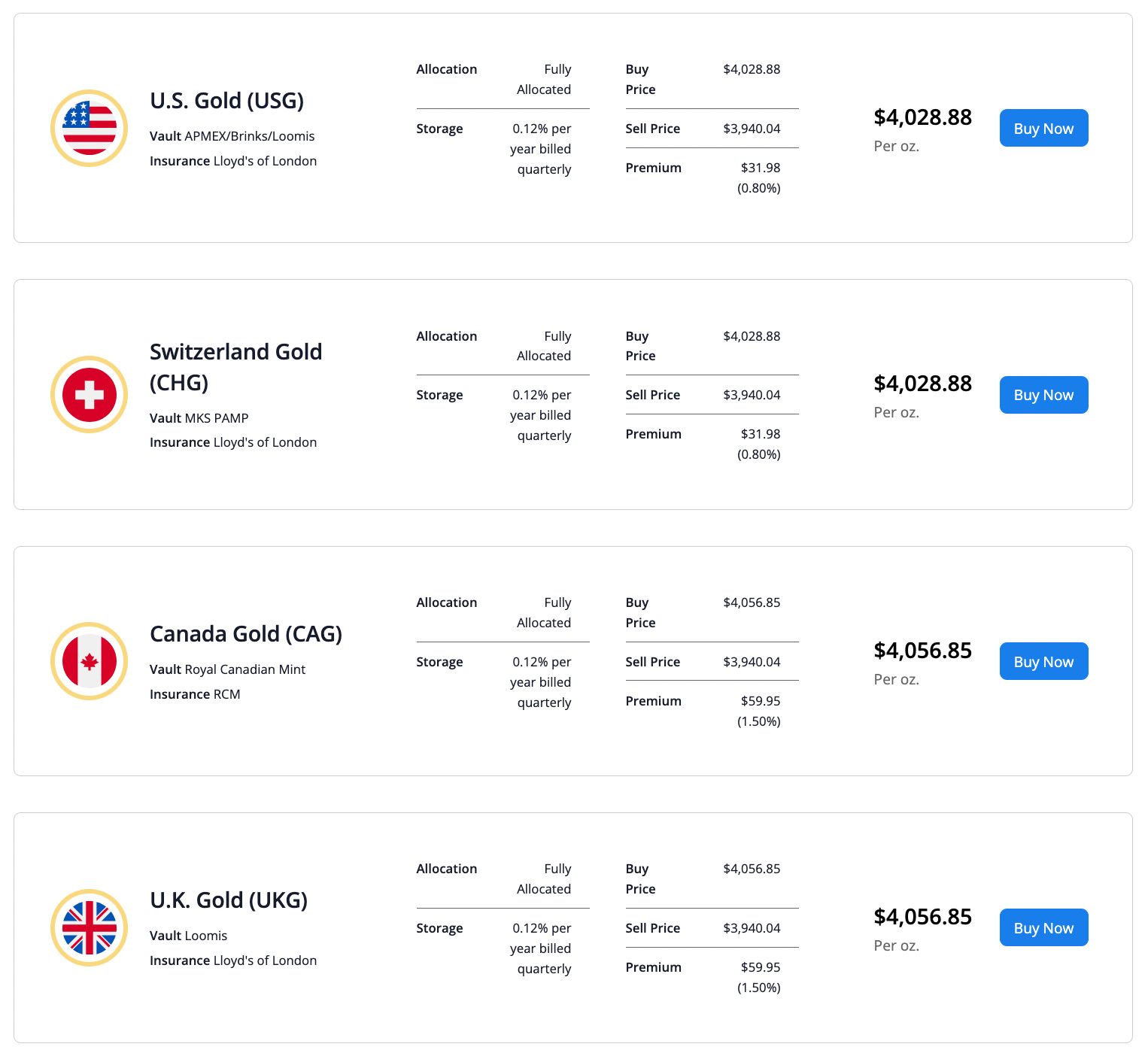
You pick both the metal and the country where it’s stored:
- Gold — vaulted in the U.S., Canada, U.K., or Switzerland
- Silver — vaulted in the U.S., Canada, U.K., or Switzerland
- Platinum — U.S. only
Gold buyers choose among products like U.S. Gold (premium around 0.80%), Switzerland Gold at MKS PAMP (around 0.80%), U.K. Gold (around 1.50%), and Canada Gold at the Royal Canadian Mint (around 1.50%). The metal is identical; you’re paying for the vault location and its insurer.
Storage Partners: Brinks, Loomis, APMEX, Royal Canadian Mint, MKS PAMP
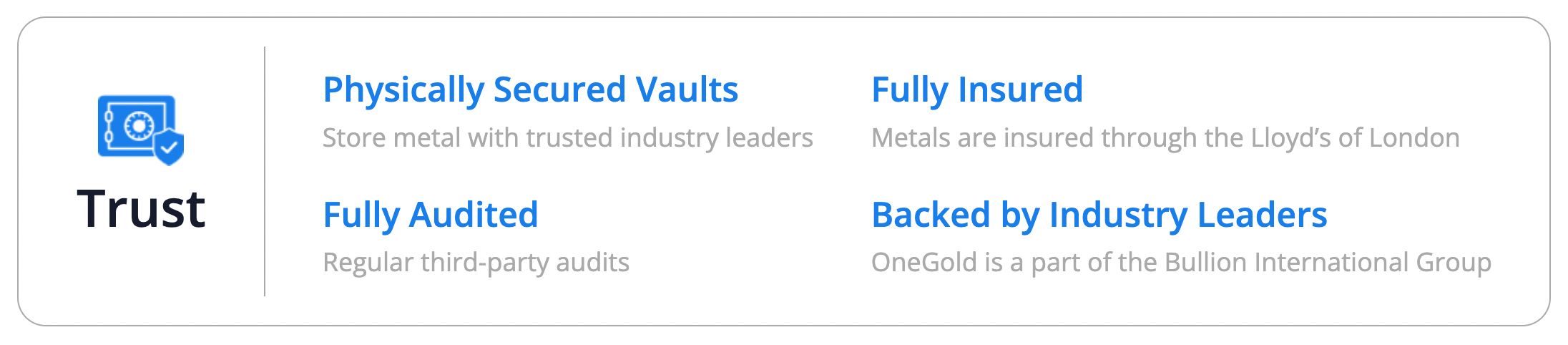
Your metal sits with names the industry trusts. The storage partners include:
- APMEX vaults (U.S.)
- Brinks and Loomis International (U.S. and U.K.)
- Royal Canadian Mint (Canada)
- MKS PAMP (Switzerland)
These are recognized vaulting operators, not anonymous warehouses. That reduces counterparty risk, which is the whole point of paying storage fees instead of stuffing coins under a mattress.
Insurance, Daily Reconciliation, and the RSM Audit
Every ounce is insured. U.S., U.K., and Switzerland products carry coverage from Lloyd’s of London, while Canadian holdings are guaranteed by the Royal Canadian Mint, a Crown corporation.
Audits happen on a real schedule. Balances reconcile daily, and RSM, a top-10 accounting firm, performs physical counts twice a year for U.S., U.K., and Swiss inventory.
Canada’s stock is audited annually by the country’s Auditor-General. OneGold also posts monthly public inventory reports, which most competitors never do.
What It Costs to Own Metal Here
Costs decide whether a platform is worth it over years of holding. OneGold’s pricing is one of its strongest selling points.
Premiums and Spreads by Product
Premiums run low compared to buying physical coins from a dealer. U.S. and Swiss gold carry roughly a 0.80% premium, while U.K. and Canadian gold sit near 1.50%. OneGold also runs frequent “at spot” promotions where the premium drops to nearly zero.
Spreads (the gap between buy and sell prices) stay tight. And because vaulted metal isn’t a taxable retail sale in the same way, you skip sales tax that physical coin buyers often pay.
Storage Fees Broken Down (and the $20 Minimum)
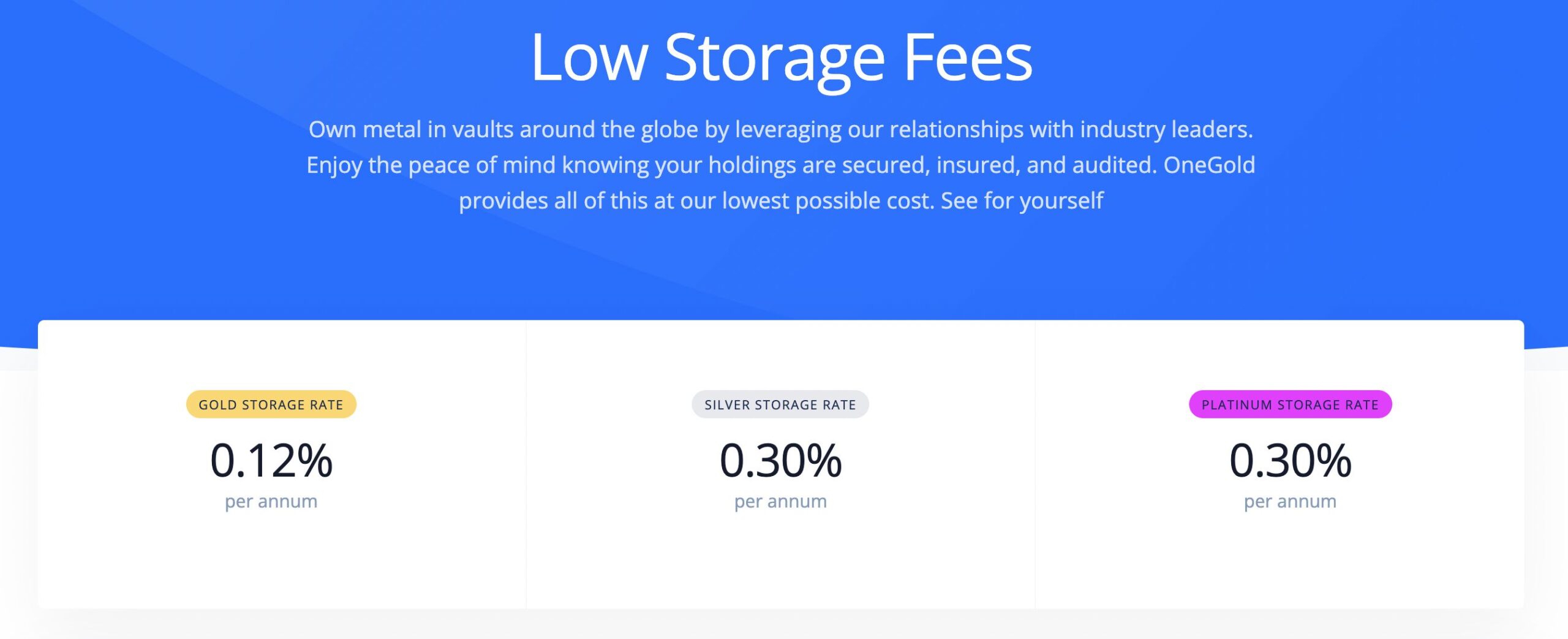
Storage is billed quarterly on your average daily balance:
- Gold: 0.12% per year
- Silver: 0.30% per year
- Platinum: 0.30% per year
There’s a floor of $5 per quarter, which works out to a $20 annual minimum. If you hold only a small balance, that minimum can eat into returns, so tiny long-term positions aren’t the most efficient use of the platform.
How OneGold’s Costs Stack Up Against ETFs
A gold ETF typically charges 0.40% to 0.60% in annual expenses. OneGold’s 0.12% gold storage fee undercuts that by a wide margin.
You pay less to store real, allocated metal than you’d pay to hold a paper fund. For long-term holders, that gap compounds into meaningful savings.
Buying, Funding, and the “Buy Now, Pay Later” Angle
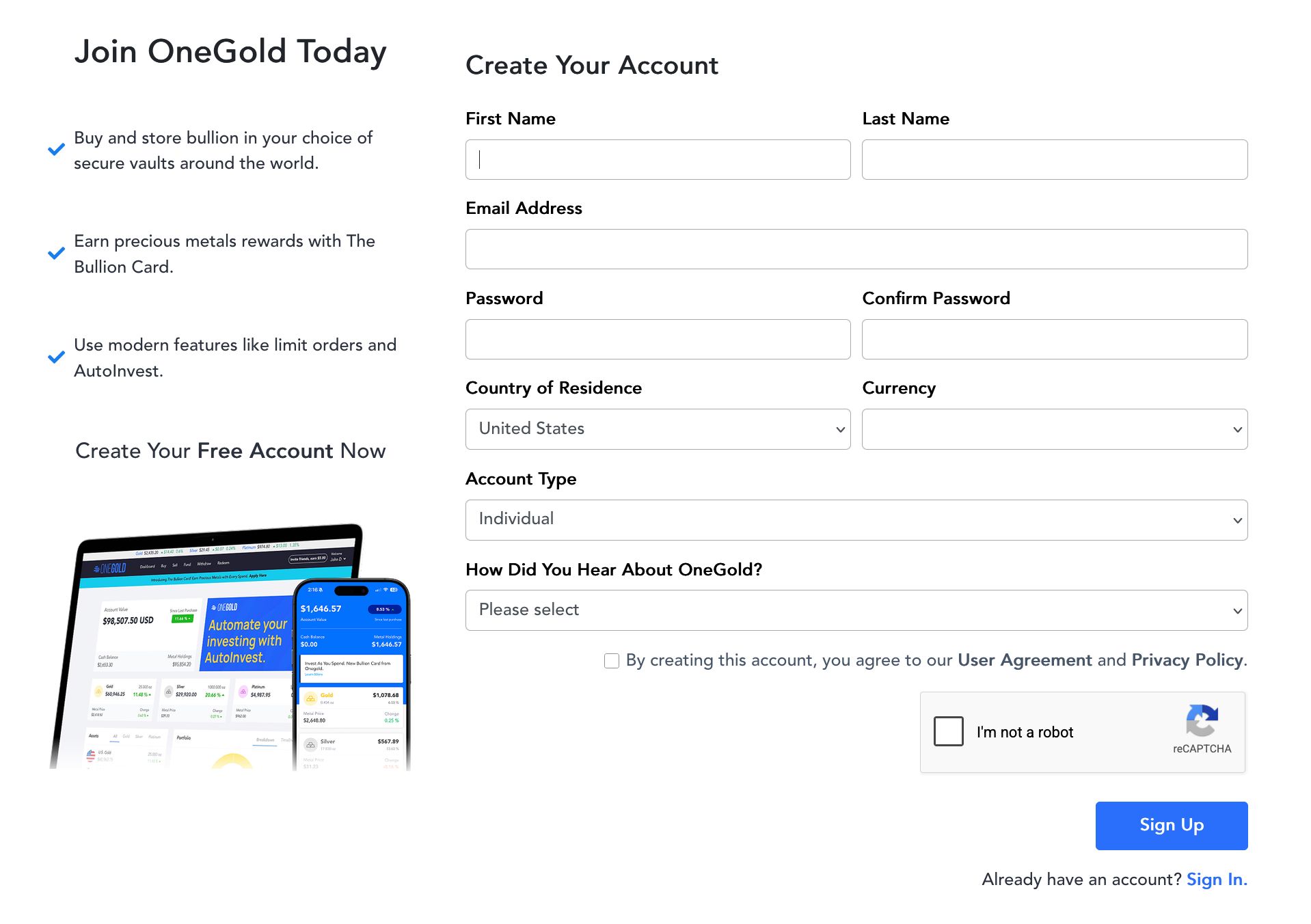
Opening an account takes a few minutes, and the buying flow is refreshingly direct. You browse products, pick your metal and vault, then lock in a price.
Accepted Payment Methods (Including Bitcoin)
OneGold accepts more funding options than most metals dealers:
- Bank transfer / ACH
- Credit and debit cards
- Personal check
- PayPal
- Bitcoin
That flexibility is rare. Being able to fund with crypto or PayPal opens the door for buyers who don’t want to wire money the old-fashioned way.
Locking In Spot Price Without Pre-Funding
Here’s a feature I liked. You don’t have to pre-fund your cash balance to buy. Straight from the buy page, you can lock in the current spot price and settle payment after, a “buy now, pay later” style order.
That lets you grab a price during a dip without waiting for a bank transfer to clear. For active buyers watching the market, that timing edge is real.
Selling Back and Cashing Out
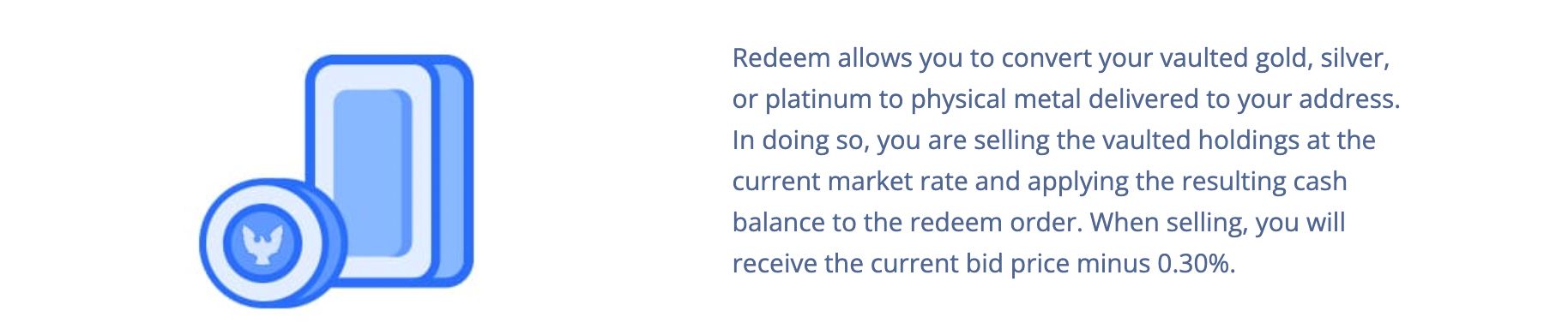
Liquidity is where digital metal beats a coin you’d have to find a buyer for. OneGold lets you sell 24/7, with proceeds landing in your cash balance before you withdraw.
The Buyback Price (Spot Minus 0.30%)
When you sell, OneGold buys your metal back at the spot bid price minus 0.30%. That’s a narrow, predictable spread.
You always know roughly what you’ll get. Compare that to selling physical coins, where a local dealer might shave 3% to 5% off spot.
The 60-Day Hold Rule You Need to Know
This is the rule that trips people up. If you fund with a card, PayPal, or ACH, those dollars must sit for 60 days before you can redeem them for physical metal.
You can withdraw the funds back to the original payment source before then, but you can’t cash out to a different account or take physical delivery until the hold clears.
This is a fraud-prevention measure, and it’s the source of a chunk of the negative reviews I’ll cover shortly. Know it going in.
Turning Digital Positions Into Physical Metal
One of OneGold’s best features is that your digital balance isn’t stuck digital. You can convert it into coins or bars shipped to you, handled through APMEX’s inventory of 20,000+ products.
The process works like this: you sell your vaulted position at market, then apply the proceeds toward a physical order.
Redeem orders typically ship within one business day, with free shipping inside the U.S. International orders may carry country-specific fees.
Your account must be verified before you can redeem, and the 60-day hold on card/PayPal/ACH funds still applies. Plan around that if you’re buying with delivery in mind.
Tools That Set the Platform Apart
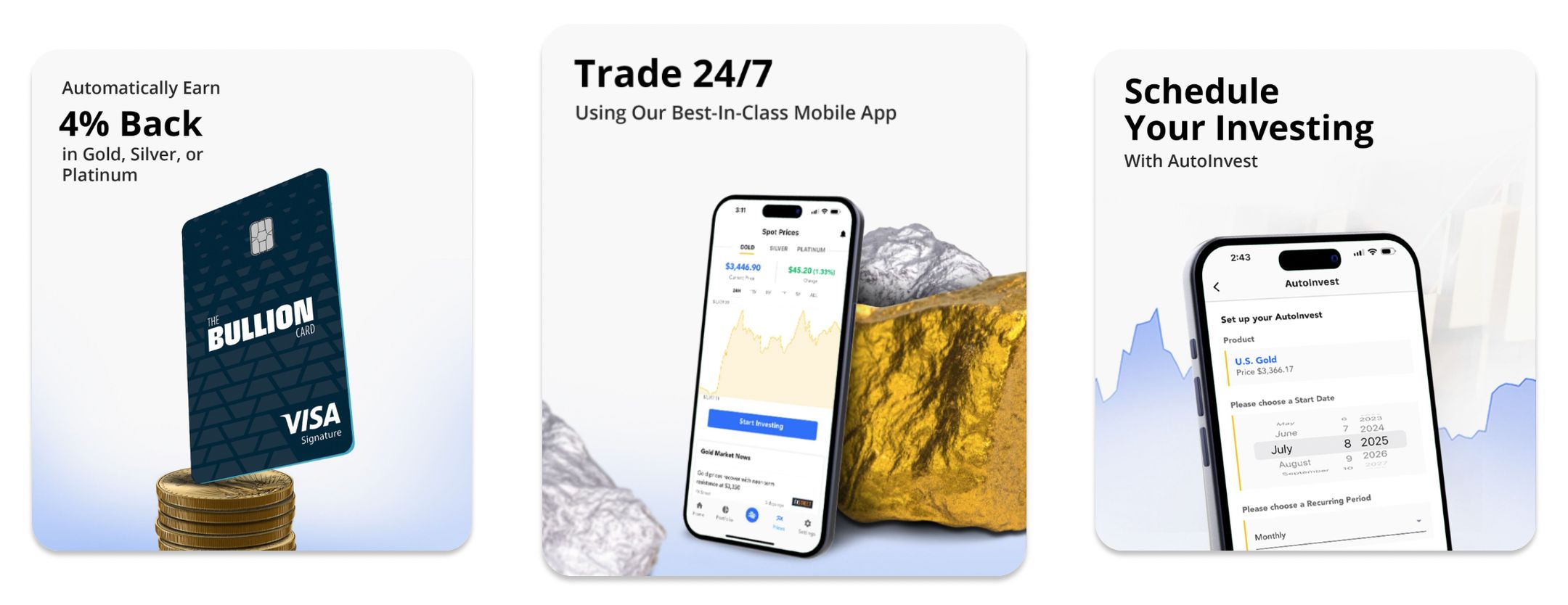
Beyond buying and selling, OneGold layers on features that reward disciplined savers. These are the pieces that make it feel more like a modern app than a coin shop.
AutoInvest for Steady Stackers
AutoInvest sets up recurring buys by dollar amount or ounce count, starting as low as about $20 a month. It’s dollar-cost averaging on autopilot.
If you’d rather build a position slowly than time the market, this does the work for you. Set it and forget it.
Limit Orders and 24/7 Trading
You can place limit orders that trigger a buy or sell when metal hits your target price. Trading runs around the clock, so you’re never locked out by market hours.
That’s a genuine advantage over dealers who only transact during business hours.
The Bullion Card (4% Back in Metal)
OneGold offers a Visa Signature rewards card called the Bullion Card. It earns 4% back in gold, silver, or platinum on OneGold purchases.
For someone already stacking metal, that rebate quietly adds up over time. It’s an unusual perk in this space.
The Mobile App
The app runs on iOS and Android with 24/7 trading, real-time portfolio tracking, and market alerts. Reviewers consistently praise how simple it is to use.
If you manage money from your phone, this is where OneGold shines.
Using OneGold Inside a Precious Metals IRA
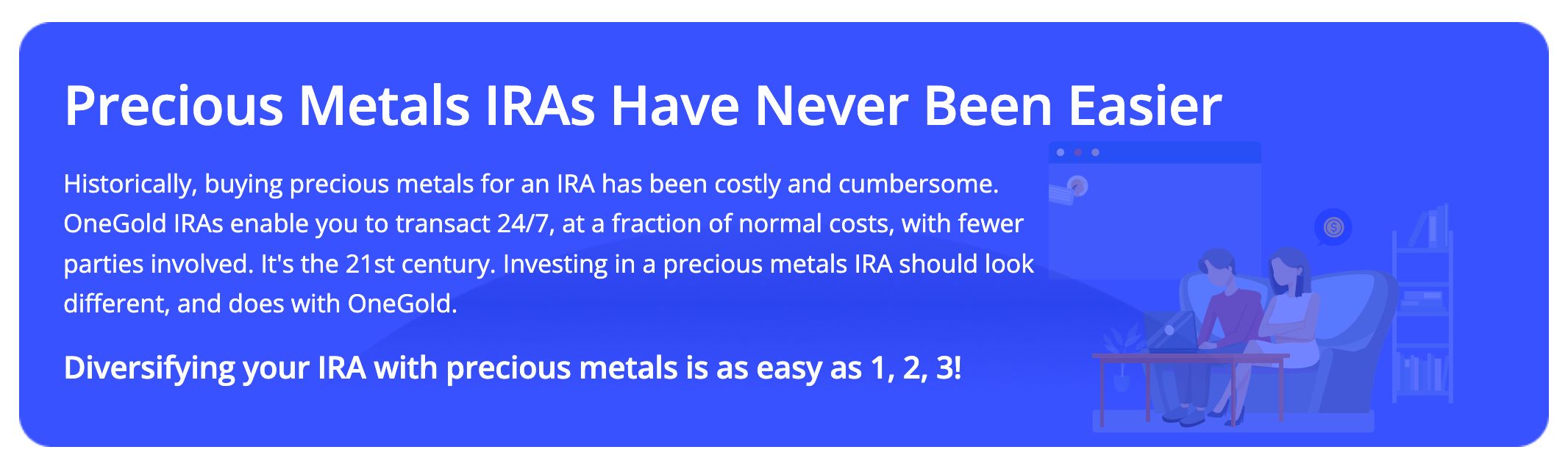
Yes, you can hold OneGold metal inside a self-directed IRA and get the tax advantages that come with it. This is where retirement savers should pay close attention.
The Custodian Choices
OneGold doesn’t lock you into a single custodian, which is a plus. Its listed partners include:
- STRATA Trust Company
- Kingdom Trust
- New Direction Trust Company
- Preferred Trust
- RocketDollar
Having options lets you compare custodian fees instead of accepting whatever one company charges. That flexibility can save you money over the life of the account.
Steps to Open an IRA Position
The process runs in three steps:
- Open an account with one of the approved custodians
- Fund it through a contribution, rollover, or transfer
- Create a OneGold account, select “IRA,” and designate your custodian
From there you buy metal the same way you would in a regular account. The custodian handles the tax reporting.
The Fee Transparency Question Worth Asking
Here’s my caution. OneGold doesn’t publish IRA-specific fees openly, and one reviewer flagged the same gap.
Custodians charge their own setup, annual, and storage fees on top of OneGold’s costs. Before you commit, ask your chosen custodian for a full fee schedule in writing. Don’t assume the 0.12% storage rate is the whole story inside an IRA.
What the Ratings Sites Really Show
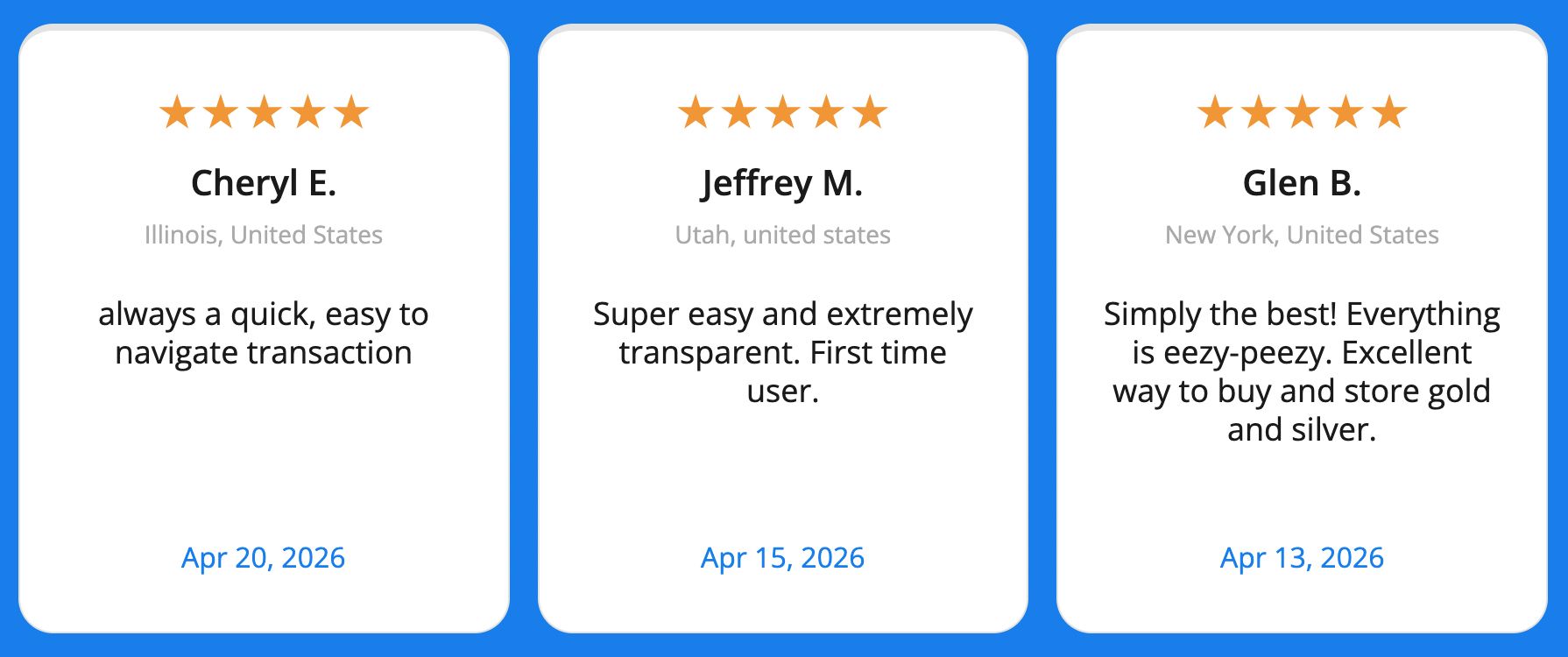
Ratings tell a fuller story than any single number. I checked four platforms, and they don’t all agree. That’s exactly why you should look at all of them.
Trustpilot
OneGold holds roughly 4.4/5 from 162 reviews on Trustpilot. Some snapshots show 4.3 and one aggregator cited 4.0, so treat 4.4 as a safe midpoint. Most reviewers praise convenience and transparency, with a minority citing payment and pricing gripes.
Shopper Approved
Shopper Approved shows a 4.8/5 average across roughly 11,967 reviews. That’s the number OneGold leans on in its marketing, and it reflects thousands of buyers reporting smooth transactions.
BBB
The BBB gives OneGold an A letter grade, accredited since 2018. But the BBB customer review score is a separate figure: 3.1/5 from just 10 reviews, with 3 complaints on file.
Don’t confuse those two. The letter grade reflects how the company handles complaints and its time in business, not customer satisfaction.
A small sample of 10 unhappy reviewers pulled the customer score down, while the A grade signals the company actually responds to problems.
Google Reviews
Google shows around 4.5/5 from 210 reviews, landing between the glowing Shopper Approved score and the lower BBB customer rating. Taken together, the picture is a platform most people like, with a real minority who hit friction.
What Happy Customers Keep Repeating
The positive reviews cluster around a few consistent themes. These are the things buyers mention again and again:
- The app and website are easy and intuitive
- Premiums are low and the “at spot” promos are a genuine deal
- Long-term users of 4 to 5 years report dependable service
- Fractional buying makes gold feel like a savings account
- Fast shipping when redeeming physical metal
- Trust carried over from the APMEX name
Many describe using OneGold as a place to park savings in hard assets without the hassle of storing coins. That convenience is the recurring win.
The Complaints I Couldn’t Ignore
I won’t bury the bad news the way some review sites do. The negative feedback follows clear patterns, and you deserve to see them plainly.
Withdrawal Delays and Held Funds
The single loudest complaint is about getting money out. Reviewers describe multi-week waits, withdrawals that allegedly weren’t sent, and funds held longer than expected.
Some of these ties back to the 60-day hold on card, PayPal, and ACH deposits. But not all of it, and slow withdrawals are the top frustration by far.
Account Suspensions and KYC Re-Verification Headaches
Several users report accounts getting locked during larger withdrawals or after changing a linked debit card. OneGold sometimes demands specific documents, in one case an electric bill, before releasing funds.
This is know-your-customer (KYC) compliance, and it’s normal for financial platforms. The problem is that the timing feels arbitrary to users who just want their money.
Customer Service That Goes Quiet
The third theme is silence. Reviewers describe unanswered emails, hard-to-reach phone lines, and feeling “ghosted” mid-problem.
With phone support limited to weekday business hours, a weekend issue can stretch into days. That’s a real weakness for a platform that trades 24/7.
What These Patterns Mean for You
Here’s my honest read. OneGold is not a scam, the BBB A grade and third-party legitimacy back that up. But the withdrawal and verification friction is real and repeated.
Protect yourself with a few habits:
- Fund with ACH or bank transfer well ahead of when you might need to sell
- Complete full identity verification before you ever try to withdraw
- Keep documents like a utility bill ready in case KYC flags your account
- Don’t treat OneGold as an emergency-cash source, given the possible delays
Go in with your eyes open, and the friction becomes manageable rather than shocking.
How OneGold Compares to Other Ways to Own Metal
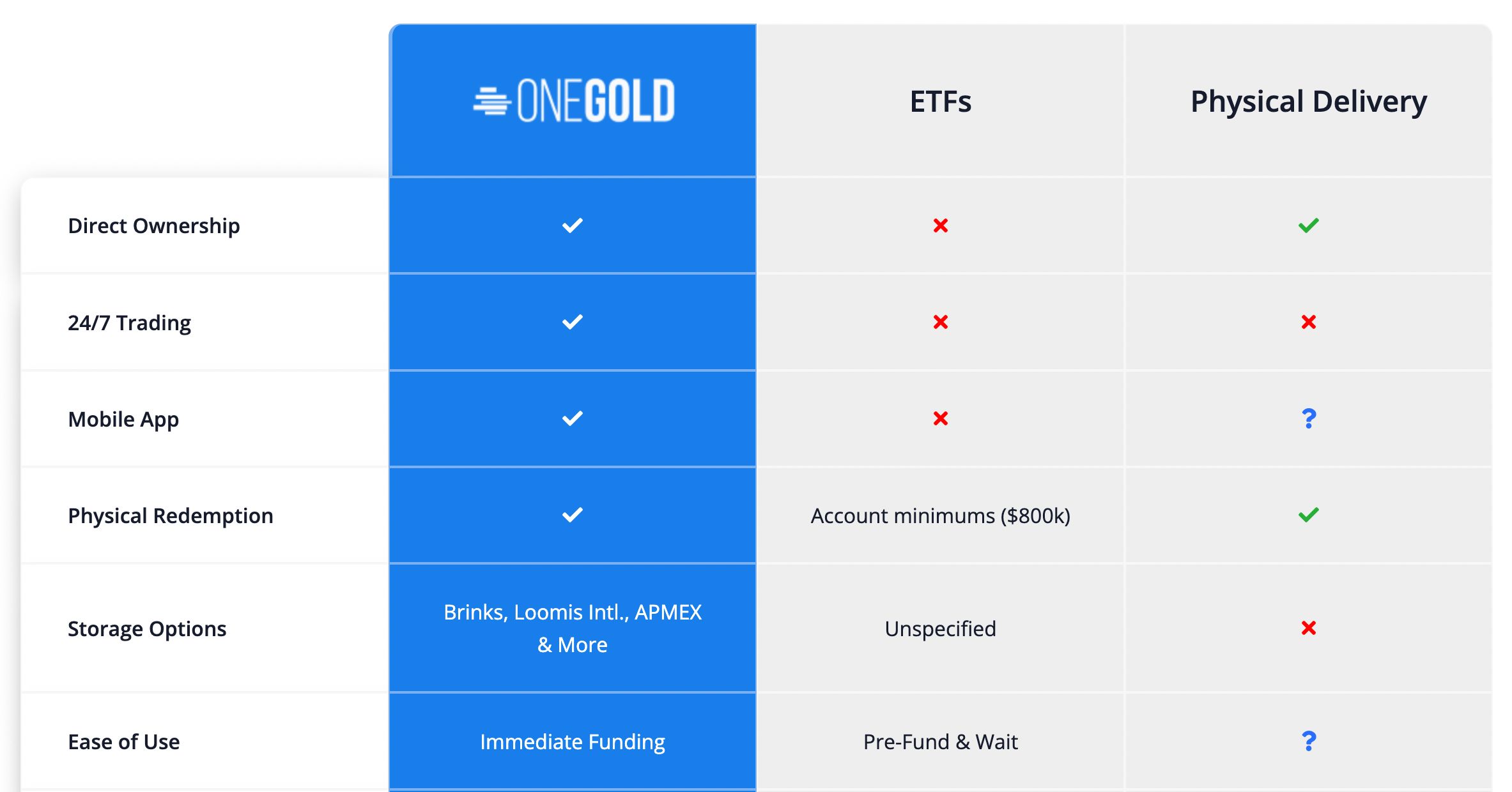
Stack OneGold against the alternatives and the trade-offs get clear.
Versus a gold ETF, OneGold gives you actual allocated metal you can take delivery of, at a lower storage cost. The ETF wins only on instant liquidity to a brokerage account you already have.
Versus buying physical coins outright, OneGold saves you dealer premiums, sales tax, and the storage headache, but you give up having metal physically in hand today.
Versus a dedicated gold IRA rollover firm, OneGold is cheaper and more flexible on custodians, though those firms offer more hand-holding for people who want a guided rollover. Your choice depends on whether you value cost and control or personal service.
Frequently Asked Questions
Q1. Does OneGold Actually Hold Real Metal for My Account?
Yes. Your holdings are allocated physical metal stored in insured vaults with partners like Brinks, Loomis, and the Royal Canadian Mint.
Outside firm RSM audits the U.S., U.K., and Swiss inventory twice a year, and monthly inventory reports are public.
Q2. How Fast Can I Get My Money Out?
Selling is instant, with proceeds landing in your cash balance right away. Withdrawing to your bank can take longer, and funds added by card, PayPal, or ACH carry a 60-day hold before redemption. Plan ahead, since delays are the most common complaint.
Q3. Is There a Minimum to Start?
You can begin with a very small amount, since fractional ounces are allowed. Keep in mind the $20 annual storage minimum, which makes tiny long-term balances less cost-efficient.
Q4. Can I Move My Existing IRA Into OneGold?
Yes. You open a self-directed IRA with an approved custodian such as STRATA or Kingdom Trust, then transfer or roll over your funds and buy metal through OneGold. Ask the custodian for a full fee schedule first.
Q5. What Happens to My Metal if OneGold Goes Under?
Your metal is allocated to you and stored with independent vault operators, not held on OneGold’s own books.
It’s also insured by Lloyd’s of London or guaranteed by the Royal Canadian Mint, which separates your assets from the company’s finances.
So, Is OneGold Legit? My Final Verdict
Yes, OneGold is legitimate. It’s owned by APMEX, backed by the Bullion International Group, stores allocated metal in insured and audited vaults, and holds an A grade from the BBB. The fees beat most ETFs, and the app makes stacking simple.
But it isn’t flawless. Withdrawal delays, KYC lockouts, and the 60-day hold are real friction points that show up across reviews. My advice: fund with bank transfer, verify your identity early, and don’t rely on it for fast cash.
For patient, cost-conscious buyers who want real metal without the storage hassle, OneGold earns a spot on the shortlist.
Goldco Precious Metals
- Goldco Surpasses $2 Billion in Precious Metals Placements
- Over 6,000 Five-Star Ratings on BBB, Trustpilot, and ConsumerAffairs
- Seven-Time Winer on the Inc. 5000 List